Side lighting
Also calledCross light, 90-degree lighting, Lateral lighting
Side lighting is a setup where the main light source sits roughly 90 degrees from the camera-subject axis, splitting the subject into a lit half and a shadowed half. It carves out texture, volume and edges that flat frontal light erases, and it pushes the viewer to read the image as dimensional and often tense.
What it tells
Directors reach for side light when they want the audience to feel weight, conflict or hidden depth rather than comfort. A face cut in half by light and shadow reads as divided, guarded or under pressure, while a side-lit texture (bread crust, brick, skin, fabric) suddenly feels tactile. It is the light of moral gray zones and physical labor, the opposite of the flat, reassuring glow used for news anchors and product shots.
How it is shot
Position a single key source at about 90 degrees from the lens-to-subject line, at or slightly above eye level, with little or no fill on the shadow side (contrast ratio 4:1 or higher for drama, closer to 2:1 for a gentler look). Hard sources (a bare fresnel, direct sun, a window with no diffusion) produce crisp shadow edges and visible texture; soft sources (bounced light, a large diffused panel) give a smoother falloff while keeping the directionality. On set, a single 650W to 1K fresnel or an LED panel with a grid works for a face; for a room, one strong practical or window is often enough if everything else is kept dark. Flag any spill that wraps light onto the shadow side.
When to use it
- Revealing a character's inner conflict or a morally divided decision in a single shot
- Showing texture on skin, food, wood or stone that flat light would flatten out
- Building tension in an interrogation, negotiation or confrontation scene
- Simulating a single strong practical source like a window, lamp or open door at dawn
Not to be confused with
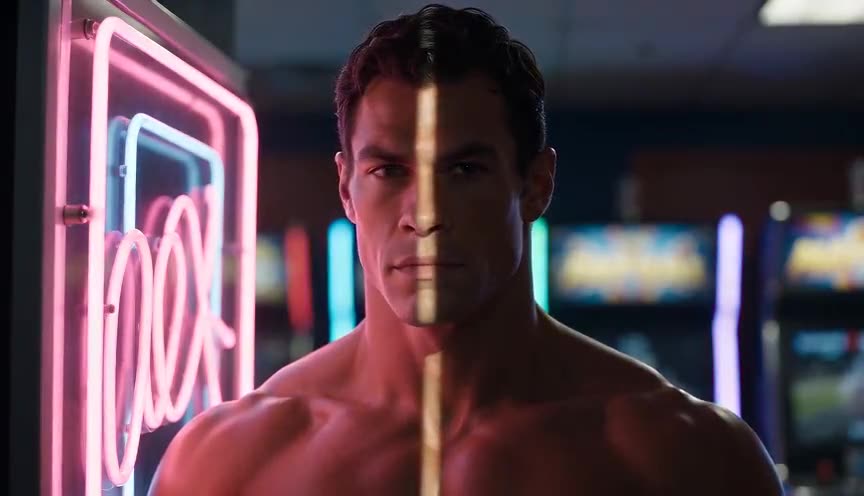
Split lighting is the extreme, portrait-specific case of side lighting where the line falls exactly down the center of the face. Side lighting is broader and applies to bodies, objects and rooms, not only the face.
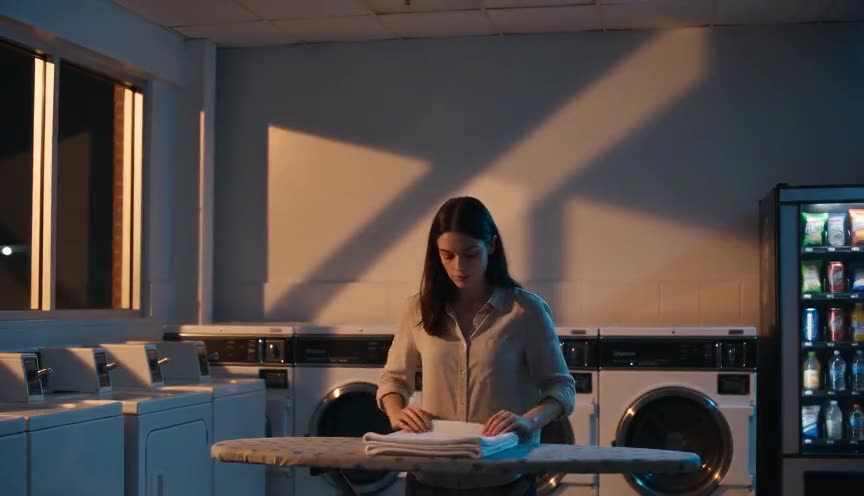
Cross lighting uses two side sources aimed at each other from opposite angles to light both sides of a scene or two subjects. Side lighting uses a single lateral source, leaving one side genuinely dark.
In film
The Godfather (1972)
Gordon Willis lights interiors from the side and through blinds, splitting faces to suggest men who are never fully seen.
Chinatown (1974)
Hard lateral light through window slats carves shadow bars across rooms and faces, reinforcing the film's mood of concealment.
The prompt
Name the light's direction explicitly (from the left, from a side window) and its hardness (hard shadow edges, or soft wraparound). Mention the shadow side by name (left side of the face in shadow, right side lit) since models often default to soft frontal light otherwise. Add a plausible source (low sun, a single work lamp, an open door) so the model motivates the angle instead of inventing flat fill. Avoid asking for multiple lights or symmetry, that collapses the effect.
The exact prompt that rendered the video on this page. Keep the description of the move, change the subject and the setting.
Side lighting: a woman in her fifties kneads dough on a steel counter inside a small bakery at 5 am, low golden light streaming through a single side window and hitting her at roughly ninety degrees, carving one side of her face and arms in bright warm light while the other side falls into deep shadow. The camera holds a static medium shot at eye level as flour dust drifts through the shaft of light. Racks of bread stay dark and undefined in the background, untouched by the light. No text.
Common mistakes
Adding fill to the shadow side
Bouncing light back into the dark half kills the contrast that makes side lighting work, turning it into flat frontal light with a slightly warmer edge.
Placing the source behind the subject
Pushing the light past 90 degrees toward the back turns side lighting into backlight or rim light, which reads as a silhouette instead of a sculpted, half-lit face.
Ignoring the motivation
A hard lateral light with no visible source (window, lamp, sun) looks artificial and staged; audiences accept the harsh split more easily when they can see where it comes from.
Frequently asked questions
What is side lighting?
Side lighting is a lighting setup where the key light comes from roughly 90 degrees to the side of the subject instead of from near the camera, creating one lit side and one shadowed side. It emphasizes texture, volume and often tension.
Is side lighting the same as split lighting?
They are closely related. Split lighting is the specific portrait case of side lighting where the light-shadow line runs exactly down the center of the face; side lighting is the general technique and can apply to any subject or angle near 90 degrees.
What kind of source works best for side lighting?
Any single, strong, directional source works: a fresnel with a grid, direct sun, a bare window, or a practical lamp placed to the side. Hard sources give crisp shadows, soft sources give a gentler gradient, but both need to come from the side, not the front.
Can AI video tools generate side lighting reliably?
Yes, if you name the direction (from the left or right), describe the shadow side explicitly, and give the light a visible source like a window or lamp. On a platform like Imaginode, being that specific in the prompt makes the split far more consistent across the clip.