Loop lighting
Also called45-degree lighting, loop pattern lighting
Loop lighting is a portrait lighting pattern that places the key light about 45 degrees to the side and slightly above eye level, casting a small round shadow of the nose that loops down onto the cheek without touching the lip line. It gives a face gentle three-dimensional shape while keeping the look clean, flattering and easy to reproduce on set.
What it tells
Loop lighting sits between the flatness of butterfly light and the drama of Rembrandt, which makes it the workhorse of dialogue scenes and interviews. Directors reach for it when a face needs to read as approachable and trustworthy, not glamorous and not haunted. The small nose shadow adds just enough depth to keep a face from looking pasted onto the frame, without pulling focus the way a heavier key would. It is the lighting of confession scenes, kitchen-table conversations and documentary talking heads: present, human, unremarkable in the best sense.
How it is shot
Set the key light 30 to 45 degrees off the camera-subject axis and raise it slightly above the subject's eyeline, high enough that the nose casts a shadow but not so high it reaches the upper lip. On a face looking straight at camera, the shadow should fall as a small, separate loop between the nose and the cheek, never merging with the cheek shadow (that shift becomes Rembrandt lighting). A softbox or beauty dish at close to medium distance keeps the shadow edge soft. Add a fill light or reflector opposite the key at a lower ratio, around 2:1 or 3:1, to control shadow density, then a modest backlight to separate the subject from the background.
When to use it
- Filming interviews or testimonials where the subject needs to look credible, warm and easy to trust.
- Lighting a two-person dialogue scene on a budget, since one key and one fill cover both faces quickly.
- Shooting a beauty or product close-up that needs gentle facial modeling without heavy shadow drama.
- Setting up a documentary sit-down interview where the crew must relight fast between multiple subjects.
Not to be confused with
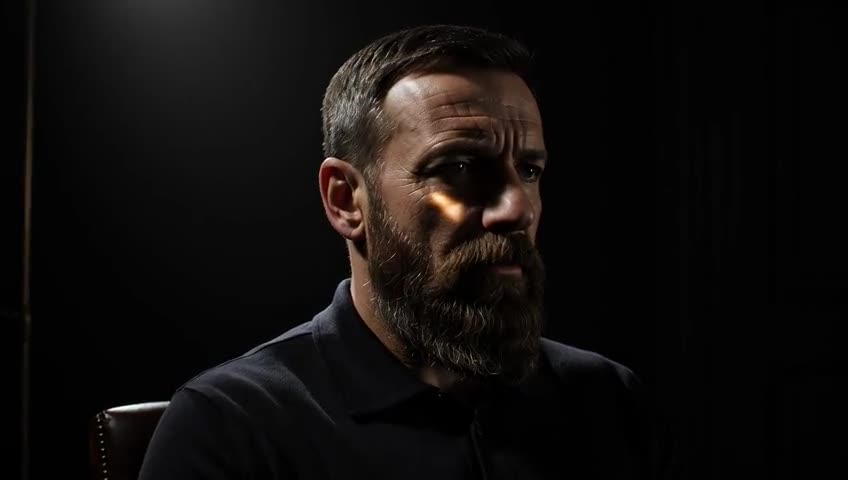
Rembrandt lighting raises the key higher and further around the face until the nose and cheek shadows merge into a small triangle of light on the shadow-side cheek, reading as more dramatic and sculpted than the separate, gentler shadow of loop lighting.
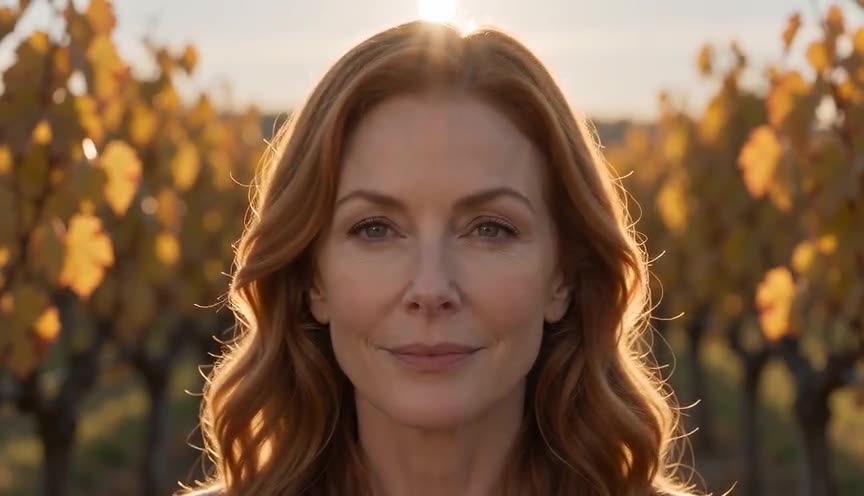
Butterfly lighting moves the key almost directly above and in front of the face, casting the nose shadow straight down under the nose. Loop lighting shifts that same key sideways by 15 to 20 degrees, angling the shadow into a small loop instead.
In film
Casablanca (1942)
Cinematographer Arthur Edeson lights Ingrid Bergman's close-ups with a classic loop pattern, keeping her face soft, symmetrical and instantly sympathetic.
The Social Network (2010)
Cinematographer Jeff Cronenweth uses a tight loop key on dialogue-heavy close-ups, giving the characters a clean, credible look through long scenes of talk.
The prompt
Name the light's position explicitly (45 degrees, slightly above eye level) and describe the nose shadow directly, since generative models do not know lighting pattern jargon well. Mention a soft key source like a large softbox or window, a lower fill light, and keep the background simple so the face reads clearly. Avoid asking for 'dramatic' or 'moody' light, which pushes the model toward Rembrandt or split lighting instead. Reinforce with words like 'gentle', 'soft-edged shadow' and 'front three-quarter face'.
The exact prompt that rendered the video on this page. Keep the description of the move, change the subject and the setting.
Loop lighting on a woman in her fifties shaping clay at a pottery wheel inside a sunlit workshop, camera locked off at eye level in a medium close-up. A large soft key light glows through a window at 45 degrees to her face, casting a small round shadow of her nose that loops onto her cheek without touching her lips, while a lower fill light from the opposite side keeps the shadow gentle. Her hands keep turning the wet clay, dust and light motes drifting through the beam, the camera holding completely still for the full four seconds. No text.
Common mistakes
Key too high
Raising the key too far above eye level pushes the nose shadow onto the upper lip, sliding the look into split or Rembrandt territory instead of a clean loop.
Shadow merges with cheek
If the key sits too far around the face, the nose shadow connects with the cheek shadow and forms a triangle, which is Rembrandt lighting, not loop.
No fill control
Skipping a fill light or reflector lets the shadow side go too dark, turning a soft loop pattern into a harsher, more dramatic look than intended.
Frequently asked questions
What is loop lighting?
Loop lighting is a portrait lighting pattern where the key light sits about 45 degrees to the side and slightly above eye level, casting a small shadow of the nose that loops onto the cheek without touching the mouth. It is one of the most common lighting setups for interviews and dialogue scenes.
How do you set up loop lighting?
Place the key light roughly 30 to 45 degrees from the camera-subject axis and a few inches above the subject's eyeline, then check that the nose shadow falls as a short loop on the cheek. Add fill at a lower intensity to control contrast.
What is the difference between loop lighting and Rembrandt lighting?
In loop lighting the nose shadow stays separate from the cheek shadow. In Rembrandt lighting the key is raised and moved further around the face until both shadows merge into a small triangle of light on the cheek.
Can AI video tools generate loop lighting accurately?
Yes, if you describe the light's angle and the nose shadow explicitly rather than naming the pattern alone. Imaginode's models respond well to concrete cues like '45 degree soft key' and 'shadow loops onto the cheek' paired with a simple background.