The house bought as it was
Orange varnished pine stairs and original wallpaper. The new owners start with the hallway and compare oak and white against oak and black before buying any sanding kit.
A photo of your old staircase with oak treads and white paint, then matte black, same shape and same balusters. To decide before you start sanding. Workflow visible here, no account needed.
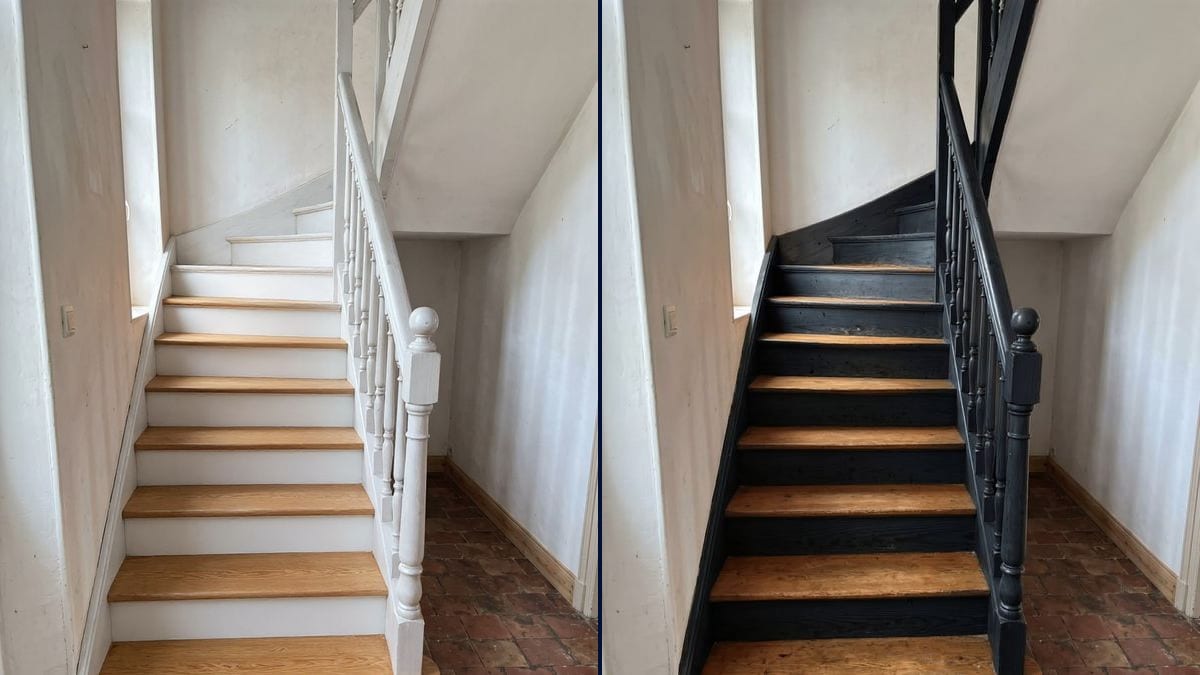
Real workflow: an old orange varnished pine staircase with turned balusters, then the same stairs with light oak treads and everything else white, and with wood treads and everything else matte black. On the white version, the handrail came out white rather than oak.
At a glance
Plenty of houses have one: the old staircase in orange varnished pine. And plenty of owners hesitate before tackling it, because sanding, painting or capping the treads means several weekends and stairs you can't use in between. This workflow starts from a photo of YOUR staircase and shows two makeovers: oak and white, then oak and matte black.
The hard part is keeping the staircase. A model left to itself draws a new one, with different steps and different balusters. The prompt gives every part its own finish and asks for the same shape. Flux Kontext repaints in place and keeps the turned balusters and the floor tiles, even if it doesn't apply every finish to the letter.
For the room around it, see the home staging tool or the paint colour tester. Both makeovers cost twelve credits.
These are the files of the workflow above, exactly as the models produced them, unretouched. The starting point is shown when there is one.
Starting point
Render
Owners of an old wooden staircase, joiners and decorators showing a finish, sellers getting a house ready to list.
A photo of the staircase taken from the bottom, and a finish for each part: treads, risers, stringers, balusters, handrail.
Shoot from the bottom
Standing in the hallway, with the whole staircase in frame, handrail and newel post included, in daylight.
One finish per part
Treads, risers, stringers, balusters, handrail: give each one a finish. That's what stops the model inventing a staircase.
Lock the shape
Write "same shape, same number of steps, same balusters". Otherwise a quarter turn can become a straight flight.
Check the render
Go over each part: in the demo, the handrail we wanted in oak came out white. Run it again if that detail matters to you.
The same canvas, tuned for different needs: each variation is two or three lines of prompt away.
Orange varnished pine stairs and original wallpaper. The new owners start with the hallway and compare oak and white against oak and black before buying any sanding kit.
The joiner photographs the staircase on the first visit and shows the client two finishes on their own stairs. The client knows what they're ordering, capped treads or just paint.
He wants to paint it himself and can't decide between white and black for the balusters. Two pictures of his own staircase save him painting a test patch he'd then have to sand off.
The landlord wants to modernise the hallway before re-letting, without replacing the staircase. The render shows whether white paint is enough to freshen up the listing photos.
The orange staircase is the first thing you see from the front door. The seller shows buyers what a simple makeover would look like, next to the current photo.
A dark wooden staircase makes the living room gloomy. White risers and light treads show whether the room would feel brighter before committing to the work.
"Paint the staircase white" turns everything white, treads included, or produces a new staircase. Give each element its own finish.
In the demo, the handrail we wanted in oak and the treads on the turn came out white. Look over the render part by part before showing it.
Without "same shape, same number of steps", the model may straighten a quarter turn or swap turned balusters for plain square ones.
In the black version, the treads kept the original worn wood, knots and stains included. To see new treads, add "new treads, no wear".
No: same quarter turn, same turned balusters, same ball on the newel post. Only the colours and materials change.
Yes: ask for a seagrass runner down the middle of the treads, or for treads capped in solid oak.
No. Painting turned balusters takes time, and capping treads needs a joiner. Get the render you choose priced up.
Twelve credits, six per render on Flux Kontext. A third finish on the same photo costs six more.
Because it repaints in place and keeps the photo: turned balusters, terracotta floor, window and walls are still yours. The trade-off is that you need to check every part of the render.
Painting is cheaper and can be done yourself; capping the treads in oak needs a joiner. The picture shows the result you're after, not the method.
Yes: light grey, sage green, navy for the risers and balusters. Duplicate the node, six credits a go.
The format of your photo, here 3:4. A staircase is best shot in portrait, from the bottom.
Give your staircase a makeover with AI
Use this workflowFree account, no card required. The workflow opens pre-filled in your canvas.
 Flux Kontext
 Nano Banana 2.1
 GPT Image 2.5 Sunburst