Probe lens
Also calledPeriscope lens, Snorkel lens, Macro probe lens
A probe lens is a long, narrow lens with a tiny front element mounted at the end of a thin barrel, letting the camera get extremely close to a subject while keeping both that subject and the background in deep focus. It gives the viewer a voyeuristic, almost microscopic point of view, pulling them into spaces a normal lens could never physically reach.
What it tells
Directors reach for a probe lens when they want to dissolve the boundary between the audience and a tiny, hidden world: an insect on a table, a crack in a wall, a keyhole. Because it keeps everything in focus at any distance, it feels less like a camera move and more like the frame itself is bending to slip through matter. That impossibility is the point: it signals a shift into a heightened, dreamlike or clinical register.
How it is shot
A probe lens, such as a Laowa 24mm f/14, has a front element as small as a few millimeters mounted on a thin metal barrel 20 to 30 cm long, so the tip can be inserted into gaps, liquids or tight sets without the housing blocking the shot. The very small aperture (often f/14) combined with a wide angle of view gives near-infinite depth of field from a few millimeters to infinity, but it demands heavy lighting to compensate for the light loss. The barrel is mounted on a motorized slider, robotic arm or macro rail so the push through the gap stays perfectly smooth, since any wobble is magnified at extreme proximity.
When to use it
- To glide through a keyhole, a crack in a wall, or a gap in a railing as a scene transition.
- To reveal a small object on a table or floor while the entire room behind it stays in sharp focus.
- To create a surreal, dreamlike push through an impossible space in a title sequence or music video.
- To show a product's surface texture in extreme close-up without losing the context around it.
Not to be confused with
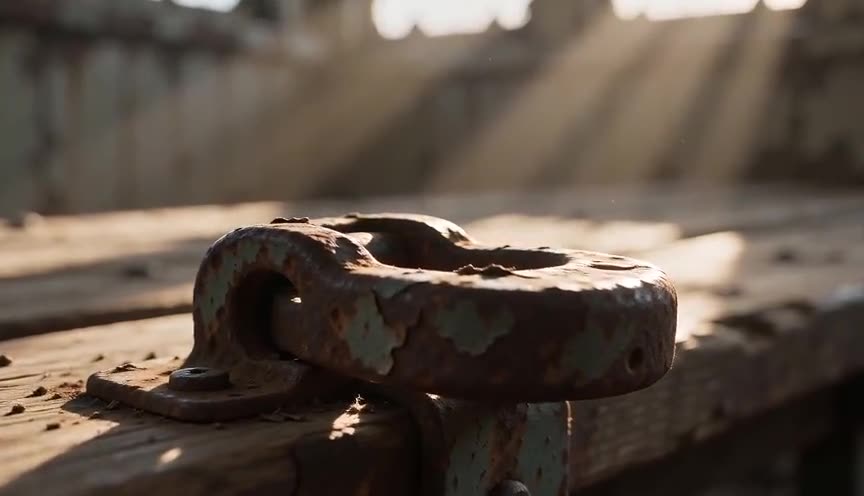
A macro lens also gets very close, but it renders a shallow depth of field that melts the background into blur. A probe lens keeps the background sharp too, which is the trait that makes it look uncanny.
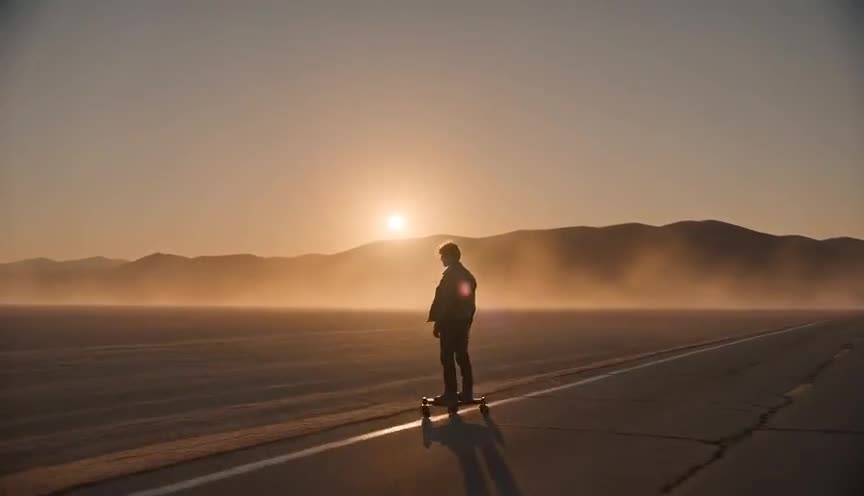
A dolly-in pushes a normal lens toward a subject from a comfortable distance. A probe lens travels inside the space itself, threading through gaps and staying in deep focus at millimeter range.
In film
Star Wars (1977)
ILM used periscope lenses on Dykstraflex motion-control passes for the Death Star trench run, sending the camera inches above miniature surface detail.
Blade Runner (1982)
Douglas Trumbull's effects unit used snorkel and periscope lens motion-control passes over miniature Los Angeles, creating low, close flythroughs with dense city detail.
Babe (1995)
Andrew Lesnie used Jim Frazier's deep-focus snorkel lens for animal-level farm shots, keeping a piglet's close foreground world sharp against the barnyard.
The prompt
Name the lens directly ('probe lens' or 'periscope macro lens') and describe two things at once: something extremely close and in focus, and something far away that stays equally sharp, since that is what separates this from a normal macro or close-up shot. Specify a slow, steady, linear push through a physical gap. Avoid words like 'blurry background' or 'bokeh', which push the model toward shallow depth of field instead.
The exact prompt that rendered the video on this page. Keep the description of the move, change the subject and the setting.
Probe lens shot on a Parisian rooftop at dusk. The tiny lens tip glides forward at a slow, steady pace along a narrow rusted iron railing, so close to the metal that individual rust flecks and paint chips fill the frame in sharp focus, while a distant view of the Eiffel Tower and surrounding rooftops stays equally crisp beyond the railing. The camera continues its push through a narrow gap between two chimney pots, keeping both the foreground texture and the far cityscape in deep focus throughout, with no blur and no cut. No text.
Common mistakes
Wide aperture defeats the look
Shooting with a shallow depth of field blurs the background and turns the shot into an ordinary macro close-up, erasing the deep-focus effect that defines a probe lens.
Moving too fast
Extreme proximity magnifies every bit of speed and vibration into distortion. The push through a gap needs to be slow and mechanically stabilized, not handheld or rushed.
Underlighting the scene
Probe lenses often sit around f/14, so a normally lit set will look dark and noisy. Plan for significantly more light than a standard lens setup requires.
Frequently asked questions
What is a probe lens?
A probe lens is a long, thin lens with a tiny front element that lets the camera get extremely close to a subject while keeping the entire scene, near and far, in sharp focus. It is used to travel through small gaps or reveal tiny details without losing the surrounding context.
Why does a probe lens keep everything in focus?
Its small front element, wide angle of view and very small aperture (often around f/14) combine to give a huge depth of field, so objects a few millimeters away and objects far in the background can appear sharp at the same time.
What equipment does a probe lens shot need?
Beyond the lens itself, most probe shots use a motorized slider, robotic arm or macro rail to move the barrel smoothly, plus extra lighting to compensate for the very small aperture the lens requires.
Can I get a probe lens look with an AI video model?
Yes. Describe the physical trait directly: extreme closeness to a foreground detail with a distant background staying equally sharp, plus a slow linear push through a gap. A platform like Imaginode can render this from a clear, specific prompt.