Macro lens
Also calledMacro photography, Macro shot, Extreme magnification lens
A macro lens is a lens built to focus at very short distances and reproduce a subject at life-size (1:1) magnification or greater on the sensor. It turns small, ordinary details into abstract, tactile compositions that the naked eye would normally pass right over.
What it tells
Directors reach for macro when the story needs the audience to stop and notice: a drop of sweat, a crack in glass, a insect crossing skin. The extreme scale creates intimacy and unease at once, because we rarely see anything this close in real life. It slows the viewer down, forces attention onto texture and decay, and can make an inanimate object feel as charged as a face in close-up.
How it is shot
True macro lenses (commonly 60mm to 105mm on full frame) focus down to a few centimeters and hit 1:1 magnification, meaning the subject on the sensor is the same physical size as in life. Depth of field collapses to a few millimeters even at f/8 or f/11, so a focus rail, slider or motorized rig is used to creep the lens forward and keep the plane of focus on target. Because the lens sits so close, standard lighting throws shadows onto the subject, so small LED panels, ring lights or fiber optic lights are rigged near the lens axis. Any camera shake reads as a violent earthquake at this scale, so shots are locked off or moved at a fraction of normal speed.
When to use it
- Revealing texture, decay or wear on an object that carries story weight, like rust or torn fabric.
- Building dread or fascination around insects, water droplets or small mechanisms before a reveal.
- Opening or closing a scene on a tiny detail to signal scale, time passing or hidden danger.
- Cutting away from dialogue to a tactile insert that grounds the audience in a physical world.
Not to be confused with

Extreme close-up is a framing choice, achievable with almost any lens by moving close or cropping. Macro lens is the optical tool that lets that framing hold true focus and real magnification at distances no standard lens can manage.
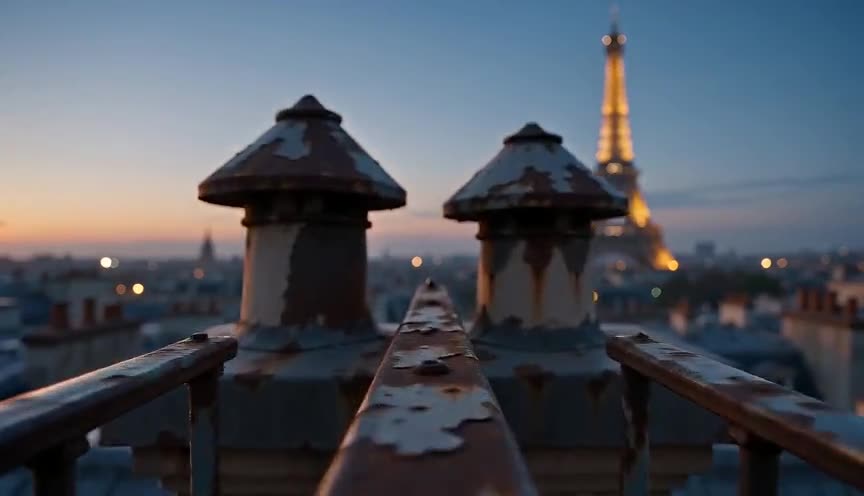
A probe lens pushes a thin optical tube into tight spaces to move the camera through a scene while staying in focus. Macro lens magnifies a static or slow subject; probe lens is built for movement inside confined, often impossible camera positions.
In film
Microcosmos (1996)
The entire documentary is shot with custom macro rigs, turning insects and dewdrops into a full-scale cinematic world of drama and texture.
Phase IV (1974)
Ken Middleham's macro photography makes ants appear monumental, observing their communication, labor, and attacks with scientific precision and eerie cinematic scale.
The prompt
Name the lens explicitly ('macro lens', 'extreme close focus', '1:1 magnification') because generic 'close-up' often reads as a normal portrait crop, not true macro scale. Describe a small, specific subject with visible texture (rust, moss, cracked paint, water droplets) and state that depth of field is only a few millimeters so everything else falls into soft blur. Mention slow, minimal camera movement and close directional light, since fast motion or flat lighting breaks the illusion.
The exact prompt that rendered the video on this page. Keep the description of the move, change the subject and the setting.
Macro lens shot of a corroded metal latch and flaking paint on an abandoned train station bench, camera locked at extreme close focus with life-size magnification, depth of field only a few millimeters so the wood grain behind dissolves into soft blur, dust motes drifting through a low shaft of window light, the lens creeping forward barely a centimeter over four seconds to reveal deeper rust texture, warm side light raking across the metal surface. No text.
Common mistakes
Faking it with digital zoom
Cropping into a wide shot in post gives soft, mushy detail instead of true macro sharpness, because no real close-focus optics were used to resolve the texture.
Lighting the subject from too far away
Standard lights positioned for normal shots leave the lens barrel itself casting a shadow on a subject this close, so light needs to sit right next to the lens axis.
Moving the camera at normal speed
At extreme magnification, ordinary handheld motion or dolly speed reads as violent shaking, so movement must be a fraction of typical speed or locked off entirely.
Frequently asked questions
What is a macro lens?
A macro lens is a lens designed to focus at very short distances and reproduce a subject at 1:1 magnification or greater, meaning the subject appears on the sensor at its true physical size. It reveals texture and detail that standard lenses cannot resolve up close.
How is a macro lens different from just zooming in close?
A macro lens maintains sharp focus at true close distances and captures real magnification of fine texture. Digital zoom or a standard lens pushed too close either loses focus entirely or produces soft, low-resolution detail instead of crisp magnification.
Can an AI video model generate a convincing macro shot?
Yes, if the prompt names the lens, the magnification, and the shallow depth of field explicitly. Tools like Imaginode respond well to concrete texture descriptions (rust, droplets, cracked surface) paired with a stated focus distance.
What focal lengths count as macro in real filmmaking?
True macro lenses typically run from 60mm to 105mm on full frame sensors and are rated for 1:1 or greater magnification. Some specialty probe or macro zoom lenses go further, but the defining trait is the magnification ratio, not the focal length itself.