Deep focus
Also calledDeep depth of field, Everything-in-focus shot
Deep focus is a cinematographic technique that keeps foreground, midground and background all in sharp focus at the same time. It lets the viewer scan the whole frame and decide where to look, instead of being pointed there by a focus pull.
What it tells
Deep focus treats the frame as a stage rather than a sequence of close-ups. It lets a director stage two conversations at once, one near the lens and one far behind it, and trust the audience to read both without a cut. This gives scenes a documentary honesty and a sense that the world keeps existing outside the main subject. It also builds tension through composition: a threat can sit sharp and small in the background while the foreground character remains unaware.
How it is shot
Deep focus needs a small aperture, typically f/8 to f/16, which reduces the light hitting the sensor, so the set is lit hard and bright, often 2 to 3 stops over normal exposure, to compensate. A wide or standard lens (18mm to 35mm) helps, since focal length and aperture both drive depth of field. Camera and blocking are planned together: actors and set pieces are placed on distinct planes, often 3 to 10 meters apart, so all of them read clearly. On digital cameras, a larger sensor pushed to a higher f-stop or a shorter focal length gets the same result; on film, this historically meant faster stocks and heavier lighting rigs.
When to use it
- Staging two actions on different planes that the audience must connect without a cut
- Establishing a location where background detail carries plot or character information
- Building dramatic irony by keeping a threat visible and sharp behind an unaware subject
- Shooting a master shot meant to hold the whole scene in one continuous take
Not to be confused with
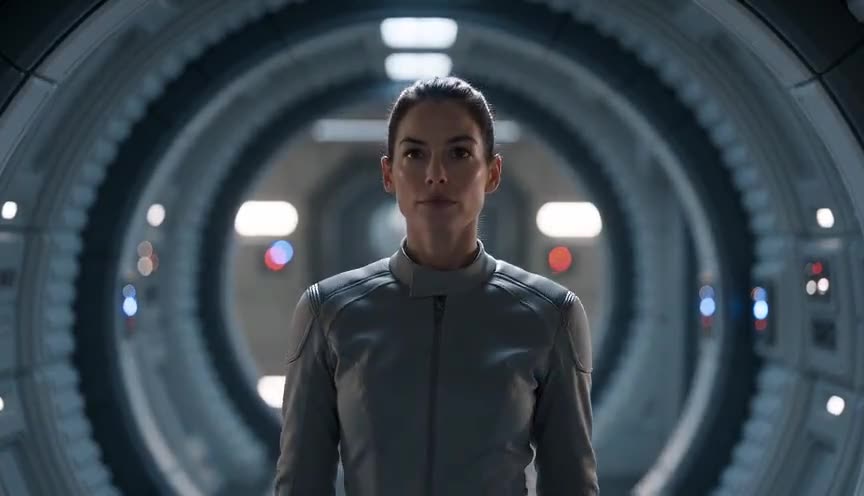
Shallow depth of field isolates one plane and blurs the rest, directing attention by exclusion. Deep focus does the opposite: it keeps every plane legible and lets the viewer choose, which suits scenes with layered staging.
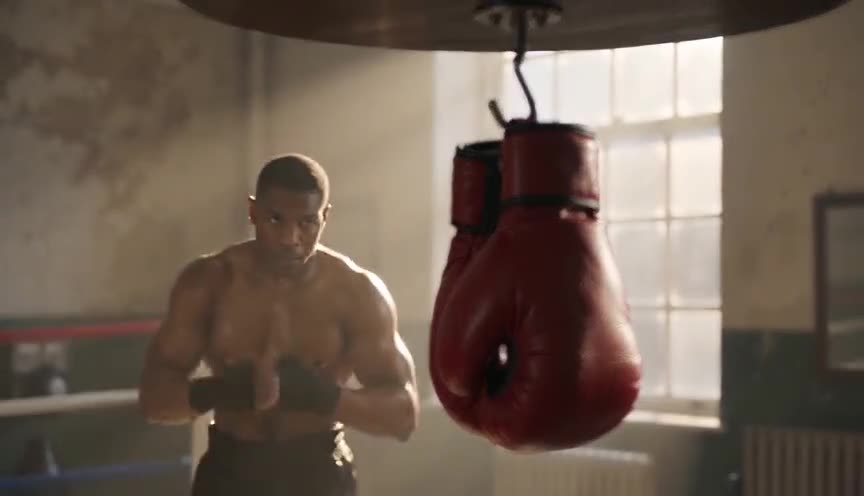
Rack focus shifts sharpness from one plane to another during a shot to redirect attention over time. Deep focus keeps all planes sharp simultaneously, so no shift is needed and the whole frame stays readable at once.
In film
Citizen Kane (1941)
Gregg Toland's cinematography famously keeps a foreground object, a mid-ground actor and a background actor all in sharp focus within the same shot.
The Best Years of Our Lives (1946)
William Wyler and Gregg Toland keep Homer at the piano in the foreground and Fred in the rear phone booth sharp during the bar scene.
The prompt
Name the aperture behavior directly: say the whole frame stays sharp from a close object to the far horizon, no blur on any plane. Describe at least three distinct planes (something near the lens, a middle subject, a distant background) so the model has depth to render sharply. Mention bright, even light, since deep focus reads as a hard, well lit image. Avoid words like bokeh, blurred background or shallow, which push the model toward the opposite effect.
The exact prompt that rendered the video on this page. Keep the description of the move, change the subject and the setting.
Deep focus shot on an Icelandic black sand beach at midday, camera locked on a tripod at knee height. In the foreground, wet volcanic rocks sit sharp just centimeters from the lens; in the midground, a woman in a dark wool coat walks slowly along the shoreline, fully in focus; in the background, jagged sea cliffs and crashing waves remain crisp all the way to the horizon. Flat, bright overcast light with no haze. Nothing blurs at any distance, the whole frame stays evenly sharp for the full four seconds, only the woman and the waves move. No text.
Common mistakes
Using a long lens
Telephoto focal lengths compress depth of field no matter how small the aperture is, which fights deep focus. Choose a wide or standard lens to get real depth in the frame.
Underlighting the set
Small apertures cut a lot of light, and a dim set forces the lens open again, destroying the effect. Deep focus scenes need strong, often harsh, lighting to work.
Flat blocking
If every actor stands at the same distance from the camera, deep focus has nothing to show off. Stage subjects on clearly separated planes so the sharpness actually reads as depth.
Frequently asked questions
What is deep focus?
Deep focus is a technique that keeps near, middle and far elements of a shot all sharp at once, using a small aperture and often a wide lens, so the viewer can look anywhere in the frame without losing detail.
How is deep focus different from a wide lens shot?
A wide lens widens the field of view but does not guarantee sharp focus throughout; deep focus specifically requires a small aperture and enough light to keep every plane crisp, regardless of how much is included in frame.
Why did Citizen Kane make deep focus famous?
Gregg Toland pushed then-new fast film stocks and heavy lighting to keep foreground, middle and background actors sharp in single shots, letting Orson Welles stage complex scenes without cutting between them.
Can AI video tools generate deep focus?
Yes. On Imaginode, describing the aperture behavior explicitly (sharp from near object to distant horizon, no blur on any plane) and giving the model at least three distinct depth layers produces a convincing deep focus result.