Split diopter
Also calledDiopter shot, Split-field diopter
A split diopter is a half-lens attachment fitted over part of the main lens that keeps a very close foreground subject and a distant background subject both in sharp focus in the same shot. It lets the viewer read two actions or two faces at once, without a cut or a rack focus.
What it tells
Directors reach for the split diopter when they want the audience to hold two dramatic threads in a single glance, comparing a face in the foreground to an event unfolding behind it. It builds suspense through simultaneity: nothing is hidden, nothing needs a cut, and the tension comes from watching two things collide in one frame that the eye cannot fully process at once.
How it is shot
A semicircular half-lens (typically +1 to +3 diopters) mounts in the matte box, covering only part of the main lens, usually a 40mm to 75mm prime. The other half stays clean, so each half of the frame focuses at a different distance. The lens closes down to around f/5.6 to f/8 to widen depth of field on both sides, and focus is pulled to sit between the two subjects, one placed 2 to 4 feet from camera and the other 10 to 20 feet back. The seam between the two focus zones is a soft blur ring, hidden along a vertical edge in the set (a doorway, a pole, a shelf) so the eye never notices the trick.
When to use it
- Two characters at very different distances both need to read sharp in one continuous shot
- A cook chopping in the foreground and the head chef shouting orders across the kitchen
- A hidden threat or reaction needs to stay visible in the background while foreground action holds focus
- Surveillance or eavesdropping scenes where the watcher and the watched must both stay sharp
Not to be confused with
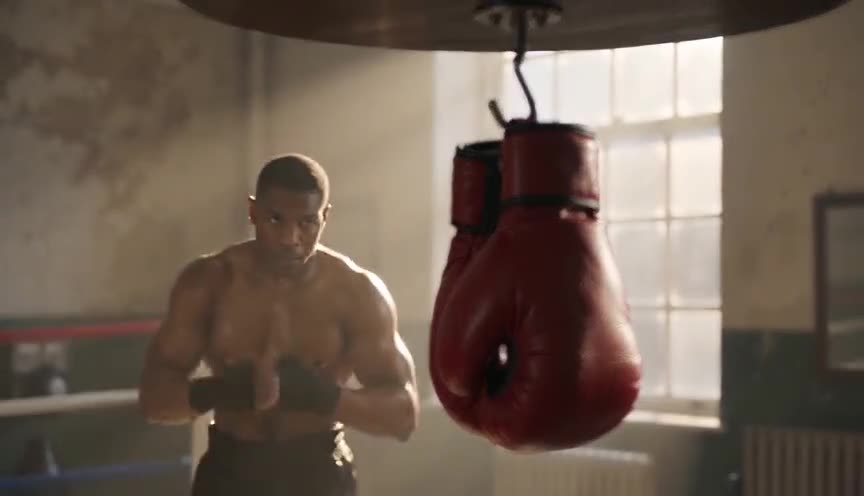
Rack focus shifts focus from one subject to another over time, so only one is sharp at any moment. Split diopter holds both sharp at once, no shift, no waiting.
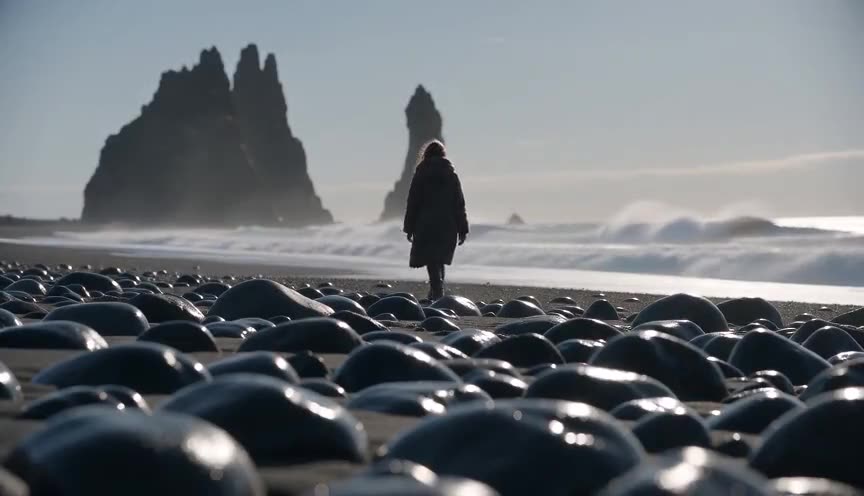
Deep focus uses a small aperture and wide lens to keep an entire scene reasonably sharp with no hard line. Split diopter creates two distinct sharp zones with a visible seam between them.
In film
Blow Out (1981)
Brian De Palma's signature use, keeping a foreground detail and a distant clue equally sharp to build paranoia.
Carrie (1976)
De Palma again pairs a close reaction with a background event, letting dread build in both planes at once.
The prompt
Name the technique directly and describe the optical seam: a close object or face sharp near the lens, a distant subject sharp behind it, and a faint vertical blur band between them hidden against an edge in the set. Keep the camera static or nearly still so the two focus zones do not drift. Avoid asking for a soft, shallow, single-focus look, that defeats the effect; specify that both planes stay in crisp focus simultaneously.
The exact prompt that rendered the video on this page. Keep the description of the move, change the subject and the setting.
Split diopter shot in a busy ramen kitchen: a line cook's hands chopping scallions fill the extreme foreground in sharp focus, four feet from the lens, while the head chef shouting orders at the pass stays equally sharp fifteen feet back near the steaming broth pots. A faint soft blur seam runs vertically along the edge of a hanging pot rack between them, invisible against the metal shelf. The camera stays locked off, steam drifting through both planes, no rack focus, no drift. No text.
Common mistakes
Visible seam
Placing the blur transition in open space instead of hiding it along a vertical edge like a doorway or shelf makes the optical trick obvious and distracting.
Wrong aperture
Shooting too wide open, like f/1.4, leaves each half of the frame with its own shallow falloff, so neither subject reads fully sharp even with the diopter attached.
Loose blocking
Letting either subject drift off their marked distance breaks the calculated focus planes, and one side slips soft mid shot.
Frequently asked questions
What is a split diopter?
It is a half-lens attachment placed over part of the main camera lens that lets a very close subject and a distant subject both stay in sharp focus in the same shot, without cutting or racking focus between them.
How is split diopter different from rack focus?
Rack focus moves the focus point from one subject to another over time, so only one is sharp at a time. Split diopter holds both subjects sharp simultaneously using two different optical zones in one lens.
Can you fake a split diopter in editing or CGI?
Yes, compositing two separately focused plates or using depth-based sharpening in post can mimic the look, but the in-camera version avoids matching light and perspective by hand.
Do AI video models understand split diopter?
They respond best when you describe the two sharp planes and the hidden blur seam explicitly rather than just naming the technique. On Imaginode, spelling out distances and where the seam hides against an edge gets a cleaner result.