Snow
Also calledFalling snow, Snowfall effect, Snow atmosphere
Snow is an atmospheric effect in which falling flakes drift through the frame and settle on surfaces, softening edges and muffling the visual field. It slows the rhythm of a shot and signals cold, isolation, or the quiet passage of time to the viewer.
What it tells
Snow works as an emotional shorthand for stillness, isolation, and the passage of time. A scene that opens on falling snow immediately reads as cold, hushed, and reflective, whether the story is a tense thriller or a quiet drama. Directors use it to slow the audience down, to blanket a location in silence, or to mark a turning point where the world outside stops mirroring the urgency inside a character.
How it is shot
On set, snow is created by SFX crews using paper flake or biodegradable soap-flake machines, foam snow guns for exteriors, or fine plastic chips blown through a wind machine to control drift speed and density. A backlight or three-quarter backlight placed behind the falling snow makes each flake catch the light and read against a darker background; without that rim of light, snow disappears into the frame. Ground dressing (real snow, foam, or crushed ice) extends the effect below the actors. Cinematographers often place a few flakes close to the lens on a longer focal length so they blur into soft discs in the foreground while background flakes stay sharp, giving the shot real depth. Dry ice smoke and visible breath extend the illusion of cold.
When to use it
- Opening a scene that needs to feel isolated, quiet, or cut off from the outside world.
- Marking a turning point in the story where time seems to slow down or pause.
- Building a wintry setting for exteriors, funerals, or reflective character moments.
- Adding texture to a studio shoot when the story needs a snowbound mood without leaving the stage.
Not to be confused with

Rain streaks fast, catches light as sharp lines, and often signals urgency, conflict, or cleansing; snow drifts slowly, muffles sound, and settles rather than streaks, reading as stillness or memory instead of turmoil.
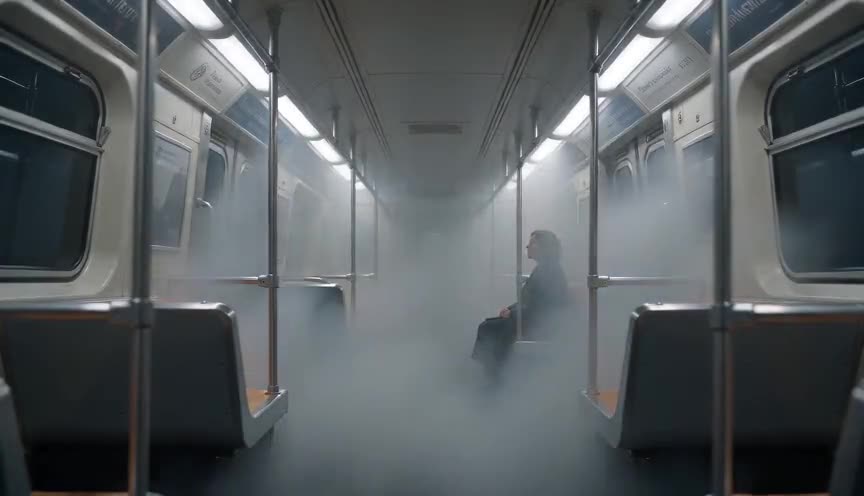
Fog softens the whole frame with a uniform haze that hides depth and distance; snow is made of discrete particles that fall and accumulate, adding motion and texture in the air without erasing what lies behind it.
In film
Fargo (1996)
Persistent snow-covered plains and roads set the isolated, deadpan tone that runs through the entire film.
The Revenant (2015)
Practical snow and real blizzard conditions define the physical ordeal at the center of the survival story.
Let the Right One In (2008)
Quiet, persistent snowfall around a housing estate mirrors the isolation and coldness of the two young leads.
The prompt
Name the technique directly (snow, falling snow) and describe its physical behavior: density (light flurry versus heavy fall), speed of drift, and how it meets light (backlit flakes glowing, or dark flakes against a bright sky). Specify a wind pattern or still air, and mention where the snow lands (shoulders, ground, gear) so the model keeps it consistent across the frame. Avoid vague words like 'wintry' alone; state the visible flake size and the light source that reveals it, or the model may render a generic white haze instead of falling snow.
The exact prompt that rendered the video on this page. Keep the description of the move, change the subject and the setting.
Snow: inside a padded recording studio, a woman in her thirties sings into a vintage microphone as a practical snow machine overhead releases a soft flurry of white paper flakes that drift down through a shaft of cool backlight, each flake catching a bright rim as it falls past her shoulders and settles on the floor and acoustic panels. The camera stays locked on a static tripod at eye level, the flakes moving slowly through frame while the singer remains still, sound baffles and cables visible in the soft-focus background. No text.
Common mistakes
Generic white haze
Without discrete flakes and a light source to reveal them, the render turns into a flat foggy overlay instead of visible falling snow with real motion.
No depth cues
Making every flake the same size and sharpness flattens the shot; without near-lens blur against sharper background flakes, the snow looks pasted on rather than three-dimensional.
Wrong light direction
Lighting the snow only from the front lets flakes vanish against a bright sky or blown-out highlights, losing the rim light that makes falling snow readable on camera.
Frequently asked questions
What is snow as a cinematic technique?
It is an atmospheric effect where falling flakes move through the frame and settle on surfaces, created on set with paper or soap-flake machines and revealed by backlight. It signals cold, stillness, or the passage of time without a line of dialogue.
How is snow simulated on a film set?
SFX crews use biodegradable paper or soap-flake machines, foam snow guns for wide exteriors, and wind machines to control how the flakes drift. Ground dressing with real or fake snow extends the effect below the actors and props.
Why do directors use snow in a scene?
Snow slows the visual rhythm of a shot, muffles the implied sound of a place, and reads instantly as cold or isolated. It is often used to mark a turning point or to give a quiet moment more emotional weight.
How do I get realistic snow from an AI video model?
Describe the flake size, fall speed, and the light hitting them, and state where the snow lands, rather than just writing 'snowy scene'. Tools like Imaginode let you test a few phrasings quickly to see which one keeps the flakes visible and consistent across the four seconds.