Atmospheric haze
Also calledAtmospheric perspective, Aerial haze, Diffusion haze
Atmospheric haze is a thin veil of particles (moisture, dust, smoke, pollution) suspended in the air between the camera and the subject that softens contrast and color the farther an object sits from the lens. It reads to the viewer as depth and distance, and it lends a scene a muted, melancholic or dreamlike quality even before anything else happens in the frame.
What it tells
Haze does the work of a location scout and a colorist at once: it separates planes without a single cut, pushing the background toward pale, low-contrast grey while the foreground keeps its color and edge. Directors reach for it to suggest memory, distance, time passing, or a world slightly out of reach, because the eye reads reduced contrast as 'far away' long before it reads any story information. It is atmosphere as staging.
How it is shot
On set, haze comes from atmospheric smoke or fog machines diffused into a very thin, even wash (far less dense than fog for concealment), from natural conditions like morning mist, dust, or distant wildfire smoke, or from shooting into backlight so airborne particles scatter light. A long lens (85mm to 200mm) compresses distance and exaggerates the falloff between sharp foreground and washed-out background. Contrast and saturation naturally drop with distance, so grading should not fully correct it: lifting blacks slightly and desaturating the far background in post reinforces the effect. Backlight or a low sun angle makes the haze visible as it scatters; front light tends to flatten it.
When to use it
- Establishing a landscape where you need visible depth between foreground, middle ground and horizon
- Suggesting memory, nostalgia or a story being told in retrospect
- Softening a harsh location so the wide shot feels calmer or more painterly
- Separating a character from a busy or repetitive background without changing the lens
Not to be confused with
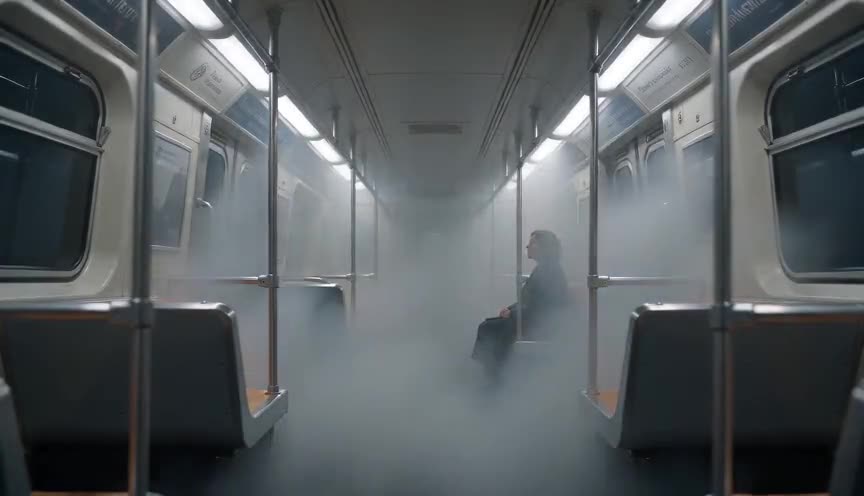
Fog is dense enough to obscure shapes and can hide or reveal a subject; haze is much thinner and mainly softens color and contrast with distance rather than hiding anything.
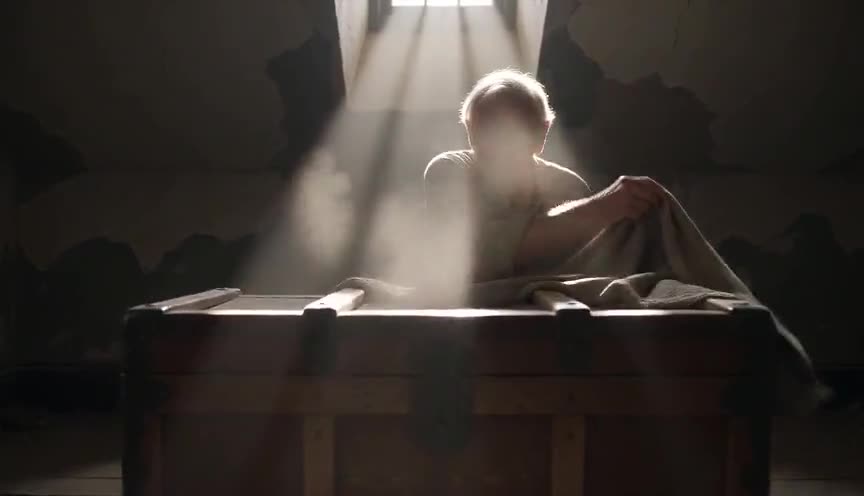
Dust motes are individual visible particles catching light in a beam, usually indoors and close to camera; haze is an even atmospheric wash affecting distant planes across a whole exterior.
In film
Blade Runner 2049 (2017)
Uses a persistent haze across exterior scenes to flatten distant structures into pale silhouettes, reinforcing the film's sense of depth and decay.
The Assassination of Jesse James by the Coward Robert Ford (2007)
Roger Deakins uses diffused, hazy backlight in wide prairie shots to soften the horizon and give the frontier a mournful, painterly distance.
The prompt
Name the haze explicitly and describe where it lives in the frame: sharp and colorful in the foreground, progressively paler and flatter with distance. Mention a light source behind or beside the haze (low sun, dawn light) so the model renders scattering, not just fog. Avoid words like 'foggy' or 'smoky' unless you want a thicker effect; specify 'thin', 'pale' or 'soft' haze instead. Keep camera movement minimal or static so the depth falloff reads clearly in four seconds.
The exact prompt that rendered the video on this page. Keep the description of the move, change the subject and the setting.
Atmospheric haze drifts across a vineyard in autumn at dawn, thinning the low backlight into a soft pale grey-white wash. The camera holds a static wide shot down a row of vines with turning red and gold leaves in the foreground, sharp and richly colored, while rows twenty and thirty meters back dissolve into flat, pale silhouettes with almost no visible detail. A middle-aged worker in a heavy coat walks slowly between the rows, her shape growing softer and less defined the farther she moves from camera until she is swallowed by the haze. No text.
Common mistakes
Haze too thick
Overdoing density turns haze into fog and hides the very depth cues it is meant to create; keep it thin enough that distant shapes are visible, just pale.
Wrong light direction
Front-lighting the haze makes it nearly invisible on camera; haze needs backlight or side light at a low angle to scatter and become visible.
Over-correcting in the grade
Pushing contrast and saturation back up in post erases the depth separation haze created on set, defeating the purpose of shooting it in the first place.
Frequently asked questions
What is atmospheric haze?
It is a thin layer of airborne particles between camera and subject that reduces contrast and color the farther away something is, which the eye reads as depth and distance in a shot.
How is atmospheric haze different from fog in cinematography?
Fog is dense enough to obscure or conceal shapes, while haze is much lighter and mainly affects color and contrast gradually with distance, leaving distant objects visible but pale and flat.
What lens works best for shooting atmospheric haze?
Longer lenses, roughly 85mm to 200mm, compress distance and make the falloff between sharp foreground and washed-out background more pronounced, which reads as haze more convincingly on screen.
Can AI video tools generate atmospheric haze accurately?
Yes, models like those used on Imaginode render haze well when the prompt specifies where the haze sits in the frame, the light direction behind it, and how distant elements should pale and flatten.