Dust motes
Also calledfloating dust, dust particles in light, light beam dust
Dust motes are tiny particles of dust or debris made visible as they float and drift through a beam of light, usually a shaft of sun or a spotlight cutting through a darker room. They give empty air a physical, weighted presence and slow the viewer down to notice a space they might otherwise ignore.
What it tells
Directors use dust motes to slow an audience down and make an ordinary room feel lived-in, sacred or haunted. Because the particles only appear against a beam, they read as a small revelation, a private detail the camera lets you notice rather than something staged for you. The effect suggests time passing, memory, or silence, and it works especially well right before or after a big emotional beat, when the scene needs to breathe.
How it is shot
Dust motes appear when a hard, directional light source, a window, a spotlight, a projector beam, crosses a darker room at an angle to the camera, so the beam itself becomes visible (backlight or side light at 45 to 90 degrees to the lens works best). On set, a stagehand often tosses fine chalk, flour or a haze machine's particulate into the air just before the take. A longer lens (85mm to 135mm) with a wide aperture (f/1.4 to f/2.8) compresses the beam and softens the specks into floating dots rather than sharp debris. Shutter speed near 1/48 or 1/50 keeps the motion natural, and a light haze in the air helps the beam register clearly on camera.
When to use it
- A quiet room needs to feel inhabited by time or memory without dialogue to carry the mood.
- A single shaft of window or spotlight light needs a physical, three-dimensional presence in the frame.
- A transition into flashback or reverie benefits from a soft, floating texture that slows the eye.
- A still or slow shot needs a small source of movement to keep the frame from feeling dead.
Not to be confused with
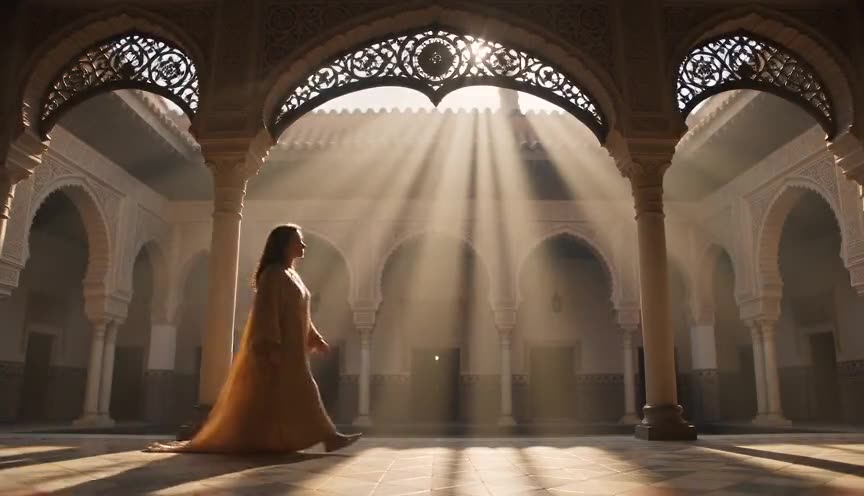
Volumetric light is the visible beam itself, shaped by haze or smoke in the air. Dust motes are the tiny bright specks floating inside that beam, and a clean beam can exist with no motes at all.
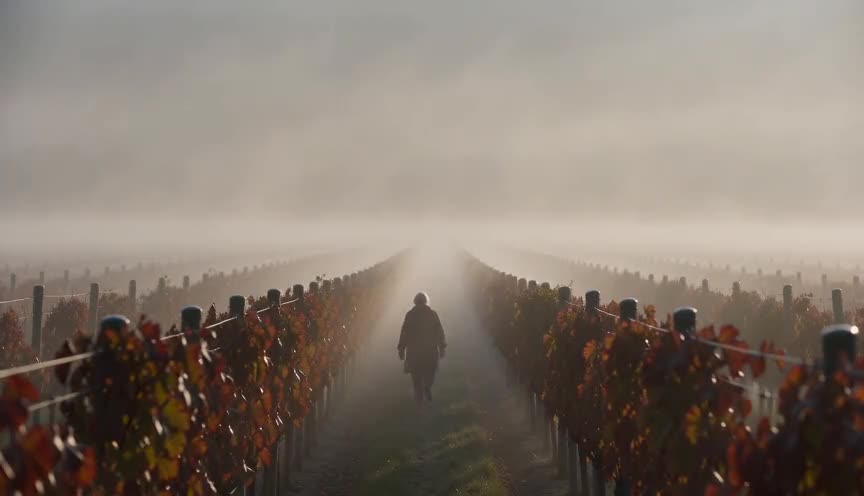
Atmospheric haze thickens the whole air with a soft, even fog that reduces contrast across the frame. Dust motes are discrete, sparkling particles that need a hard beam to become visible, not a diffuse haze.
In film
There Will Be Blood (2007)
Robert Elswit lets dust drift through sunlit windows and derrick sheds, giving the frontier interiors a tactile, sun-baked texture.
Days of Heaven (1978)
Nestor Almendros and Haskell Wexler backlight harvest dust and chaff, making the prairie air shimmer around the workers in late afternoon light.
The prompt
Name the light source and its direction explicitly, a window, a spotlight, a projector beam, so the model has something for the dust to cross. Ask for 'fine floating dust motes' or 'visible dust particles in a light beam' rather than just 'dust,' which some models render as dirt or ground clutter instead. Pair it with backlight or side light and a shallow depth of field so the beam reads clearly, and avoid piling on fog or smoke unless you actually want a thicker, hazier look.
The exact prompt that rendered the video on this page. Keep the description of the move, change the subject and the setting.
Dust motes. In a dark old attic, one strong beam of sunlight comes through a small window, and thousands of tiny glowing dust particles float slowly and sparkle inside the beam. An old man in the shadow lifts a sheet off a trunk and a new cloud of glittering dust rises into the light. Macro detail on the particles, slow push in. No text.
Common mistakes
No visible beam
Dust only reads on camera when it crosses a hard, directional light source. Without a beam, the room just looks grainy or dirty rather than atmospheric.
Overloading with fog
Adding heavy haze or smoke turns fine dust motes into a thick fog bank, hiding the sparkle and killing the delicate, quiet effect the technique relies on.
Wrong lens or aperture
A wide lens at a small aperture keeps every speck in sharp focus and looks like debris. A longer lens and a wide aperture let the motes soften into gentle floating dots instead.
Frequently asked questions
What are dust motes in filmmaking?
Dust motes are tiny airborne particles that become visible when they float through a beam of light in a darker room. Filmmakers use them to add texture, depth and a sense of stillness or time passing to a shot.
How do you create dust motes on a film set?
Crews usually toss fine chalk, flour or haze machine particulate into the air just before rolling, then light it with a hard, directional source like a window or spotlight so the beam and the drifting particles both become visible on camera.
Why do dust motes look better with backlight?
Backlight sends light straight toward the lens, so every particle crossing the beam catches a bright rim of light against a darker background. Front light or fill light tends to wash the same particles out and hide them.
Can AI video tools generate dust motes convincingly?
Yes, if the prompt names a clear light source and direction and asks for fine floating particles inside that beam. Tools like Imaginode handle it well when the beam, the backlight and the dark background are all described explicitly.