Sparks and embers
Also calledember VFX, flying sparks, fire embers
Sparks and embers are small glowing fire particles, drifting or shooting through the frame, that add motion, danger, and warmth to a scene without altering the main action. They pull the eye toward foreground or background depth and signal heat, destruction, or magic without a single line of dialogue.
What it tells
Sparks and embers turn stillness into danger or wonder. A blacksmith's hammer, a burning building, a dying campfire: each throws light and motion into the dark, reminding the viewer that fire is alive and unpredictable. Directors use the drift of embers to slow a moment down, to mark a turning point (a world ending, a spell cast, a memory fading), or to give texture to an otherwise flat night shot. The particles carry emotion the actors cannot: nostalgia, threat, transformation, simply by rising, curling, and disappearing into black.
How it is shot
On set, sparks come from practical sources: an angle grinder against metal, a welding rig, a spark box spinning steel wool, or a small pyrotechnic charge. Embers usually rise from a real fire or a smoke machine loaded with glowing particulate. The camera favors a long lens, 85mm to 200mm, to compress the particles against a dark background and turn them into soft points of light, often shot at a slower shutter angle to add a trailing streak. A single hard backlight makes each spark visible while the rest of the frame stays underexposed, so the embers read as the brightest, most alive element. In CGI, artists simulate the same physics, gravity, wind, and burn-out timing, layered into the plate.
When to use it
- Use when a fire, forge, or explosion needs to feel physically present and dangerous rather than decorative.
- Use to mark a turning point, a building collapsing, a spell being cast, a world ending.
- Use in a quiet night scene to add movement and warmth without changing the blocking of actors.
- Use to give depth to a flat background by scattering small points of light between camera and subject.
Not to be confused with
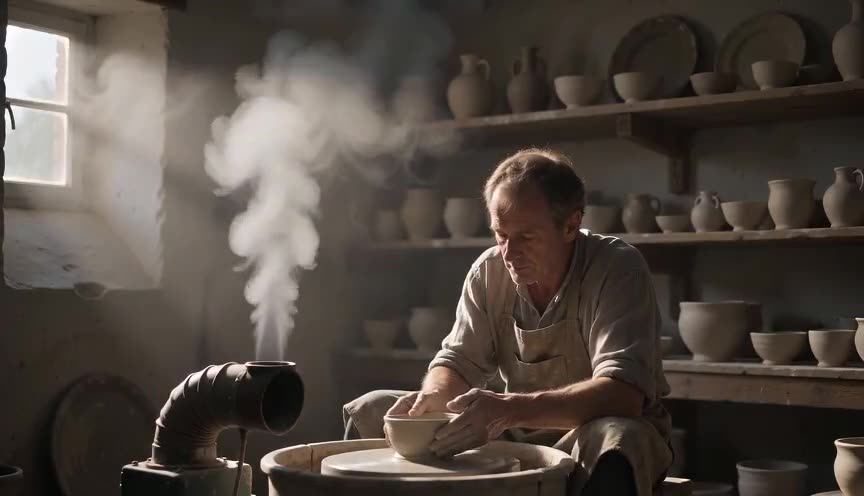
Smoke drifts as a soft, continuous volume that diffuses light and hides shapes; sparks and embers are discrete, bright points that pop against darkness and always suggest active heat or fire nearby.
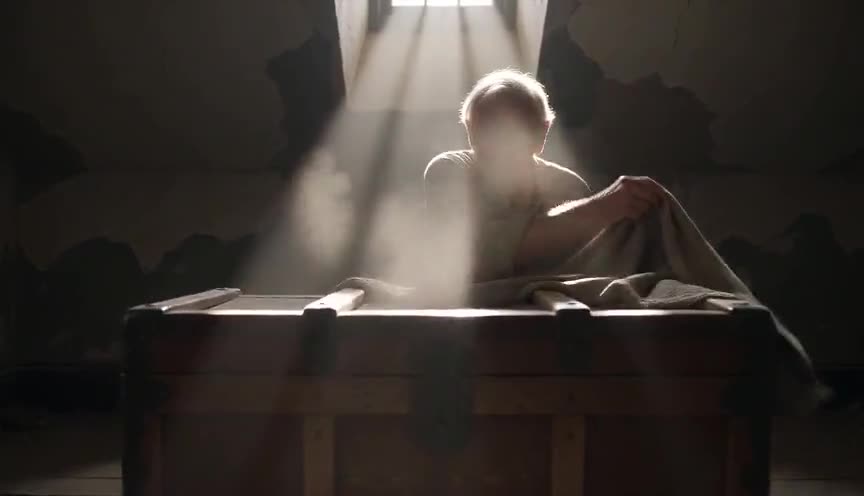
Dust motes are tiny, slow, cool-toned particles lit by a single shaft of light, usually indoors and harmless; sparks and embers are warm, fast, and tied specifically to fire, danger, or destruction.
In film
Mad Max: Fury Road (2015)
Welding sparks and engine sparks punctuate the War Rig's mechanical chaos, reinforcing the film's tactile, practical aesthetic.
Terminator 2: Judgment Day (1991)
The steel mill climax surrounds the T-800 and T-1000 with showers of sparks and molten glow as machinery and metal impacts intensify the danger.
The Lord of the Rings: The Fellowship of the Ring (2001)
The Balrog's arrival in Moria throws sparks and embers through the frame, making the bridge confrontation feel hot, deep, and mythic.
The prompt
Name the source of the sparks (welding, fire, grinder, embers rising from ash) so the model knows their color, speed, and density. Specify a long lens and a dark or underexposed background: sparks read weakest in a bright, evenly lit frame. Mention drift direction (rising, blown sideways by wind) and a trailing streak if you want motion blur. Avoid asking for sparks near people's faces or aimed at a person; keep them in open air, water, or against architecture, and let the model handle exact particle counts on its own.
The exact prompt that rendered the video on this page. Keep the description of the move, change the subject and the setting.
Sparks and embers. In a dark blacksmith forge, a smith hammers a glowing orange piece of iron on an anvil; every hit throws showers of bright sparks flying across the frame, and small glowing embers drift slowly upward through the dark air around him. Slow motion, warm firelight, cinematic. No text.
Common mistakes
Overlit background
If the rest of the frame is too bright, sparks lose contrast and look like flat white dots instead of glowing points of heat.
Static, evenly spaced sparks
Real embers rise unevenly, curve with air currents, and fade at different times; uniform, mechanical-looking particles break the illusion instantly.
Sparks near faces or hands
Directing sparks toward a performer's face or aiming them like a weapon reads as unsafe and pulls focus from the story; keep them in open space.
Frequently asked questions
What is the sparks and embers effect in film?
It is the use of small glowing fire particles, drifting or flying through frame, added practically on set or digitally in post, to suggest heat, danger, or a fading world without dialogue.
Are sparks and embers usually real or CGI?
Both. Many productions still use practical sparks (welding, spark boxes, pyrotechnics) for realistic bounce light on faces, then add CGI embers in compositing for density, safety, or shots too risky to shoot for real.
Can AI video tools generate sparks and embers convincingly?
Yes, tools like those on Imaginode can render drifting sparks and embers when the prompt names the fire source, the lens, and the underexposed background; results are strongest in short, simple shots rather than crowded scenes.
What lens and light work best for sparks and embers?
A long lens, 85mm and up, compresses the particles against a dark background, and a single backlight or the fire itself as the only strong source keeps the sparks the brightest thing in frame.