Steam
Also calledVapor, Steam vents, Breath vapor
Steam is visible water vapor released from a heat source, such as breath, a hot drink, machinery or a vent, that drifts through the frame and softens light as it rises. It adds depth, motion and a sense of temperature contrast that the viewer reads instinctively as cold air meeting warmth.
What it tells
Steam turns an empty space into a lived-in one. A single plume rising from a cup or a grate tells the audience it is cold outside, that something is working hard, or that a private moment is happening in the middle of a public place. Directors use it to add unforced texture and depth without dialogue, and to create a soft, transient veil that makes hard industrial or urban settings feel human and momentary rather than static.
How it is shot
On set, steam comes from a real heat source: a kettle, a thermos, dry ice dropped in warm water, a steam vent rig, or simply an actor's breath in cold air. The key is backlight or side light, often a low sun or a hard key at a low angle, so the vapor catches light and becomes visible against a darker background; without that contre-jour, steam disappears into the frame. Wind machines or natural breeze control drift speed and direction. Crews time the release to the take, since steam dissipates in seconds, and often use multiple small sources rather than one large machine so the plume reads as motivated and physical rather than manufactured.
When to use it
- Establishing cold weather or early morning temperature without dialogue or text
- Adding depth and softness to an industrial, urban or dockside wide shot
- Suggesting warmth from food, drink or a body in a cold environment
- Creating a brief veil of mystery around a figure entering or leaving frame
Not to be confused with
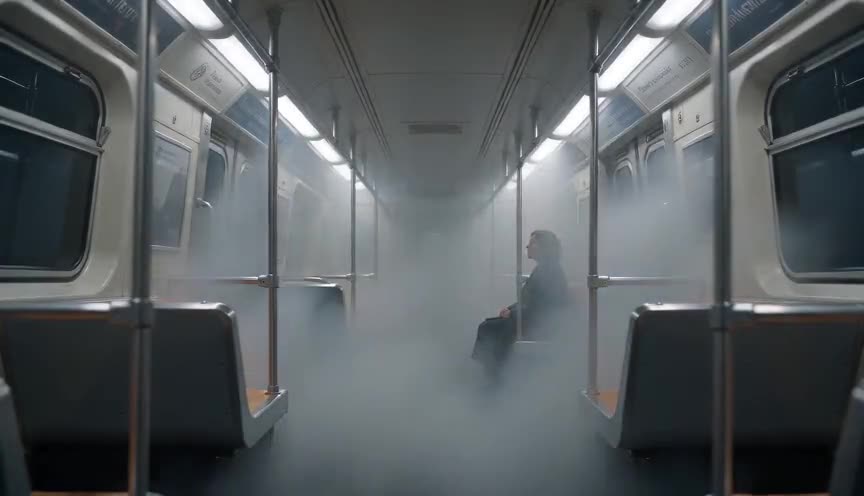
Fog is ambient and fills the whole environment evenly, while steam is a localized plume tied to a specific heat source and dissipates fast, giving it a clear point of origin fog lacks.

Smoke usually implies fire, combustion or damage and often carries a darker or grayer tone, while steam reads as clean, warm and temporary, tied to heat meeting cool air rather than burning.
In film
Blade Runner (1982)
Steam vents constantly rise from the street level, layering the dystopian city in atmosphere and softening the neon-lit backgrounds.
Taxi Driver (1976)
Steam rising from New York City manholes becomes a recurring visual signature of the nocturnal, feverish urban world Travis moves through.
The prompt
Name the exact heat source (a thermos, a bucket of fish, breath in cold air) so the model has a physical reason for the vapor. Specify backlight or a low sun behind the steam, since that is what makes it visible on screen; without naming the light direction, models often render steam as flat and invisible. Keep the camera simple, static or a slow move, so the steam itself is the moving element, and avoid asking for both steam and fog at once, which reads as generic haze rather than a motivated plume.
The exact prompt that rendered the video on this page. Keep the description of the move, change the subject and the setting.
Steam: a static locked-off camera at eye level frames a wooden fishing dock at dawn, low golden sun rising directly behind the scene. A middle-aged woman in an oilskin jacket sets down a metal bucket of fresh catch, steam rising visibly off the fish and curling upward, backlit and glowing against the dark hulls of moored boats. Beside her, an older man exhales, his breath forming a small vapor cloud in the cold air. The steam drifts slowly to the left in a faint breeze, catching the warm light, while the boats and dock remain still and everything else in frame is static. No text.
Common mistakes
No visible light behind it
Steam without backlight or a light source behind it just looks like a smudge or disappears entirely; the plume needs contre-jour to read as vapor on camera.
Unmotivated source
Steam appearing from nowhere, with no cup, vent, breath or hot surface in frame, breaks the illusion and looks like a stray fog layer instead of a physical effect.
Too much volume
Overloading the frame with steam turns a specific, readable detail into generalized haze, losing the localized plume shape that makes steam distinct from fog or smoke.
Frequently asked questions
What is steam in film?
Steam is visible water vapor rising from a heat source such as breath, hot liquid or machinery, used on screen to suggest temperature, add depth and soften harsh backgrounds without dialogue or text.
How do filmmakers make steam visible on camera?
They light it from behind or the side, usually with a low sun or a hard key light placed opposite the camera, so the vapor catches the light against a darker background; flat front light makes steam nearly invisible.
Is steam the same as fog?
No. Fog is an ambient layer that fills an entire space evenly, while steam is a localized plume tied to a specific heat source, like a cup or a vent, and it dissipates within seconds.
Can AI video tools generate realistic steam?
Yes, if the prompt names a concrete heat source and specifies backlight or a low sun behind the vapor; tools like Imaginode render convincing steam when the light direction and source object are described explicitly.