Backlight
Also calledBacklighting, Contre-jour, Edge light
Backlight is light placed behind the subject and aimed toward the camera, so the subject is lit from behind rather than the front. It separates the subject from the background, turns edges into a glowing outline, and can reduce a figure to a pure silhouette.
What it tells
Directors reach for backlight when they want mystery, elegance, or the sense that a subject is haloed by something larger than themselves, a doorway, a window, a rising sun. It flattens detail and pushes the story toward silhouette and shape, which reads as iconic rather than intimate. Because it hides the face, backlight lets an audience project emotion onto a figure instead of reading it directly, useful for reveals, arrivals, and moments where withholding information builds tension or awe before a cut to a lit, readable close-up.
How it is shot
On set the backlight sits behind the subject, aimed at the back of the head and shoulders toward the lens, often 1 to 2 stops brighter than the key so the rim reads clearly on camera. It can be a single hard source like a Fresnel or HMI for a crisp edge, or a large soft source, a window, a practical, or bounced daylight, for a softer glow. Height matters: raised and angled down keeps flare off the lens and out of the actor's eyes. Smoke, steam, or dust in the air catches the beam and makes the light itself visible as shafts. If the key light is dropped out entirely, the subject falls to full silhouette; keep a touch of fill or bounce and detail survives on the front of the face.
When to use it
- A character enters through a doorway or fog and needs an instant, iconic silhouette before their face is revealed.
- Steam, smoke, or dust in the air needs to become visible as glowing shafts of light.
- You want to separate a subject from a same-tone background without adding a hard front light.
- A sunset, window, or bright practical sits behind the subject and you want to use it, not fight it.
Not to be confused with
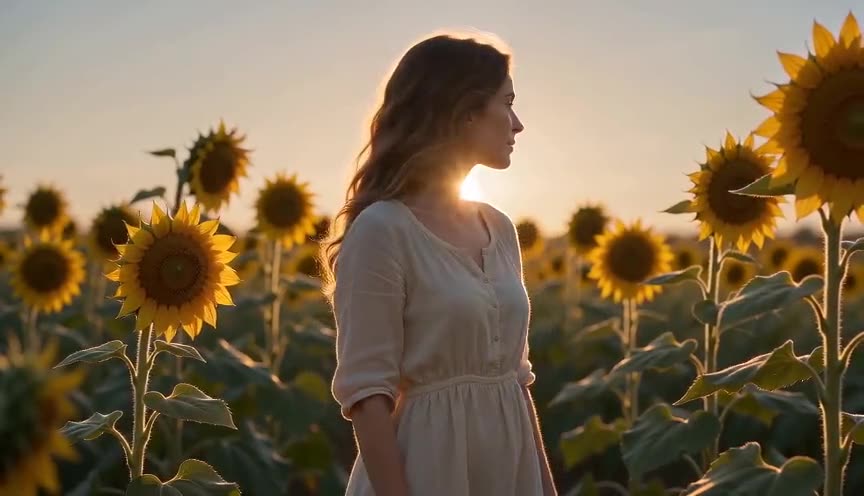
Backlight is the overall source placed behind the subject; rim light is the thin, controlled edge of light it produces, often shaped with a smaller, harder fixture to trace just the outline without spilling onto the background.
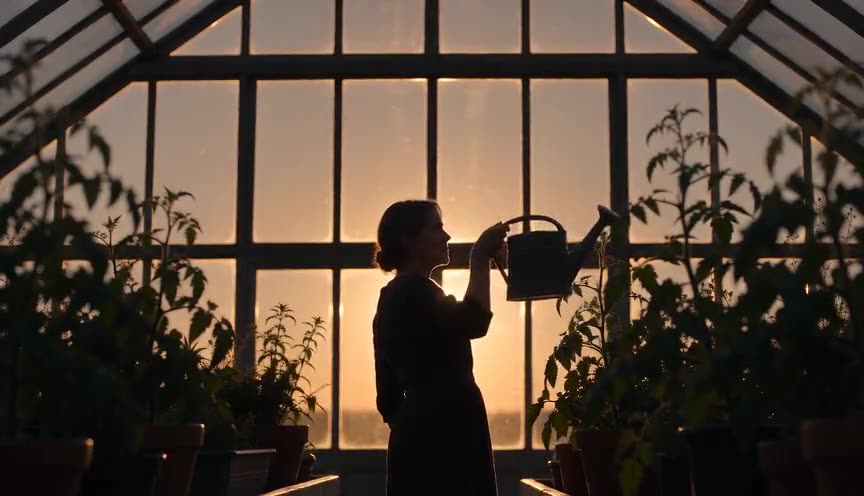
Silhouette is the extreme result of backlighting with no fill on the front of the subject, leaving only a black shape; backlight itself is the setup and can still leave detail visible if some fill is added.
In film
Days of Heaven (1978)
Nestor Almendros shoots much of the film during the magic hour, backlighting figures in wheat fields into glowing silhouettes.
E.T. the Extra-Terrestrial (1982)
The bicycle flight is backlit against a full moon, reducing the riders to a graphic black silhouette against light.
The prompt
Name the light source and its position explicitly: behind the subject, low or high, pointed toward the lens. Mention what catches the light, steam, smoke, dust, or a bright window, so the model renders a visible glow instead of a flat backdrop. Say whether the front of the subject stays lit with a rim plus some fill or falls to silhouette with no fill. Avoid vague words like dramatic lighting; instead specify the direction, the color temperature, and one atmospheric element the beam can pass through.
The exact prompt that rendered the video on this page. Keep the description of the move, change the subject and the setting.
Backlight illuminates a busy ramen kitchen at night, a bright tungsten lamp mounted behind a line cook chopping scallions at a steel counter, its warm glow flaring directly toward the locked-off camera and lens. Steam rising from simmering broth pots drifts through the beam, turning the light into visible glowing shafts, while the cook's silhouette stays dark and edged with a thin bright rim along her shoulders and knife arm. The background kitchen equipment stays dim and underexposed. The camera holds a static 35mm frame for the full four seconds, only the steam and the cook's chopping motion move. No text.
Common mistakes
Flare in the lens
Letting the backlight source spill directly into the lens without a flag creates uncontrolled flare and washes out contrast instead of a clean rim.
No separation from background
Placing the backlight too low or too soft leaves the background almost as bright as the subject's edge, killing the silhouette effect.
Losing the face by accident
Forgetting fill or bounce when the shot needs a readable expression turns a rim-lit portrait into an unwanted full silhouette.
Frequently asked questions
What is backlight?
Backlight is a lighting setup where the main light source sits behind the subject and points toward the camera, rimming the edges of the subject in light and pushing the front toward shadow or full silhouette.
How is backlight different from a lens flare?
Backlight is the placement of a light source behind the subject; lens flare is an optical artifact that happens when that light hits the lens directly and scatters inside the glass, which can happen with backlight but is not required by it.
Do I need smoke or steam for backlight to read?
No, but particles in the air make the beam itself visible as shafts instead of just an edge on the subject, which is why fog, steam, and dust are common partners for backlight.
Can AI video models generate backlight reliably?
Yes, models like the ones on Imaginode respond well to backlight when you name the source, its position behind the subject, and an atmospheric element like steam or dust for the beam to pass through.