Reverse angle shot
Also calledReverse shot, Shot-reverse-shot angle, Opposite angle
A reverse angle shot cuts to a camera position roughly 180 degrees from the previous shot, usually across a conversation, to reveal the other person or the other side of the action. It gives the audience the second half of an exchange that the first shot deliberately withheld.
What it tells
Reverse angles let a scene breathe as a dialogue between two points of view instead of one continuous observation. By withholding a character's face until the cut, directors build anticipation, control who the audience sympathizes with first, and time reactions for maximum weight. The technique mimics how a person's attention actually swings between speakers, so it reads as natural even though it is built entirely in the edit from two separate setups.
How it is shot
The crew sets up two cameras, or one camera moved between takes, positioned on opposite sides of an imaginary line drawn through the subjects (the 180-degree line), each facing roughly toward the other. Focal length and height usually match between the two setups, often 35mm to 50mm at eye level, so the cut feels symmetrical rather than jarring. Lighting is typically mirrored or motivated by the same source seen from both sides. The edit alternates the two angles on dialogue beats or reactions, and the editor keeps eyelines consistent, meaning each character looks screen left or screen right in a way that matches where the other person is supposed to be standing.
When to use it
- Two people are talking and you need to show both faces without a wide two-shot
- You want to isolate a reaction to what the other character just said
- A negotiation, interrogation, or confrontation needs to feel like a volley
- You are cutting a phone call or video chat and need each side to read clearly
Not to be confused with
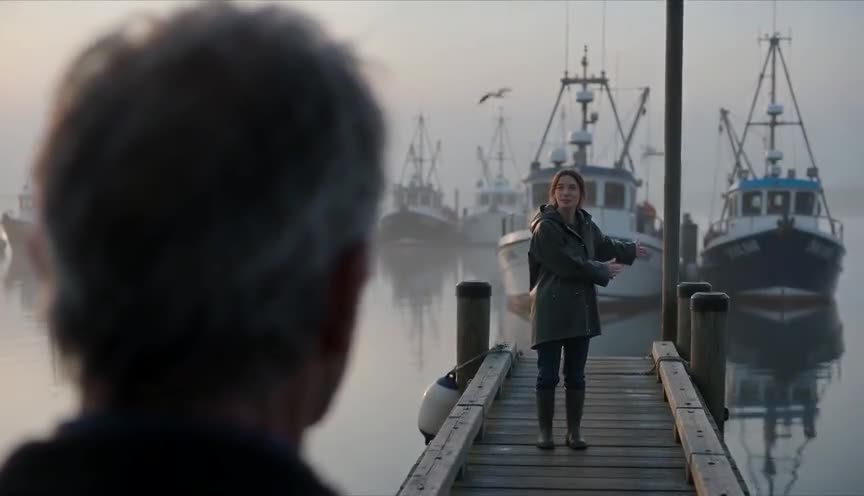
Over-the-shoulder keeps a foreground shoulder in frame to anchor spatial relation; reverse angle simply flips to the opposite side and can be framed clean, without that shoulder, on either character.
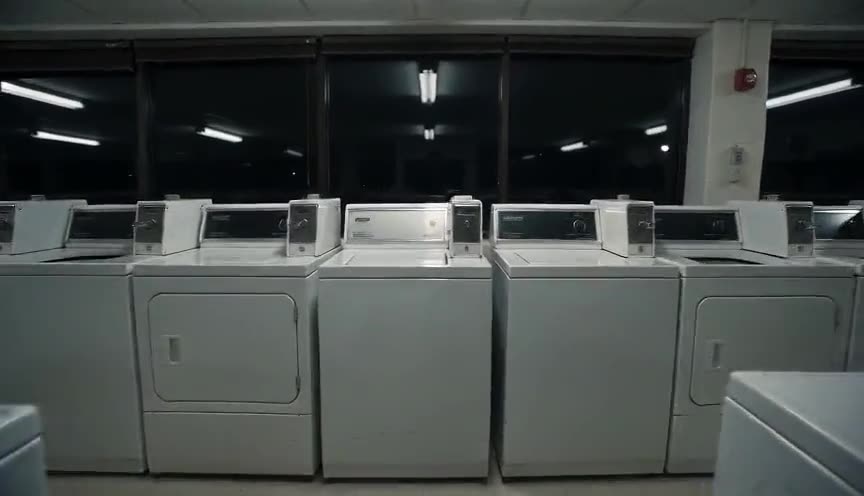
A POV shot puts the camera at a character's exact eyeline to replace their vision; a reverse angle shows that character from the outside, from roughly where the other person stands, not through their eyes.
In film
Heat (1995)
The diner conversation between two rivals is built almost entirely from patient reverse angles, letting each actor's stillness carry the tension.
The Silence of the Lambs (1991)
Clarice's interviews with Hannibal Lecter use precise shot reverse shot angles, contrasting her vulnerable framing with his unsettling direct address.
The prompt
Describe both setups explicitly and name the cut, since a single 4-second clip must show the flip to be readable as a reverse angle rather than a random cutaway. State the lens and eye level for each side so they read as matched, mention that the background changes to the opposite side of the room, and keep clothing, lighting direction, and framing consistent across the cut so the edit reads as intentional instead of a lighting mismatch.
The exact prompt that rendered the video on this page. Keep the description of the move, change the subject and the setting.
Reverse angle shot in a 1970s New York diner with red vinyl booths and a chrome counter. Shot one: 50mm lens at eye level behind a man in his 50s, wearing a diner cook's apron, looking across the booth at a woman in her 30s in a tan coat, warm tungsten light from a hanging lamp, static frame, she speaks and gestures once with her hand. Hard cut to shot two: same 50mm lens and eye level, now positioned behind the woman, looking back at the man, same warm tungsten light now lighting his face from the same direction, static frame, he leans back slightly. No text.
Common mistakes
Crossing the line
Placing the second camera on the wrong side of the 180-degree line flips screen direction, making it look like the characters swapped places instead of just being seen from the other side.
Mismatched eyelines
If each character looks in the wrong direction relative to where the other actually stands, the cut breaks the illusion that they are looking at each other.
Inconsistent lens or height
Switching focal length, camera height, or exposure between the two angles makes the cut feel like two different scenes instead of one conversation.
Frequently asked questions
What is a reverse angle shot?
It is a shot that cuts to a camera position roughly opposite the one used just before, usually across a conversation, so the audience sees the other participant or the other side of the action after the first angle.
How is reverse angle different from shot-reverse-shot?
Shot-reverse-shot describes the whole editing pattern of alternating between two angles over a scene; a reverse angle is one individual shot within that pattern, the one that flips to the opposite side.
Why does the 180-degree line matter for reverse angles?
Staying on one side of that imaginary line keeps screen direction consistent, so when you cut to the reverse angle the characters still appear to be facing each other rather than suddenly swapping positions.
Can an AI video generator create a reverse angle shot?
Yes, on a platform like Imaginode you can prompt two setups on opposite sides of the same subjects with a described cut between them, and matching lens, height, and lighting in the prompt keeps the two angles consistent.