Match on action
Also calledAction match, Match cut on action, Continuity cut
Match on action is an editing technique that cuts from one shot to another in the middle of a continuous physical movement, matching the subject's position, direction and speed across the cut. It keeps the viewer inside the motion, so the edit itself disappears and the scene feels like one unbroken piece of time.
What it tells
Directors reach for match on action when they want continuity editing to be invisible, letting the story move forward without the audience noticing the mechanics of the cut. It lets a filmmaker change angle or shot size, revealing new information, geography or a reaction, while the body keeps doing the same thing. The technique builds trust: the world feels stable and real, so tension, action or emotion can carry the scene instead of the editing.
How it is shot
On set, the same physical action is shot from at least two camera positions, ideally with a 30-degree or greater angle change to avoid a visible jump. The script supervisor logs the exact frame where a hand releases, a door passes a certain point, or a foot lands, so the editor can cut precisely on that beat in both takes. Frame rate, lens perspective and the actor's speed must stay consistent, or the motion will stutter. In post, the editor trims each shot to the matching frame, checks the cut on a scrubber at quarter speed, and confirms that direction of travel, screen position and light continuity all agree before locking the edit.
When to use it
- Cutting a repetitive physical action, like a door closing or a tool turning, across two camera setups.
- Moving from a wide establishing shot into a close-up during a chase, fight or piece of manual work.
- Hiding a change in location or set piece by cutting on a gesture that looks identical on both sides.
- Building rhythm in an action sequence without slowing the audience down to notice the edit.
Not to be confused with
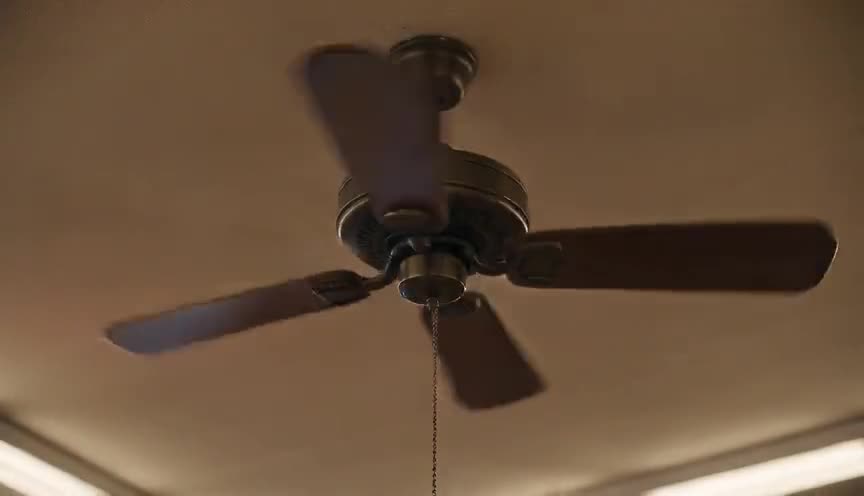
A match cut pairs two shots by shape, composition or idea, sometimes across different subjects or eras. Match on action is narrower: it specifically matches a single continuous physical movement, not just a visual echo.
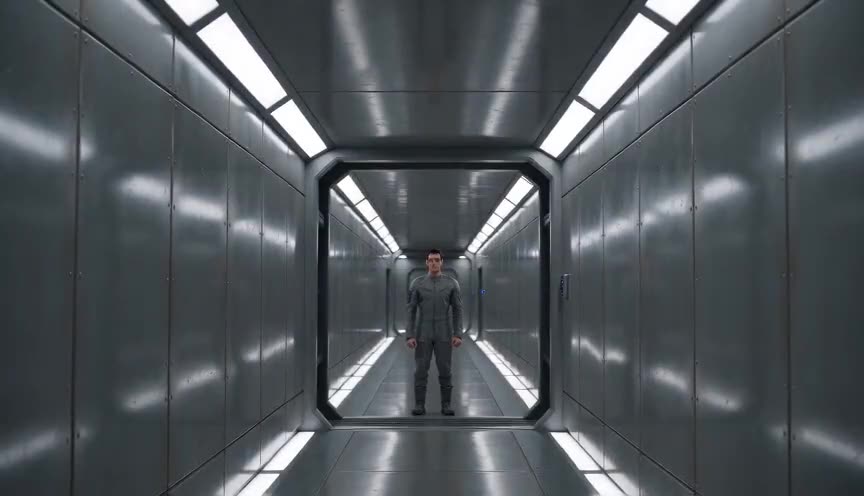
An axial cut moves the camera closer or farther along the same lens axis on a static or slow subject. Match on action instead cuts across an angle change while the subject is actively moving through space.
In film
Mad Max: Fury Road (2015)
Chase sequences cut constantly between vehicles and characters, matching the exact speed and direction of motion so the frantic action reads as continuous.
The Matrix (1999)
In the lobby shootout, cuts continue Neo and Trinity's spins, wall runs, and falls across angles, preserving momentum while hiding the edits.
The prompt
Describe the two shots as one physical action seen twice: name the exact motion (a hand turning a wheel, a foot landing), state that the second shot picks up at the same point, speed and direction, and change the camera distance or angle between them. Avoid vague words like 'seamless transition' alone; instead specify the shot sizes and the moment of the cut. Keep the subject's clothing, lighting direction and pace identical across both shots so the model does not accidentally break continuity.
The exact prompt that rendered the video on this page. Keep the description of the move, change the subject and the setting.
Match on action: a weathered lighthouse keeper on a storm-lashed coast grips a heavy iron valve wheel, shown in a close medium shot at eye level as driving rain streaks past and the wheel turns a quarter rotation clockwise. The cut lands at the exact midpoint of that turn, jumping to a wide shot from outside the lighthouse where the same keeper's arms continue the identical wheel rotation at matching speed, waves smashing against the rocks and wind snapping his coat. Position, direction and pace of the motion stay perfectly continuous across the cut, so the gesture reads as one unbroken action. No text.
Common mistakes
Sloppy frame matching
Cutting a few frames before or after the true match point makes the motion stutter or jump backward, breaking the illusion instantly.
Same angle, tiny change
Cutting between two camera positions less than about 30 degrees apart creates a jarring jump cut instead of a smooth match, even if the timing is perfect.
Inconsistent speed or light
If the actor moves faster in the second shot, or the light direction shifts, the brain flags the discontinuity even when the position lines up.
Frequently asked questions
What is match on action?
It is an editing technique that cuts from one shot to another in the middle of a physical movement, matching position, direction and speed so the motion appears continuous across the cut.
How is match on action different from a jump cut?
A jump cut deliberately breaks continuity, often within the same shot size and angle, to create a jarring effect. Match on action does the opposite: it hides the cut by preserving the motion perfectly.
Why do editors need a 30-degree angle change for a match cut?
Below roughly 30 degrees, two shots of the same subject look too similar, so the cut reads as a mistake or jump rather than a deliberate change in perspective.
Can AI video tools generate match on action automatically?
Most AI video models render one continuous clip, not a multi-shot edit, so on a platform like Imaginode you typically generate the two shots separately and cut them together in post to build the match.