Dolly zoom
Also calledVertigo effect, Contra-zoom, Trombone shot, Hitchcock zoom
A dolly zoom is a shot where the camera physically moves toward or away from the subject while the lens zooms in the opposite direction, so the subject stays the same size in frame while the background stretches or compresses. It leaves the viewer with a physical sense of vertigo, as if the space itself has warped.
What it tells
Directors reach for the dolly zoom when a character's understanding of reality suddenly shifts, whether it is dread, revelation, or the ground dropping out from under them. Because the subject holds still while the world around them twists, the effect reads as internal rather than external, a visualization of shock or panic rather than a simple camera move. It is rare and disorienting by design, so most films use it once, at a hinge point in the story.
How it is shot
The camera sits on a dolly track and moves toward or away from the subject at a steady speed, typically over 2 to 5 seconds. Simultaneously, an operator or motorized zoom control drives the lens in the opposite direction (zooming in as the dolly pulls back, or zooming out as it pushes in) so the subject's size in frame stays locked. This requires a zoom lens with real range, often 25 to 250mm, and a rehearsed match between dolly speed and zoom speed, since any mismatch breaks the illusion. Focus must be pulled continuously as distance changes. Modern rigs use motion control or motorized zoom heads for precision that hand-cranked zooms struggle to match.
When to use it
- A character realizes something horrifying or life-changing in a single beat
- You want to externalize vertigo, panic, or a fainting spell without cutting
- A quiet, static scene needs one unmistakable jolt of unreality
- The story hinges on a character's perception of space suddenly feeling wrong
Not to be confused with
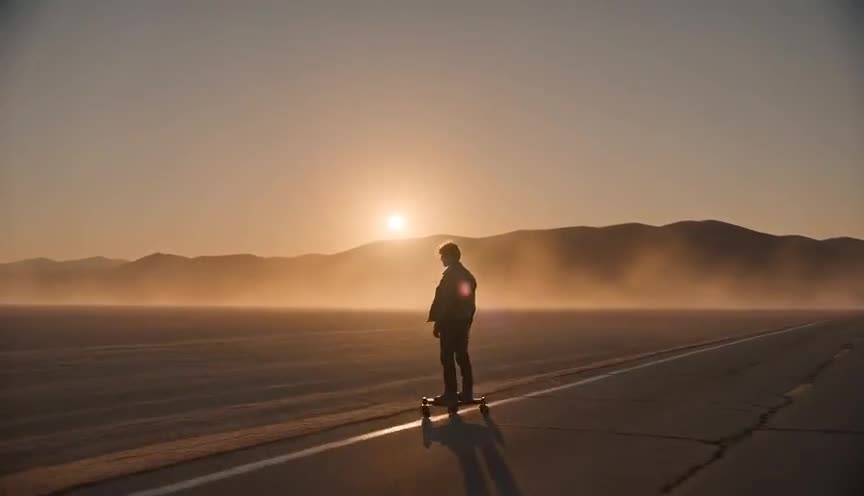
A dolly-in moves the camera closer while the lens stays fixed, so the background naturally compresses along with the subject. The dolly zoom cancels that relationship instead, keeping the subject constant while the background alone warps.
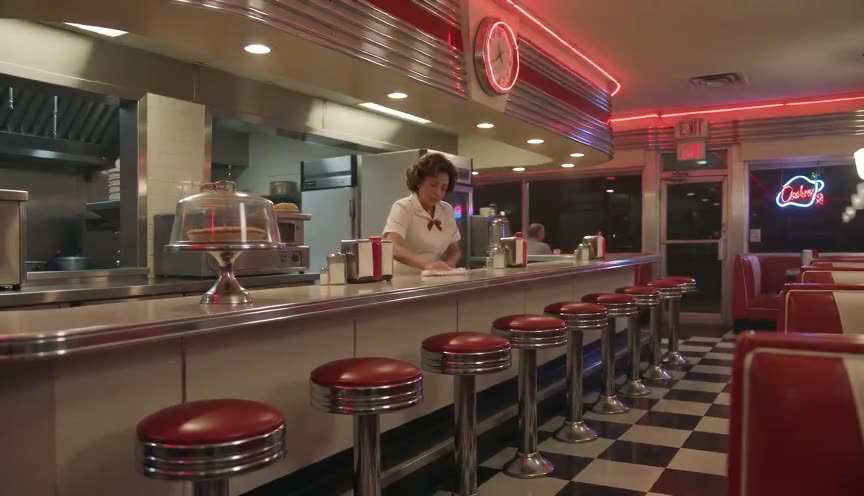
A crash zoom is a fast lens-only zoom with no camera movement, an abrupt punch used for shock or comedy. The dolly zoom is slower, combines camera movement with zoom, and warps the background rather than simply magnifying it.
In film
Vertigo (1958)
Alfred Hitchcock and Irmin Roberts developed the effect to visualize the protagonist's acrophobia looking down a stairwell.
Jaws (1975)
Steven Spielberg uses it on the beach as Chief Brody realizes there is another shark attack, the crowd around him seeming to lurch.
The Lord of the Rings: The Fellowship of the Ring (2001)
Peter Jackson uses it as Frodo senses a Black Rider near the Shire road, making the forest path stretch unnaturally around him.
The prompt
Name the technique directly (dolly zoom or vertigo effect) since AI video models rarely infer it from a plain description of movement. Specify the two opposite motions explicitly: the camera moving one way, the lens zooming the other, and state clearly that the subject stays the same size while the background stretches or compresses. Keep the described motion slow and deliberate; fast wording tends to render as a shake or a glitch instead of a controlled warp.
The exact prompt that rendered the video on this page. Keep the description of the move, change the subject and the setting.
Dolly zoom, the Vertigo effect. A gondolier stands still on a small stone bridge over a Venetian canal, framed from the waist up in the center. For the whole shot he stays exactly the same size in the frame, while the buildings and the canal behind him grow bigger and closer, as if the background were rushing toward him and swallowing the space. The camera travels backward while zooming in. Smooth, unsettling, realistic daylight. No text.
Common mistakes
Mismatched speeds
If the dolly move and the zoom move are not calibrated to the same rate, the subject drifts in size instead of staying locked, and the illusion collapses into a shaky zoom.
Too fast
A dolly zoom needs a few seconds to register as a warp of space; done in under a second it just looks like a focus glitch or a mistake.
No narrative reason
Because the effect is so recognizable, using it without a moment of shock or realization to justify it reads as a technical flex rather than a storytelling choice.
Frequently asked questions
What is a dolly zoom?
A dolly zoom is a shot where the camera moves toward or away from a subject while the lens zooms in the opposite direction, keeping the subject the same size while the background around it stretches or compresses, creating a disorienting sense of warped space.
Why is it called the Vertigo effect?
It is named after Alfred Hitchcock's 1958 film Vertigo, where the shot was first used prominently to convey the protagonist's fear of heights, and the nickname stuck in film culture even though Hitchcock's crew called it a contra-zoom.
Do you need a real dolly and zoom lens to do this?
Traditionally yes, a physical dolly track and a zoom lens with substantial range, along with careful focus pulling and speed matching between the two moves, which is why the shot has a reputation for being hard to execute cleanly.
Can AI video tools generate a dolly zoom?
Yes, models like those on Imaginode can render the effect if you describe both opposite motions explicitly and specify that the subject stays constant in size while the background warps, since the model has no physical rig to calibrate.