Crash zoom
Also calledSnap zoom, Zoom punch, Smash zoom
A crash zoom is an extremely fast zoom, executed in under a second, that snaps from a wide or medium framing to a tight close-up, or the reverse. It jolts the viewer's attention onto a detail with a jarring, almost violent suddenness that a slow zoom or a cut cannot replicate.
What it tells
Directors reach for the crash zoom when a moment needs to hit like a slap rather than build like a wave. It compresses shock, punchline or revelation into a fraction of a second, mimicking the way attention snaps toward a threat or an absurdity. Because it breaks the smooth visual grammar audiences expect, it reads as comedic exaggeration in one context and as dread or violence in another. It works as a punctuation mark, not a sentence: used sparingly, so the abruptness keeps its power instead of becoming a tic.
How it is shot
On a physical zoom lens, the operator racks the zoom ring from wide to tight, commonly 24mm to 100mm, in 0.2 to 0.5 seconds, fast enough that the image blurs slightly at the midpoint. Many productions fake it in post: shoot a locked wide frame, then punch in with a digital zoom or crop over a handful of frames and add a touch of motion blur to sell the speed. Focus must be preset on the final framing before the zoom starts, since there is no time to rack focus mid-move. A short whip-pan or a snap sound cue often rides along with it, and the shot usually holds still right before and right after the move.
When to use it
- A character notices something alarming and the audience should feel the same startle in real time.
- A punchline lands and the crash zoom exaggerates the gag for comic emphasis, as in parody scenes.
- A hidden object or clue suddenly matters and needs instant visual emphasis without cutting away entirely.
- A scene needs a jolt of energy between calmer shots, signaling a tonal shift or a genre wink.
Not to be confused with

A whip pan snaps the camera sideways across space to reveal a new subject, while a crash zoom stays on axis and rushes toward or away from the same subject already in frame.
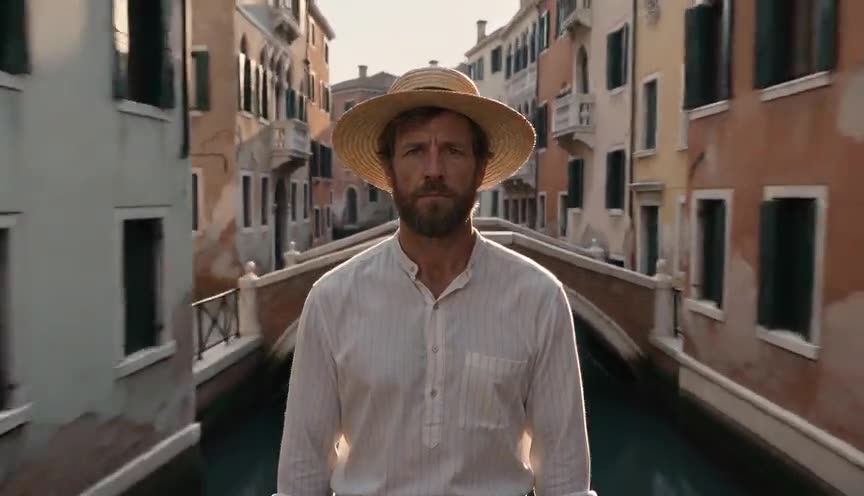
A dolly zoom keeps the subject's size constant while the background stretches over several seconds, creating slow unease. A crash zoom does the opposite: it changes the subject's size almost instantly to deliver a shock.
In film
Evil Dead II (1987)
Sam Raimi uses rapid crash zooms into faces and objects for both jump-scare shock and dark slapstick comedy.
Hot Fuzz (2007)
Edgar Wright deploys crash zooms as a comedic homage to action-film cliches, punching in on props and reaction shots.
Kill Bill: Vol. 1 (2003)
Quentin Tarantino uses crash zooms to punctuate sudden violent reveals and heighten the film's exploitation-cinema energy.
The prompt
Name the move explicitly: 'crash zoom' or 'extremely fast zoom in under one second.' State the start and end framing, such as wide to close-up, and name the exact subject that must stay sharp, since AI models often blur or morph the wrong element. Ask for a slight motion blur at the midpoint and a hard stop on the final frame, not a settle or a bounce. Avoid vague words like 'quick zoom,' which many models stretch into a slow zoom over the whole clip. Keep the rest of the scene static so the speed reads clearly against a still background.
The exact prompt that rendered the video on this page. Keep the description of the move, change the subject and the setting.
Crash zoom: in a 1970s New York diner with checkered floor tiles, chrome stools and a neon clock on the wall, a wide shot holds on a middle-aged waitress standing behind the counter, static and steady for the first two seconds. In a sudden burst lasting under half a second, the camera zooms violently from that wide framing to a tight close-up of her startled eyes, the image blurring briefly at the midpoint before snapping into sharp focus, then holding perfectly still on her face for the rest of the shot. No text.
Common mistakes
Zoom too slow
If the punch-in takes more than half a second or so, it reads as an ordinary fast zoom rather than a crash, and the shock effect is lost entirely.
Losing focus mid-zoom
Racking focus during the move instead of presetting it on the final frame produces a soft, wobbly landing that undercuts the sharp, jarring snap the technique needs.
Overusing it in one scene
Repeating the crash zoom several times in a row drains its impact and starts to feel like a stylistic tic rather than a deliberate punctuation mark.
Frequently asked questions
What is a crash zoom?
A crash zoom is an extremely fast zoom, usually completed in under a second, that snaps the frame from wide to tight or tight to wide. It is used to startle the viewer or land a comedic or dramatic beat instantly.
How is a crash zoom different from a regular zoom?
A regular zoom moves smoothly over one or several seconds and reads as a deliberate reveal. A crash zoom happens almost instantly, with visible blur at the midpoint, and is meant to feel abrupt rather than graceful.
Do directors use a real zoom lens or fake it in editing?
Both. Some shoot with a physical zoom lens racked at high speed, others lock the camera on a wide frame and simulate the zoom digitally in post with a fast crop and added motion blur.
Can AI video tools like those on Imaginode generate a crash zoom?
Yes, if the prompt states the move explicitly, gives the start and end framing, and describes the speed and the brief blur, models render a convincing crash zoom rather than a slow, generic push in.