Zoom into the eye
Also calledPush into the eye, Eye punch zoom, Zoom to iris
Zoom into the eye is a camera movement that pushes the lens optically from a wider framing into an extreme close-up on a character's eye, usually ending tight on the iris or pupil. It collapses distance and story into a single beat, forcing the viewer to read the character's inner state at the exact moment the frame arrives.
What it tells
Directors reach for this move when a look says more than a line of dialogue. The zoom strips away the world around a character and leaves only the eye: the moment of recognition, fear, decision or memory. Because the technique is unmistakably a camera move rather than a cut, it keeps the audience inside the character's present tense, building tension through the mechanical arrival at the eye rather than an instant reveal. It works best as a punctuation mark placed at a turning point, a reveal, or the instant before action.
How it is shot
The shot starts on a longer lens setting, framing the subject in a medium or close shot, then the operator zooms the lens toward the telephoto end while focus stays locked on the eye, so the background compresses and blurs as the field of view narrows. A 2x to 10x zoom lens works best; on a fixed prime, a slow digital push-in can substitute. The move typically runs 1 to 3 seconds for a hard punch, or 4 to 8 seconds for a slower reveal, often paired with a drop in ambient sound or a rise in score. Keep the camera locked on a tripod or gimbal so only the zoom moves, not the frame position, or the effect reads as shaky rather than deliberate.
When to use it
- Use it at the instant a character recognizes danger, a lie, or a hidden truth on screen.
- Use it right before a decisive action, such as pulling a trigger or making a choice.
- Use it to punctuate a flashback trigger, linking a present look to a remembered image.
- Use it sparingly as a stylistic exclamation point in genre films like westerns, thrillers, or horror.
Not to be confused with
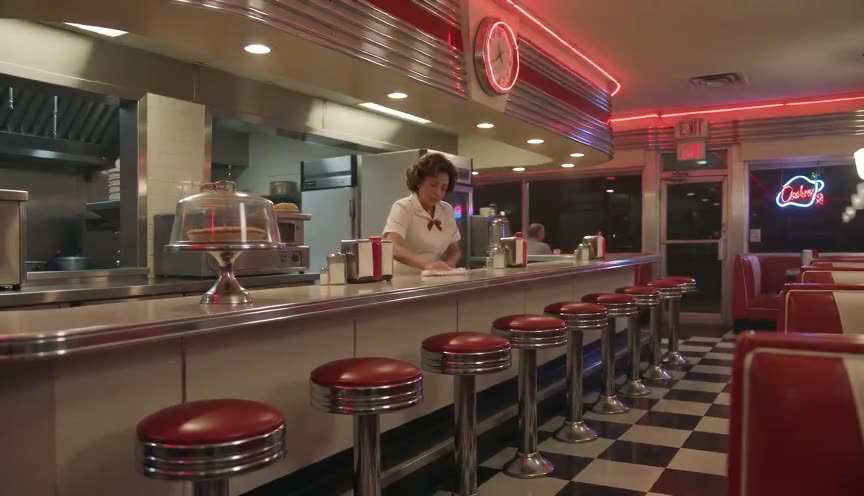
A crash zoom is a fast zoom to any subject or framing, used for shock or comic emphasis. Zoom into the eye has a specific target and mood: the destination is always the eye, and the intent is usually psychological.
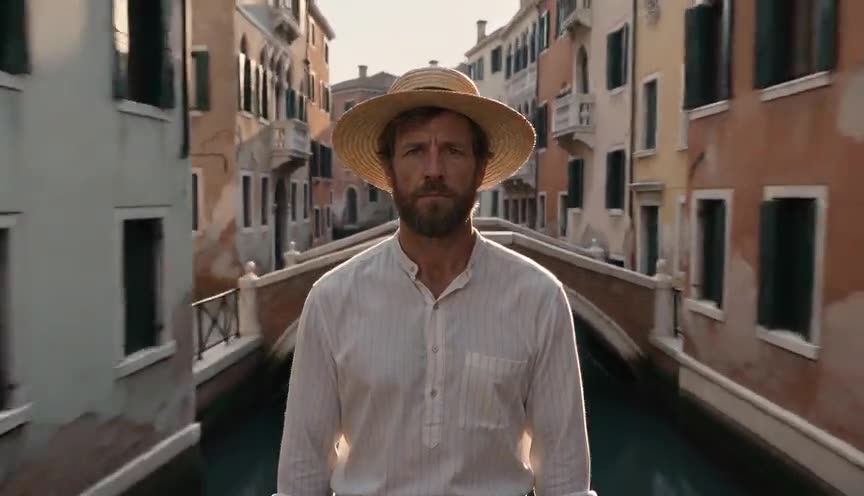
A dolly zoom moves the camera and the zoom simultaneously to warp perspective while the subject stays the same size. Zoom into the eye keeps the camera still and only changes focal length, so perspective compresses normally as it closes in.
In film
The Good, the Bad and the Ugly (1966)
Sergio Leone cuts between crash zooms into each gunslinger's eyes during the final three-way standoff, building unbearable tension before the draw.
Once Upon a Time in the West (1968)
Leone uses tight zooms into Harmonica's and Frank's eyes during the final showdown, linking the flashback revelation to imminent violence.
Vertigo (1958)
Saul Bass's title sequence moves from a woman's face to her eye, then pushes into the iris as animated spirals emerge.
The prompt
Name the start and end framing explicitly (medium shot to extreme close-up on the iris) and state that only the lens changes, not the camera position, so the model does not add drift or a dolly move. Specify zoom speed in seconds and keep the background description simple so it can convincingly blur as the frame tightens. Mention that focus stays locked on the eye throughout. Avoid vague words like fast zoom without a target; always name the eye as the destination, and avoid asking for a cut mid-shot since this is one continuous optical move.
The exact prompt that rendered the video on this page. Keep the description of the move, change the subject and the setting.
Zoom into the eye: a weathered man in his fifties stands beside a parked truck on a cracked desert highway at dusk, orange sky glowing behind him. The camera stays completely still on a tripod as the lens optically zooms from a medium shot of his face to an extreme close-up filling the frame with his right eye, the iris catching the last amber light. The zoom takes three seconds, the background dissolving into soft blur, focus locked sharp on the eye the entire time, no camera position change, no cut. No text.
Common mistakes
Moving the camera during the zoom
Panning, dollying, or handheld shake while zooming breaks the optical purity of the move and reads as a mistake rather than a deliberate push.
Zooming to a generic close-up
Stopping at a medium close-up instead of the iris weakens the technique; the destination must be tight enough to fill the frame with the eye.
Losing focus on the eye
If focus drifts to the eyebrow or cheek during the zoom, the emotional target is lost and the shot feels like an accident, not a choice.
Frequently asked questions
What is zoom into the eye?
It is a camera movement where the lens zooms from a wider framing to an extreme close-up on a character's eye, isolating a single moment of recognition or decision without a cut.
Is zoom into the eye the same as a crash zoom?
Not exactly. A crash zoom can land on any subject fast for shock, while zoom into the eye always targets the eye specifically, usually for a psychological rather than comedic effect.
How fast should the zoom into the eye be?
A hard punch runs 1 to 3 seconds for maximum shock; a slower reveal of 4 to 8 seconds builds dread or suspense. Match the speed to the emotional stakes of the moment.
Can I generate a zoom into the eye with AI video tools?
Yes. Describe the start framing, the end framing on the iris, a locked camera position, and the zoom duration in seconds; tools like Imaginode render this as one continuous optical push.