Parallax shot
Also calledParallax pan, Depth trucking shot, Multi-plane shot
A parallax shot is a lateral camera move that reveals the different apparent speeds at which near and far objects pass by, using that speed difference to build depth in a flat frame. It makes the viewer read three dimensions from a two-dimensional image without any focus tricks.
What it tells
Directors reach for parallax when they want a space to feel tactile and inhabited rather than flat, or when a character needs to feel boxed in by the world around them. The layered motion turns ordinary environments (a hallway, a street, a row of machines) into something the eye has to sort through, which slows attention down and builds atmosphere. It is a quiet, almost subliminal way to say this place has depth, and so does this moment.
How it is shot
Mount the camera on a slider, dolly or gimbal and move it laterally, perpendicular to the lens axis, at a steady, moderate speed (roughly 1 to 3 feet per second for an interior). Place foreground elements close to the lens, within a few feet, and keep background elements several times farther away. The near objects sweep across frame fast, the far ones drift slowly, and that gap is the whole effect. Wide to normal lenses (24mm to 35mm) exaggerate the differential more than telephoto glass, which compresses it. Even, consistent light on each plane (or contrasting light between planes) helps the eye separate the layers instead of merging them into a blur.
When to use it
- Introducing a location you want to feel dense, layered and real rather than staged
- Showing a character isolated behind foreground objects like bars, shelves or machines
- Building unease or voyeurism as the camera glides past obstructions toward a subject
- Replacing a cut with continuous lateral movement in a hallway, market or corridor scene
Not to be confused with
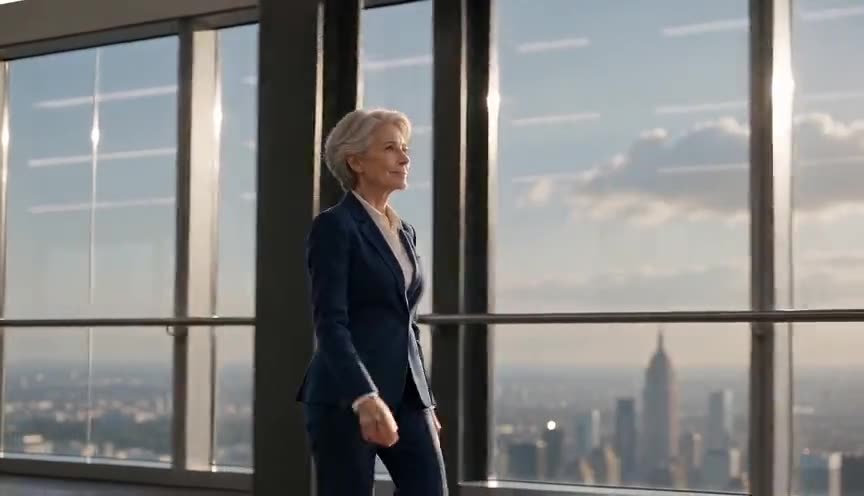
A truck shot is any lateral camera move. A parallax shot is a truck shot specifically staged so foreground and background elements are at very different distances, so the speed gap between them becomes the visible subject.
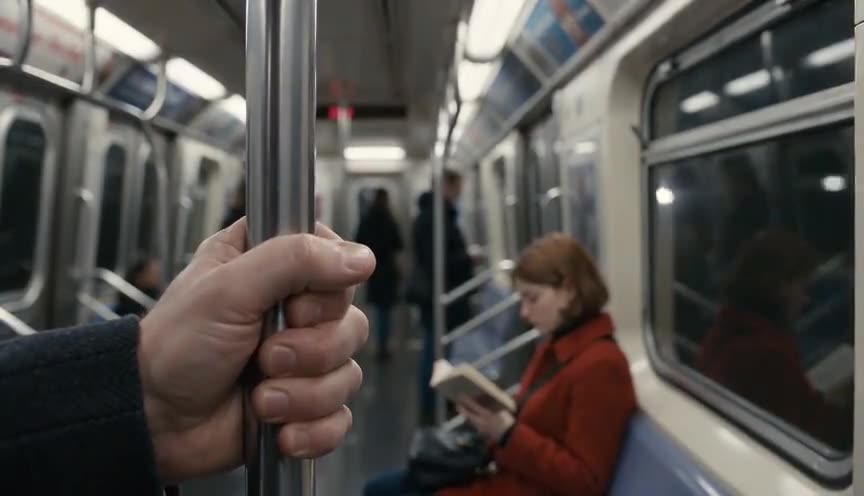
Layered depth is a composition principle for arranging foreground, midground and background in a single frame, static or moving. Parallax shot is the camera movement technique that makes that same layering visible through differential motion.
In film
The Old Mill (1937)
Disney's multiplane camera moves past stacked glass paintings of reeds, animals, and the mill, making foreground layers slide faster than the background.
Pinocchio (1940)
The opening village move uses the multiplane camera across rooftops, streets, and windows, with layered artwork shifting at different rates toward Geppetto's workshop.
Bambi (1942)
The forest opening uses multiplane layers of trees, mist, and foliage, producing clear parallax as the camera travels into the woodland space.
The prompt
Name a foreground object close to the lens and a background element much farther away, and state that the camera moves laterally (trucking left or right) so their speeds visibly differ. Use words like 'foreground sweeps past quickly, background drifts slowly' rather than just 'camera moves sideways'. Specify a wide or normal lens, not telephoto, since compression flattens the effect. Avoid combining it with a pan or the rotation will cancel the parallax read.
The exact prompt that rendered the video on this page. Keep the description of the move, change the subject and the setting.
Parallax shot: inside a laundromat at night, the camera trucks smoothly left to right on a slider at a steady pace. In the foreground, a row of spinning washing machines close to the lens streaks past quickly, coin slots and dials briefly catching the light. In the midground, a woman in her 50s folds towels at a counter, drifting past at a moderate speed. In the deep background, a wall of dryers and a flickering neon open sign glide by slowly. Cool fluorescent light overhead, warm neon glow from the sign, damp linoleum floor reflecting both. No text.
Common mistakes
No real depth separation
If foreground and background objects sit at similar distances from the lens, their speeds look nearly identical and the parallax effect disappears entirely.
Panning instead of trucking
Rotating the camera on its axis (a pan) keeps distances constant and kills the differential speed. Parallax needs lateral translation of the camera body itself.
Moving too fast for the format
A quick lateral sweep turns foreground elements into an unreadable blur, especially in a short clip, so the depth cue is lost instead of enhanced.
Frequently asked questions
What is a parallax shot?
It is a camera move, usually lateral, that shows near objects passing faster than far objects, which the eye reads as depth. It works because closer things cover more visual ground for the same physical distance moved.
What lens works best for a parallax shot?
Wide to normal lenses, roughly 24mm to 35mm, exaggerate the speed difference between planes. Telephoto lenses compress distance and flatten the effect, so they work against parallax rather than for it.
How is parallax different from a dolly zoom?
A dolly zoom keeps the subject the same size while distorting the background through simultaneous dolly and zoom in opposite directions. A parallax shot uses pure lateral movement with no zoom, letting natural distance differences do the work.
Can an AI video model generate a convincing parallax shot?
Yes, if you specify a lateral camera move and name distinct foreground and background elements with an explicit speed contrast between them. Tools like those on Imaginode respond well when the depth cue is spelled out rather than implied.