Robotic arm shot
Also calledmotion control shot, motion-control rig shot, programmed camera move, robo-arm shot
A robotic arm shot is a camera move executed by a programmable motion-control rig instead of a human operator, so the exact same path, speed and focus can be repeated frame for frame. It gives the viewer camera movement that feels impossibly smooth, precise and mechanical, often faster or more intricate than a person could pull off by hand.
What it tells
Directors reach for a robotic arm when they need movement so exact it can be repeated for a visual effects plate, or so fast and inhuman that it reads as a statement about technology, control or spectacle. Because the machine never shakes or hesitates, the shot removes any trace of human presence from the frame, which lets an object, a product or an action carry the entire emotional weight of the scene.
How it is shot
A robotic arm shot is produced with a motion-control rig, such as a Milo, Bolt or Flair system, that moves the camera along a path programmed in software rather than pushed by hand. An operator sets keyframes for position, tilt, pan, focus and speed, and the arm repeats that exact move within a fraction of a millimeter on every take, which matters when a shot must be combined with a second pass, a green screen element or a CG plate. These rigs can move faster than a human dolly grip, some reaching several meters per second, and can sync to strobe or high frame rate capture. Rehearsal runs at low speed before the same program executes the final take at full speed.
When to use it
- Filming a product or object where the camera must repeat an identical move for multiple lighting or focus passes.
- Shooting action or stunt plates that need to be combined later with green screen or CG elements.
- Creating a fast, precise reveal around a subject that a human operator could not safely or smoothly replicate.
- Building a sequence where the mechanical, non-human quality of the movement itself is part of the message.
Not to be confused with
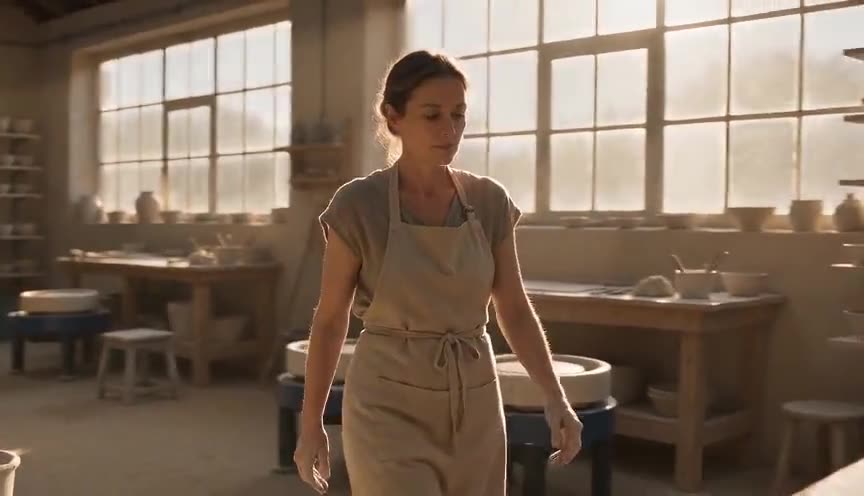
A gimbal shot uses a human operator carrying a stabilized rig, so the move is smooth but still improvised and slightly organic. A robotic arm shot is programmed and mechanically repeatable, with no human variance at all.
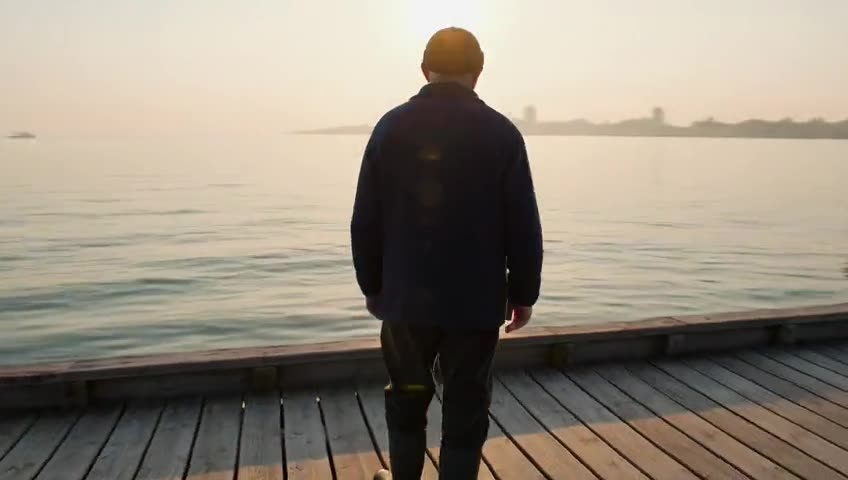
A 360-degree orbit is a path, a full circle around the subject, that can be flown by a robotic arm, a slider or a human operator. Robotic arm names the tool, not the path, and adds programmed precision to that circle.
In film
Gravity (2013)
Used the Bot and Dolly robotic arm system (IRIS) to choreograph complex, repeatable camera moves synced with LED light rigs for the space sequences.
2001: A Space Odyssey (1968)
Pioneered early motion-control photography to move the camera past spacecraft models with mathematically precise, repeatable paths.
The prompt
Name the rig and describe its motion explicitly: robotic arm camera or motion-control rig, plus the exact path (arc, sweep, push) and speed. State that the move is perfectly smooth and mechanically precise, with no handheld drift or wobble. Mention if focus or framing stays locked on a point through the move. Avoid vague words like dynamic camera; instead give a start position, an end position and the shape of the path so the model renders one continuous, machine-precise trajectory rather than a shaky human pan.
The exact prompt that rendered the video on this page. Keep the description of the move, change the subject and the setting.
Robotic arm camera shot, high-speed motion control. On a black studio table, a strawberry drops into a glass of milk and splashes. The camera itself whips in fast, stops dead on the splash in extreme close-up, then swings around it in a sharp arc, perfectly precise, ultra smooth, impossible for a human operator. Crisp studio light, slow motion splash, no machine visible in frame. No text.
Common mistakes
Confusing the path with the tool
Calling any smooth orbit or arc a robotic arm shot even when it was actually filmed handheld or on a slider, since the term should describe the rig, not just the shape of the move.
Adding human imperfection
Asking for a robotic arm shot but also describing slight shake, drift or hesitation, which contradicts the entire point of using a motion-control rig in the first place.
Ignoring speed and repeatability
Skipping the specific speed, path shape or repeat-pass logic that makes the shot read as machine-driven, so the result looks like any other smooth camera move.
Frequently asked questions
What is a robotic arm shot?
A robotic arm shot is a camera move performed by a programmable motion-control rig instead of a human operator, so the exact path, speed and focus can be repeated identically on every take. It is used when a shot needs mechanical precision, extreme speed or perfect repeatability for visual effects work.
How is a robotic arm shot different from a gimbal or Steadicam?
A gimbal or Steadicam is carried by a person, so the move always keeps a trace of human timing and slight variance, even when stabilized. A robotic arm runs on a programmed path with no operator inside the frame's timing, which makes it exactly repeatable and often faster or more geometrically precise.
Why do visual effects productions use robotic arm shots?
Because compositing often requires two or more passes of the exact same camera move, once for the live actor and once for a green screen element or a miniature, a robotic arm guarantees that both passes align perfectly in position, framing and focus.
Can AI video generators create a robotic arm shot?
Yes, if the prompt describes the rig's mechanical smoothness, the exact path and the speed explicitly, tools like Imaginode can render convincing motion-control moves; the key is naming the physical qualities of the arm's motion rather than just asking for a smooth camera move.