360-degree orbit
Also calledorbit shot, full circle shot, revolve shot
A 360-degree orbit is a camera movement that travels in a full circle around a subject while keeping that subject centered in frame. It gives the viewer a complete view of the subject and its surroundings, turning a single point in space into a small, self-contained world.
What it tells
Directors reach for the orbit when they want to isolate a subject from time and place, or the opposite: to show that the subject is the fixed center of a world that keeps moving around it. It can crown a character at a turning point, reveal a full set in one breath, or build tension by circling a moment of stillness while everything else is in motion. Used sparingly, it reads as a statement, not a transition.
How it is shot
The camera travels on a circular dolly track, a motorized gimbal head, a drone, or a steadicam walked in a ring, holding a constant radius (commonly 2 to 6 meters) and a constant distance to the subject so framing does not drift. A focal length between 24mm and 50mm is typical; wider lenses exaggerate background sweep, longer lenses compress it. Speed is set for the mood: a slow orbit (full circle in 15 to 30 seconds) feels contemplative, a fast one (3 to 6 seconds) feels kinetic or unstable. Lighting must be planned for every angle, since a key light that looks right at 0 degrees can turn into a silhouette at 180. A grip or gimbal operator, a locked focus or a focus puller, and a marked floor path keep the move repeatable across takes.
When to use it
- Introducing a hero or a villain at a decisive moment, to make them the center of the frame and the story
- Revealing a full location in one continuous move, such as a room, a vehicle, or a battlefield
- Isolating a still subject inside a chaotic scene to contrast their calm with the surrounding motion
- Closing a sequence or a film on a single image that needs to feel conclusive and complete
Not to be confused with

An arc shot moves along part of a circle around the subject, usually 30 to 180 degrees, to reveal a new angle or reframe a conversation. The orbit completes the full 360 degrees, which reads as a statement rather than a repositioning.
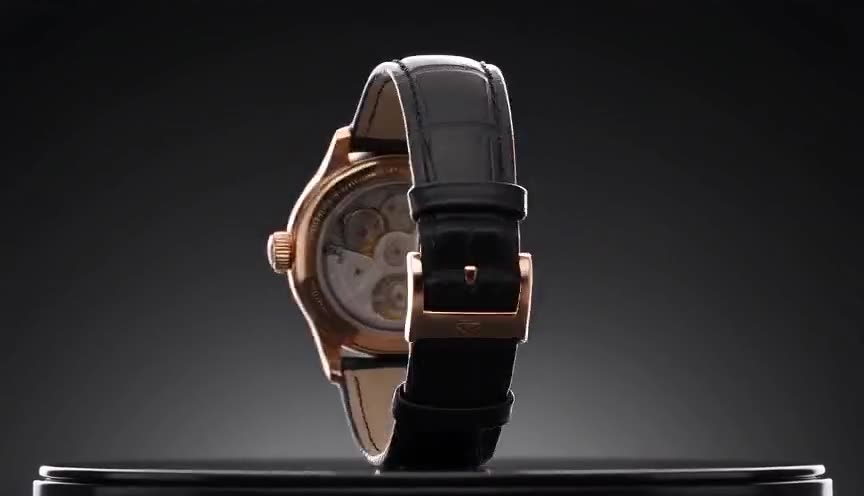
In a turntable shot the subject rotates in place on a platform while the camera stays static, common in product and portrait work. A 360-degree orbit keeps the subject still and moves the camera around it instead.
In film
The Matrix (1999)
The opening fight freezes Trinity in midair while bullet-time cameras complete a 360-degree orbit around her before the kick lands.
Kill Bill: Vol. 1 (2003)
During the House of Blue Leaves fight, a circular tracking shot orbits around Beatrix Kiddo standing still amid the surrounding swordfight.
The prompt
Name the move explicitly: '360-degree orbit' or 'camera circles the subject in a full 360 degree turn', and state that the subject stays centered and still. Give a radius and a speed ('slow, even orbit' or 'fast orbit completing in 4 seconds') and describe what stays constant (subject size, height, horizon line) so the model does not drift or zoom. Avoid vague words like 'spin' or 'rotate' alone, since models often apply them to the subject instead of the camera.
The exact prompt that rendered the video on this page. Keep the description of the move, change the subject and the setting.
Fast 360-degree orbit. The camera circles all the way around an old fisherman standing still on a wooden pier at dawn, keeping him centered: we see his face, then his profile, then his back with the harbor behind, then his other profile, and his face again, the boats and the sea sweeping past behind him. One smooth continuous circular camera move. Realistic, cinematic. No text.
Common mistakes
Inconsistent lighting across the circle
A key light placed for one side of the orbit can turn the subject into a silhouette on the opposite side. Plan lighting (or note it in the prompt) so it reads correctly at every angle.
Speed that reads as spinning, not circling
An orbit finished in under 2 to 3 seconds tends to look like the world is spinning rather than the camera moving deliberately. Slow the move or extend the duration to keep it readable as an orbit.
Losing the fixed radius
If the camera drifts closer or farther from the subject mid-circle, the framing breaks and the shot reads as shaky rather than orbital. State a constant distance and height explicitly.
Frequently asked questions
What is a 360-degree orbit shot?
It is a camera movement that circles all the way around a subject while keeping it centered in frame, showing the subject and its surrounding environment from every angle in one continuous move.
How long should a 360-degree orbit last?
Most orbits run 4 to 10 seconds for a dramatic beat and 15 to 30 seconds for a slower, contemplative reveal. Anything under 3 seconds tends to look like a spin rather than a deliberate circle.
What equipment do you need for a 360-degree orbit?
A circular dolly track, a motorized gimbal head, a drone flying a fixed-radius circle, or a steadicam operator walking a marked ring. The key requirement is keeping a constant distance and height to the subject.
Can AI video tools generate a 360-degree orbit shot?
Yes, models like Seedance, Kling, Veo, Wan and Grok Imagine can produce this move when the prompt states the full circle explicitly, names a fixed radius, and specifies that the subject stays centered and still, as shown in the example clip on this page from Imaginode.