Jib shot
Also calledJib arm shot, Mini crane shot
A jib shot is a camera move made with a small counterweighted crane arm that lifts, lowers and swings the camera through space in one continuous sweep. It gives the viewer a floating, elevated perspective that rises above eye level or arcs around a subject without the camera ever touching the ground.
What it tells
Directors reach for a jib when they want to change the audience's relationship to a scene without cutting: the camera lifts away from a conversation to reveal the room, or drops from a wide establishing height down into a character's eyeline. That single unbroken rise or arc reads as an emotional shift, curiosity opening into scale, or intimacy closing in from above. Because the move is smooth and mechanically controlled, it feels deliberate rather than shaky, letting an audience settle into the transition instead of reacting to it.
How it is shot
A jib is a lever: one end holds the camera and a remote hot head that pans and tilts independently, the other end holds counterweights that balance the arm on a central pivot, so a small push moves the camera through a large arc. Arms typically run 6 to 20 feet, mounted on a wheeled base, tripod, or dolly track for combined moves. One operator swings and raises the arm while a second, often at a wireless monitor, pans and tilts the head, keeping the horizon level through the sweep. Rises of 3 to 10 feet over 3 to 6 seconds are common, with speed eased in and out to avoid a mechanical jolt at the start and stop of the move.
When to use it
- Opening or closing a scene with a rise or descent that reveals scale without cutting away.
- Lifting off a tabletop conversation to show the wider room or landscape beyond it.
- Sweeping over an obstacle, such as a table, railing or crowd, that a dolly cannot cross.
- Combining a vertical rise with a lateral arc to follow a character as they stand or turn.
Not to be confused with
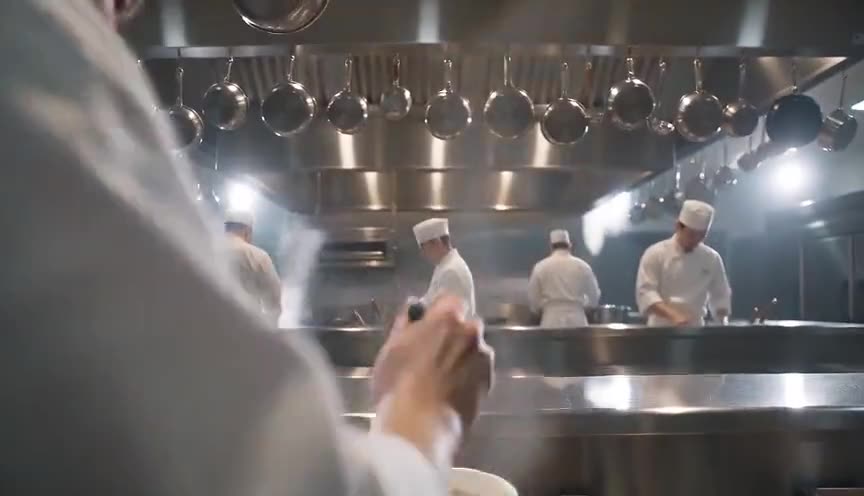
A crane-up uses a larger, often telescoping arm to lift the camera high above a scene for one big vertical reveal. A jib is smaller and combines that rise with lateral swings, better suited to tight interiors.
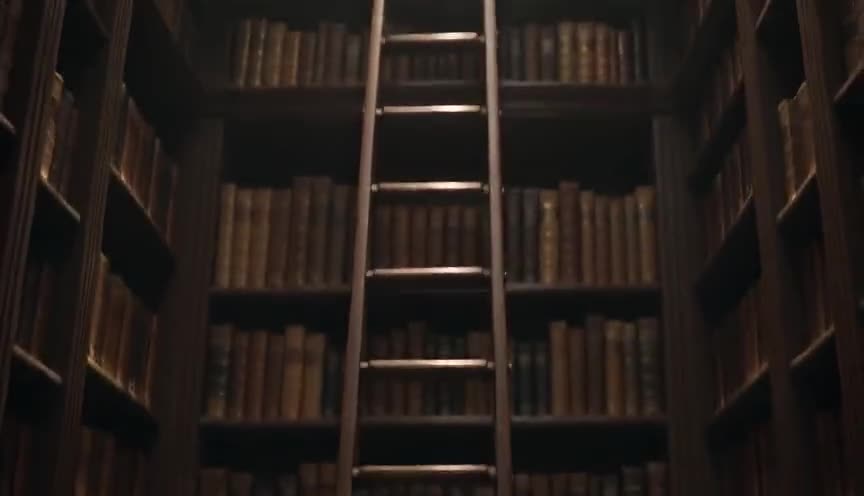
A pedestal shot moves the camera straight up or down on a hydraulic column with no arc. A jib rises on a pivoting arm instead, so the same vertical lift naturally curves sideways as it climbs.
In film
1917 (2019)
Long unbroken sequences rely on jib and technocrane arms to lift the camera over trench walls and rubble, sustaining the illusion of one continuous take.
Notorious (1946)
Hitchcock's celebrated balcony crane shot drops from a high party view to Alicia's hand, turning the hidden key into a suspenseful close detail.
Touch of Evil (1958)
The opening shot cranes above the border town, tracks the car with the planted bomb, then descends to street level in one continuous move.
The prompt
Describe the physical rise and lateral sweep explicitly: what starts low and ends high, and which direction it curves. Add an ease-in and ease-out cue, such as smooth and continuous with no jolt, and keep the horizon level so it does not tilt like a handheld shot. Avoid naming the rig itself since the model does not know equipment terms, describe the resulting camera path instead, and keep the background moving past the frame at a steady, matched rate to sell the height change.
The exact prompt that rendered the video on this page. Keep the description of the move, change the subject and the setting.
Jib shot: the camera glides up and forward through a cylindrical space station corridor, mounted on an arm that rises smoothly from hip height to near the ceiling while sweeping laterally to the right, revealing a lone engineer floating past illuminated control panels. The move is continuous with no cuts, shot on a 35mm lens, cool white LED strip lighting along the curved walls, faint drifting dust motes, horizon level throughout, the sweep easing in and holding steady speed for the full four seconds. No text.
Common mistakes
Starting too fast
Jib moves that snap into motion at full speed look mechanical and break the floating quality. Ease the rise and the swing in and out so the start and stop feel weighted rather than abrupt.
Tilting the horizon
Letting the horizon roll as the arm swings makes the shot read as a dutch angle instead of an elevated glide. Keep the head level through the entire arc.
Confusing jib with crane
A jib is a compact, often single operator arm for tighter spaces, not a full construction crane. Describing crane scale height while expecting jib scale intimacy mismatches the rig and the result.
Frequently asked questions
What is a jib shot?
A jib shot is a camera move made with a small counterweighted crane arm that lifts, lowers and swings the camera through space in one continuous sweep, giving the frame a floating, elevated quality.
What is the difference between a jib and a crane?
A jib is a smaller, more compact arm, often run by one or two people and suited to interiors or tight sets. A crane is larger and heavier, built for big vertical reveals over wide exteriors.
Can I get a jib shot with a gimbal or drone instead?
A gimbal on a slider or a low flying drone can approximate the rise, but it lacks the pivoting arc of a true jib. Combining a slider with a slight upward tilt gets closest without the actual arm.
Can an AI video generator create a jib shot?
Yes. Describe the physical camera path, the rise, the direction of the sweep and the level horizon, and models such as Seedance, Kling or Veo on a platform like Imaginode will render the motion convincingly.