Slow zoom in
Also calledpush zoom, creeping zoom, slow push
A slow zoom in is a continuous, gradual increase in focal length that pushes the frame in on a subject without moving the camera, magnifying detail over several seconds. It tightens the viewer's attention and builds tension or intimacy by shrinking the world around the subject.
What it tells
Directors reach for the slow zoom when they want the audience to lean in on their own, without a camera move that draws attention to itself. Because the lens does the work rather than the dolly, the world flattens slightly and the subject seems to be closing in on us, or we on it. It reads as psychological pressure: dawning realization, mounting dread, or quiet emotional focus, all without a cut.
How it is shot
On set, the operator sets a zoom lens (commonly a 24-180mm range) to its wide end and racks it toward telephoto over 6 to 15 seconds, using a servo motor or a calibrated zoom ring for a smooth, linear speed with no jerks at start or stop. The camera itself stays locked on a tripod or head; only the internal lens elements move, so perspective and parallax do not change, which is what separates a zoom from a dolly. Focus must be checked at both ends of the move since depth of field compresses as the lens goes long. In post, editors sometimes add a subtle speed ramp so the zoom accelerates almost imperceptibly into the final seconds.
When to use it
- A character realizes something important and the scene needs internal pressure without a cut or camera move.
- You want to isolate a detail in a wide, busy environment while keeping the background compressed and flat.
- The moment calls for dread or suspense that builds slowly across a static, uninterrupted shot.
- You are recreating a surveillance or observational point of view where a physical camera move would feel wrong.
Not to be confused with
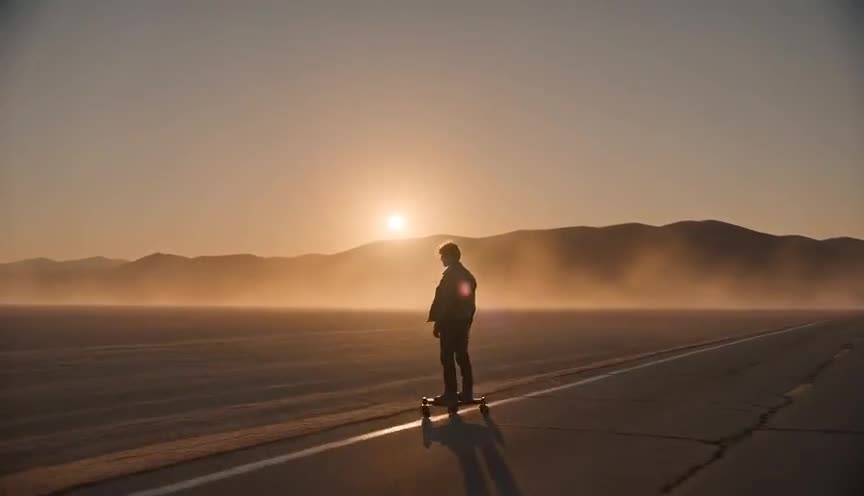
A dolly in moves the camera itself through space, so perspective shifts and background elements slide past each other; a slow zoom only changes focal length, flattening the image and leaving parallax untouched.
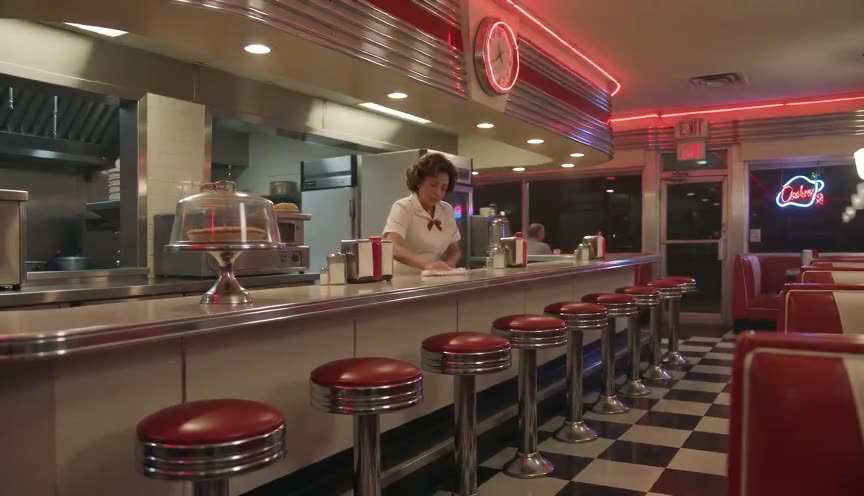
A crash zoom is the same tool, a magnification change, but executed in under a second for shock or comedy; the slow zoom stretches the identical move across many seconds for tension instead of surprise.
In film
The Conversation (1974)
The opening Union Square surveillance shot slowly zooms from a high wide view toward the recorded couple, making the camera itself feel like eavesdropping equipment.
The Godfather Part II (1974)
The final Lake Tahoe shot slowly zooms in on Michael Corleone sitting alone outside, tightening his isolation after the family flashback.
The prompt
Name the focal length range and the duration explicitly (for example, 35mm pushing to 85mm over 6 seconds) since models default to fast or wobbly zooms otherwise. Say the camera stays fixed on a tripod so the model does not add dolly movement or handheld drift. Describe what should stay sharp and what falls out of frame at the edges as magnification increases, and mention a steady, linear speed to avoid a jump partway through the clip.
The exact prompt that rendered the video on this page. Keep the description of the move, change the subject and the setting.
Slow zoom in on an elderly street vendor stirring noodles in a wok at a crowded night market in Taipei, red paper lanterns and neon signs glowing behind him. The camera is locked on a tripod and does not move sideways or forward; only the lens focal length increases smoothly from a wide 24mm view to a tighter 70mm view across the full four seconds, with no jump or stutter in speed. Steam rises from the wok and drifts past the frame, background crowds and stalls slowly compress and blur as the shot tightens on the vendor's face and hands. No text.
Common mistakes
Zoom too fast
Racking the lens too quickly turns a slow zoom into a crash zoom, killing the slow-building tension the technique is meant to create.
Confusing it with a dolly
Letting the camera itself creep forward while zooming, or asking an AI model for a loose 'zoom in', produces a dolly move with shifting parallax instead of a true zoom.
Uneven speed
Starting or stopping the zoom abruptly, rather than holding a steady linear rate, draws attention to the mechanics instead of the subject.
Frequently asked questions
What is a slow zoom in?
It is a continuous, gradual narrowing of the field of view achieved by changing the lens's focal length while the camera itself stays perfectly still. The effect gathers the audience's focus onto a subject over several seconds, often to signal a realization or building tension.
How is a slow zoom in different from a dolly in?
A zoom changes only magnification through the lens, so the background compresses and parallax stays absent; a dolly physically moves the camera through the room, so foreground and background elements shift relative to each other as the frame changes.
How long should a slow zoom in last?
Most examples run between 6 and 30 seconds depending on the emotional weight of the moment; shorter than that reads as a crash zoom, and much longer risks losing the audience's attention before the payoff.
Can AI video tools generate a convincing slow zoom in?
Yes, tools like those on Imaginode can render a smooth slow zoom if the prompt specifies a fixed camera, an explicit focal length change and a steady speed over the clip's duration, since vague zoom requests often default to a shaky or uneven push.