Static locked-off shot
Also calledLocked shot, Fixed shot, Static shot, Locked-off camera
A static locked-off shot is a shot in which the camera is fixed on a tripod or mount and does not pan, tilt, zoom, or travel during the take. It removes camera movement entirely, so the viewer's attention goes to what moves, or doesn't, inside a stable frame.
What it tells
Directors reach for the locked-off frame when they want the audience to observe rather than be pulled along. Without camera motion, the eye scans the composition freely, and any change in the frame (a gesture, a shift of light, a figure entering or leaving) carries extra weight. It suits scenes of quiet tension, surveillance, ritual, or grief, where stillness itself becomes a statement and restraint reads as confidence rather than absence of style.
How it is shot
The camera is mounted on a tripod with the head locked in pan, tilt, and roll, or bolted to a fixed rig, then leveled and checked for drift before rolling. The frame is composed and the lens chosen (often a normal or wide focal length so depth and geometry read clearly) before action starts, since nothing will be adjusted mid-take. Focus is set and, if needed, marked so it holds without a pull. Lighting is built to stay consistent for the shot's full duration, from a few seconds to several minutes. All motion in the image comes from the subjects, practical effects, or time passing, never from the camera.
When to use it
- To let a performance or a long take play out without the camera commenting on it
- For surveillance or voyeuristic scenes where the frame should feel like a fixed observer
- To contrast with a movement-heavy sequence and give the audience a visual rest
- For tableau-like compositions where geometry and blocking do the storytelling
Not to be confused with
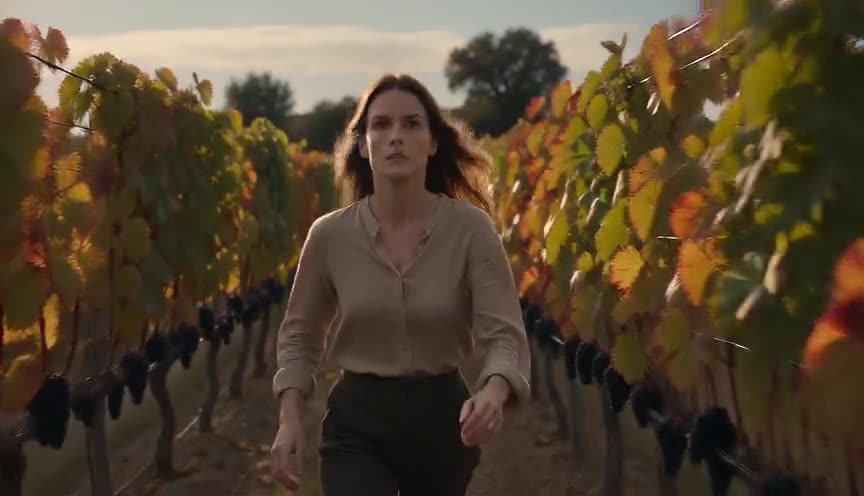
Handheld camera adds constant small motion and a sense of a present, breathing observer, while the static shot removes the camera entirely from the equation, making any movement inside the frame the only source of energy.
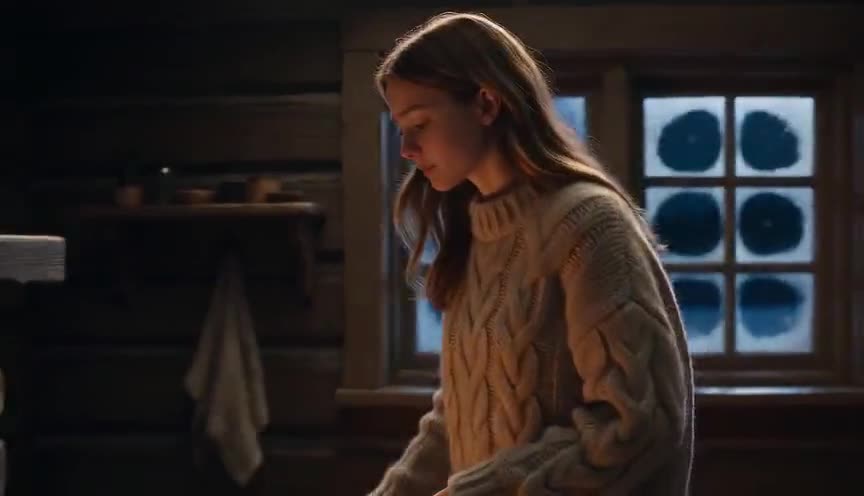
A long take is defined by duration and often involves camera movement within one continuous shot. A static locked-off shot can be short or long, but its defining trait is the complete absence of camera motion, not the length of the take.
In film
Jeanne Dielman, 23 Quai du Commerce, 1080 Bruxelles (1975)
Chantal Akerman builds nearly the entire film from locked-off frames, turning domestic routine into a study of time and control.
Tokyo Story (1953)
Yasujiro Ozu’s low, fixed camera observes family conversations and empty rooms from stable tatami-level compositions, making small gestures and absences carry the drama.
Stranger Than Paradise (1984)
Jim Jarmusch stages scenes as single static master shots, separated by blackouts, so the deadpan performances and sparse blocking define the film’s rhythm.
The prompt
State plainly that the camera is locked off, fixed, or on a tripod, and add 'no camera movement' or 'no pan, no tilt, no zoom' so the model does not drift into a slow push or float. Put all the motion in the description of the subject, light, or elements in the scene, since a static shot with nothing changing inside the frame reads as a still photo rather than a video. Avoid movement verbs applied to the camera itself.
The exact prompt that rendered the video on this page. Keep the description of the move, change the subject and the setting.
Static locked-off shot inside a greenhouse, camera fixed on a tripod at eye level with no pan, no tilt, no zoom, and no drift for the full four seconds. A middle-aged woman in a canvas apron stands center frame watering rows of tomato seedlings with a metal can, steam rising faintly from warm soil under diffused daylight through fogged glass panels. The frame stays perfectly still while water drips, leaves sway slightly, and dust motes drift through a shaft of soft light behind her. No text.
Common mistakes
Hidden camera drift
A tripod head that is not fully locked, or a model output that adds a slow float, breaks the shot's core promise; check for any creep in framing over the take.
Nothing to watch
A locked frame with no change inside it reads as a still photograph. Give the shot a reason to be a video: a gesture, a light shift, an entrance or exit.
Weak composition treated as a placeholder
Because the camera cannot move to fix framing later, the composition has to work on its own, with deliberate lines, balance, and depth chosen before rolling.
Frequently asked questions
What is a static locked-off shot?
It is a shot filmed with a camera fixed in place, usually on a tripod with the head locked, so there is no pan, tilt, zoom, or travel during the take. All movement the viewer sees comes from inside the frame, not from the camera.
Is a static shot the same as a tripod shot?
Not quite. A tripod shot can still pan or tilt on the tripod head. A static locked-off shot specifically has the head locked so the frame cannot move at all, which is a stricter and more deliberate choice.
Why do directors choose a locked-off frame instead of moving the camera?
Stillness removes the camera's voice from a scene, letting performance, blocking, or the passage of time speak for themselves. It also creates contrast when it is cut against or followed by moving shots.
How do I get a true static shot from an AI video model?
Say explicitly that the camera is locked off or fixed with no pan, tilt, or zoom, and describe the motion you want happening inside the frame instead. Tools like Imaginode's models respond well to this kind of explicit, physical instruction.