Sepia
Also calledSepia tone, Sepia grade, Antique tone
Sepia is a color grade that strips out the full color palette and replaces it with a single warm, brownish monochrome, similar to an aged photograph or old print. It tells the viewer, without a word, that what they see belongs to the past, to memory, or to something already fading.
What it tells
Sepia works as a shorthand for time. Directors reach for it to mark a flashback, a memory that has softened at the edges, a historical document, or a photograph coming to life. Unlike black and white, which can feel cold or clinical, sepia carries warmth, so it tends to soften harsh material, evoke nostalgia rather than dread, and separate a remembered or bygone scene from the harder, fuller color of the story's present.
How it is shot
Start by desaturating the image to grayscale, then push the tonal range into a narrow warm hue band, roughly 30 to 40 degrees on the hue wheel, so shadows sit in dark brown and highlights lift toward cream or amber. This can be done with a color grading LUT, a curves adjustment that lifts red and green in the shadows while cutting blue everywhere, or historically by chemically toning a silver print with sulfide. Cinematographers often pair the grade with light film grain, a soft vignette, and a gentle highlight rolloff to mimic paper aging, and they light the scene with fewer competing colors on set so the mono conversion reads cleanly.
When to use it
- Marking a flashback or a character's memory as distinct from present-day scenes
- Recreating an old photograph, letter, or newsreel that the story treats as a historical artifact
- Softening a violent or tragic past event so it reads as remembered rather than immediate
- Establishing a period setting quickly in a title sequence or opening montage
Not to be confused with
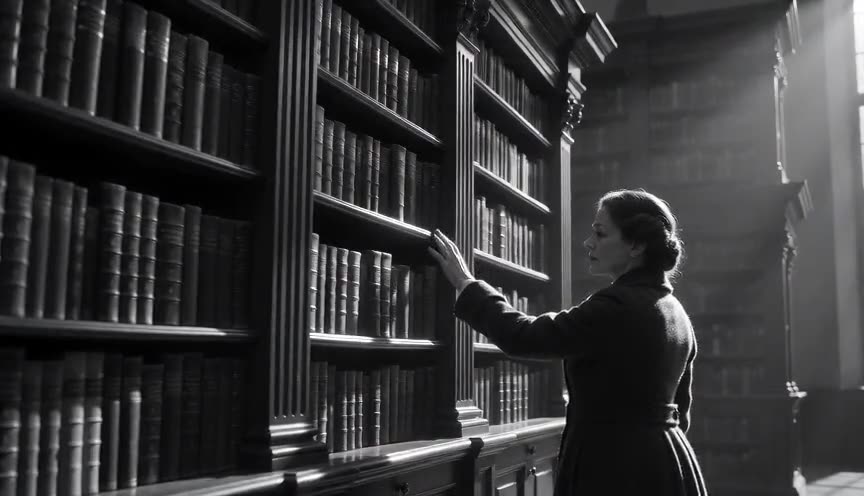
Black and white removes color entirely and reads as neutral, formal, or documentary. Sepia keeps a single warm hue, which feels nostalgic and photographic rather than journalistic or stark.

Faded film lifts blacks and desaturates unevenly to mimic sun-damaged stock, often keeping some color. Sepia is a full, deliberate monochrome conversion into one brown hue, with no residual color left.
In film
The Wizard of Oz (1939)
Kansas is shot in warm sepia-toned monochrome, so the switch to full Technicolor in Oz reads as a jolt into another world.
The Godfather Part II (1974)
Willis gives young Vito's early New York flashbacks a sepia-amber palette, separating immigrant memory from the cooler contemporary Corleone story.
O Brother, Where Art Thou? (2000)
Its digital intermediate desaturates and warms Depression-era Mississippi into a dusty sepia-gold, making the comic odyssey feel like an aged folk photograph.
The prompt
Say the word sepia or warm monochrome brown explicitly, and state that no other color is present, since models will otherwise drift toward teal and orange. Add aged photograph, film grain, and vignette to reinforce the period feel, but avoid words like vibrant or colorful, which fight the monochrome instruction. Keep the described action simple so the grade, not the motion, carries the read in four seconds.
The exact prompt that rendered the video on this page. Keep the description of the move, change the subject and the setting.
Sepia: a skate park at sunset, the entire image rendered in warm monochrome brown with no other color present, as a middle-aged skater in a hoodie rolls up a ramp and catches air against the fading sun. The camera holds a static locked-off wide shot. Fine film grain drifts across the frame, a soft vignette darkens the corners, highlights glow warm and cream like an old print, and the ramp and chain-link fence sit in deep sepia shadow. No text.
Common mistakes
Confusing sepia with teal and orange
Sepia is a single warm monochrome hue with no color contrast, while teal and orange keeps two competing hues. Mixing the two grades produces a muddy look that reads as neither.
Sepia without a memory or period cue
Applying sepia to a scene that is clearly present-day and ongoing confuses viewers about the timeline. Sepia works best when paired with a clear flashback, photograph, or period setting.
Oversaturating the brown
Pushing the hue too strong turns sepia into a warm amber color grade rather than a monochrome tone. True sepia should read as a single-color photograph, not a colored scene.
Frequently asked questions
What is sepia in film?
Sepia in film is a color grade that converts the image into a single warm brown monochrome, similar to an old toned photograph. It signals to the audience that a scene belongs to memory, history, or the past.
Why do old photos look sepia?
Early photographic prints were chemically toned with sulfide compounds to slow fading and add stability, and the process happened to shift the silver tone toward warm brown, which the eye now reads as a marker of age.
Is sepia the same as black and white?
No. Both remove color, but black and white stays neutral gray, which feels clinical or documentary, while sepia sits in a warm brown range, which feels nostalgic, aged, and softer emotionally.
Can an AI video model generate a sepia look reliably?
Yes, if you state sepia or warm monochrome brown explicitly and say no other color is present. Tools like Imaginode make it easy to test the exact phrasing against a short clip before committing to a full shoot.