Black and white
Also calledMonochrome, Grayscale, B&W, Black and white photography
Black and white is a color treatment that strips a shot of hue, rendering the image only in shades of gray from pure white to deep black. It forces the eye toward contrast, texture and composition instead of color, giving scenes a heightened, often timeless or documentary feel.
What it tells
Directors reach for black and white when they want to strip a scene of decoration and leave only form, gesture and light. Without color to soothe or distract, viewers read faces and surfaces more directly, and the image feels like memory, history or moral clarity rather than everyday reality. It can mark a flashback, a documentary truth, a fable, or simply ask the audience to look harder at what remains once color is gone.
How it is shot
On a digital camera the image is captured in color and desaturated in the grade, or shot with the camera's monochrome profile; on film, black and white stock such as Kodak Double-X is exposed directly, with no color layer to process. Cinematographers compensate with color filters, an orange or red filter darkens blue sky, a blue filter separates skin from background, because what mattered as hue in color must now read as tonal value. Lighting is built for contrast ratio, often 4:1 or higher, rather than color harmony, and costume and set design are checked in gray so objects that read differently in color do not go flat or vanish on screen.
When to use it
- To signal a flashback, dream or memory sequence set apart from present-day color scenes.
- For documentary or wartime footage that needs to feel historical, urgent or unembellished.
- When color would distract from composition, texture or performance you want the audience to study closely.
- To give a contemporary story a timeless, fable-like quality that resists a specific era.
Not to be confused with
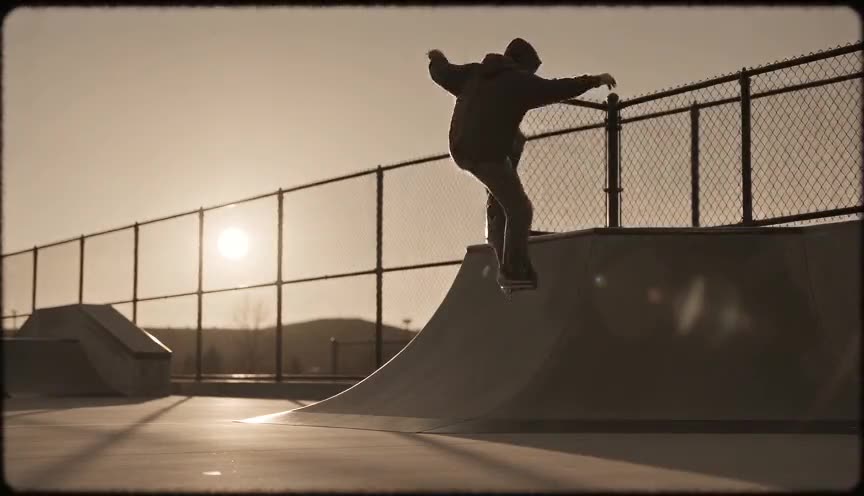
Sepia keeps a single warm brown tint across the image, evoking aged photographs, while black and white removes color entirely and relies on pure gray tonal range for contrast.

Desaturated look lowers color saturation but keeps hues visible, giving a muted, drained feel; black and white removes hue altogether, so contrast and shape carry all the visual weight.
In film
Schindler's List (1993)
Spielberg shot almost the entire film in black and white to evoke archival footage and moral gravity, breaking the palette for one famous red coat.
Roma (2018)
Cuaron shot in luminous black and white to render 1970s Mexico City as memory, letting silver tones carry texture and depth instead of period color.
The Lighthouse (2019)
Eggers used high-contrast black and white and vintage lenses to make the film feel like an unearthed early-cinema artifact of dread.
The prompt
Say 'black and white' or 'monochrome' explicitly, since some models default to color even under high contrast. Describe light in terms of value, bright highlight, deep black shadow, rather than in terms of color, and ask for film grain if you want texture. Avoid naming specific colors anywhere in the scene description, since stray color words can leak into the render as faint tints. Mention lens and contrast level for control over how harsh or soft the grayscale feels.
The exact prompt that rendered the video on this page. Keep the description of the move, change the subject and the setting.
Black and white, static locked-off shot inside a Victorian library at night. A middle-aged woman in a long wool coat stands before towering wooden shelves, running her fingers along leather book spines. Hard directional light falls from an unseen tall window, carving deep black shadows across the shelves while her face and hands sit in bright silver highlight. No color exists anywhere in the frame, only pure grayscale tones from white paper to black wood. Fine film grain sits over the whole image. The camera does not move for the full four seconds. No text.
Common mistakes
Leaving color words in the prompt
Naming any color in the scene description, even a sky or a plant, can leave a faint gray tint that fights the pure monochrome look you asked for.
Flat, even lighting
Without color to separate objects, low contrast light makes the image look muddy; black and white needs a real contrast ratio between highlight and shadow to read clearly.
Ignoring texture
Skipping film grain or fine surface detail in costume and set makes digital black and white look sterile and plastic rather than filmic and tactile.
Frequently asked questions
What is black and white in film?
It is a color treatment that removes all hue, showing the image only in shades of gray between pure white and deep black. It shifts attention to contrast, shape and texture instead of color.
Why do filmmakers still shoot in black and white today?
Even with color film widely available, directors choose black and white to evoke history, memory, documentary truth or a timeless mood, and to force the audience to focus on light, form and performance rather than color.
Does black and white work well with AI video generation?
Yes, most AI video models handle black and white cleanly if you state it explicitly and avoid color words elsewhere in the prompt; on Imaginode you can preview the look instantly before committing to a full shot.
What is the difference between black and white and monochrome?
Black and white specifically means grayscale, from white to black with no hue. Monochrome is a broader term that also covers single-color tints like sepia or a blue-toned image, so black and white is one type of monochrome.