Vaporwave
Also calledVaporwave aesthetic, Retro-futurist pastel look, VHS neon look
Vaporwave is a genre look built on pastel neon colors (pink, cyan, purple), soft VHS-style glitch and grain, and retro-futurist 1980s and 90s consumer imagery like chrome, marble statues and grid patterns. It wraps the viewer in a synthetic nostalgia that feels both comforting and slightly uncanny, like a memory of a place that never existed.
What it tells
Directors reach for vaporwave when they want to comment on nostalgia itself rather than deliver a straight period piece. The look flattens time, mixing ancient marble with 80s consumer tech and glitchy VHS artifacts, so a scene feels remembered rather than lived. It suits stories about memory, artificial paradise, corporate emptiness or characters trapped in a loop, because the aesthetic itself already carries irony and melancholy before a single line is spoken.
How it is shot
The grade pushes magenta and cyan into every shadow and highlight, often through a gradient sky or wall rather than natural light. Practical neon tubes or gelled lights (pink, purple, cyan) motivate the color on set. Add a soft diffusion filter or slight chromatic aberration, a light VHS overlay (scan lines, chroma bleed, tracking noise), and a thin film grain. Production design leans on chrome surfaces, marble busts, glass brick, palm silhouettes and grid patterns. Camera moves are usually slow (a static shot, a slow dolly or a slow zoom) so the color and texture read clearly; fast cutting breaks the trance the look depends on.
When to use it
- Opening a scene set in an artificial or dreamlike version of the recent past.
- Signaling that a character is trapped in nostalgia, memory or a simulation.
- Scoring a music video or interstitial that needs instant retro-futurist mood.
- Undercutting a consumerist or corporate setting with ironic, hollow beauty.
Not to be confused with
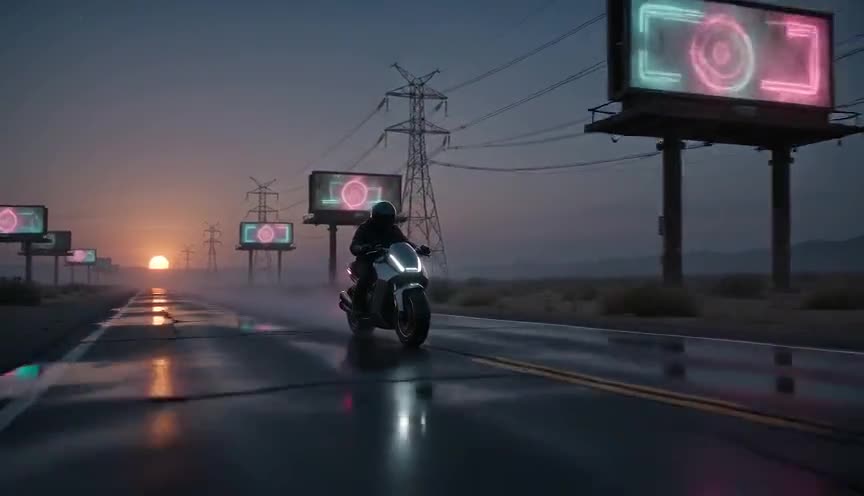
Cyberpunk leans on cool cyan and hard neon to suggest a gritty, dense high-tech future; vaporwave uses softer pastel pink and purple gradients to suggest nostalgia and emptiness rather than danger.
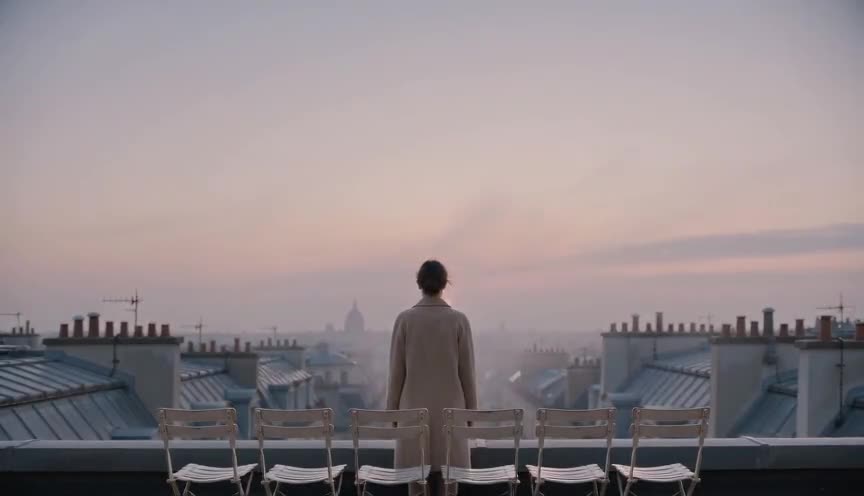
Dreamcore draws on uncanny, half-remembered liminal spaces (empty malls, pool rooms) with a more muted or desaturated palette, while vaporwave commits fully to saturated pink and cyan neon and explicit VHS texture.
In film
Kung Fury (2015)
This short film builds its entire retro-futurist 80s world on VHS grain, neon gradients and synth-driven nostalgia, a direct pop reference for the vaporwave look.
Beyond the Black Rainbow (2010)
Panos Cosmatos gives the Arboria Institute a 1983 retro-futurist look, with neon washes, analog haze and synthetic nostalgia that overlaps the vaporwave aesthetic.
The prompt
Name the palette directly: magenta and cyan, pastel gradient, chrome and marble. Add texture words like VHS scan lines, chroma bleed, soft grain and light chromatic aberration so the model does not default to clean modern neon. Keep camera movement slow (static or slow dolly) so the color and texture stay legible. Avoid asking for readable signage, logos or sharp modern tech, which pulls the image toward cyberpunk instead of vaporwave.
The exact prompt that rendered the video on this page. Keep the description of the move, change the subject and the setting.
Vaporwave: a slow, low static camera holds on a jazz club interior lit entirely in magenta and cyan neon, where a saxophonist stands in silhouette inside drifting pink haze and chrome tabletops and a marble bust catch the glow. Faint VHS scan lines and soft chroma bleed sit at the frame edges, grain flickers gently, and the color settles into pastel gradients across a grid-patterned back wall. Nothing moves quickly, only drifting smoke and a slow pulse of light. No text.
Common mistakes
Using hard, saturated modern neon
Bright single-color LED neon without gradient reads as cyberpunk or nightclub, not vaporwave; the palette needs a soft pink-to-cyan blend, not one hard hue.
Skipping the texture layer
Vaporwave without VHS grain, scan lines or chroma bleed just looks like a color grade; the analog texture is what sells the retro-futurist illusion.
Fast camera or cutting
Quick pans, cuts or handheld shake break the trance-like stillness the look depends on; vaporwave scenes almost always move slowly or stay locked off.
Frequently asked questions
What is the vaporwave look?
It is a genre look built from pastel pink and cyan neon, VHS-style grain and glitch, and retro-futurist imagery like chrome, marble statues and grid patterns, used to create a mood of synthetic, slightly uncanny nostalgia.
Where does the vaporwave aesthetic come from?
It grew out of internet music and art culture in the early 2010s, remixing 1980s and 90s advertising, mall culture, early computer graphics and classical statuary into a slowed-down, ironic nostalgia.
What colors define vaporwave?
Magenta, pink, cyan and purple dominate, usually blended into soft gradients rather than used as flat single colors, often paired with white marble and chrome for contrast.
Can an AI video model generate a vaporwave scene reliably?
Yes, if the prompt names the palette (magenta, cyan, pastel gradient), the texture (VHS scan lines, grain, chroma bleed) and slow camera movement; a tool like Imaginode's canvas responds well when those specifics are stated explicitly rather than left to the word vaporwave alone.