Cyberpunk
Also calledCyberpunk aesthetic, Neo-Tokyo look, High tech low life
Cyberpunk is a genre look that fuses advanced technology with urban decay, built from neon signage, rain-wet streets, dense signage clutter and towering megacorporate screens set against poverty and grime. It tells the viewer they are watching a near-future world where dazzling tech and human squalor sit side by side, producing glamour laced with unease.
What it tells
Directors reach for cyberpunk to picture a society where corporations tower over the powerless and technology has outpaced human dignity. The contrast between glowing advertisements and broken infrastructure lets a single frame argue a whole worldview: progress without justice. It also produces a specific loneliness, a crowd of faces lit by screens that sell them things they cannot afford, so the audience feels both dazzled and small.
How it is shot
The look is built mostly with light and production design rather than a filter. Practical neon tubes, LED signage and holographic panels serve as key light sources, mixing warm 3200K practicals with cool 8000 to 9000K ambient spill to create magenta and cyan contrast on skin and metal. Streets are wet-down before every take so signage doubles in reflection. Haze or light smoke turns beams into visible shafts. Wide 24 to 35mm lenses at low angles exaggerate scale between megastructures and pedestrians, while layered foreground signage, cables and steam add depth. Anamorphic glass adds horizontal flares off the brightest sources, and grime, rust and patched wiring keep the tech world feeling used rather than pristine.
When to use it
- Introducing a near-future city ruled by corporations rather than governments or law
- Showing a character isolated inside a crowd of screens and advertisements
- Building a chase or pursuit through streets defined by neon and rain
- Contrasting shiny consumer technology with poverty, rust and street-level decay
Not to be confused with
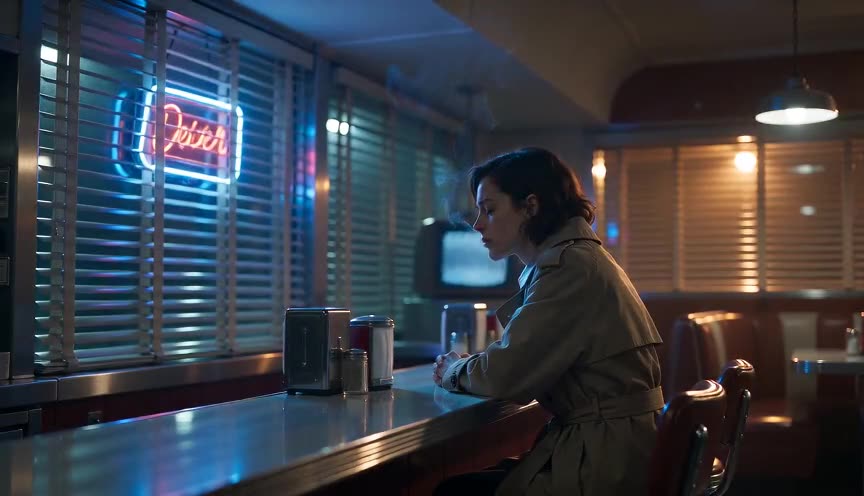
Tech noir borrows cyberpunk color and hardware but is built around a detective or hunted-protagonist plot with noir shadow and mystery. Cyberpunk is the broader world and production design; tech noir is that world wearing a crime story.
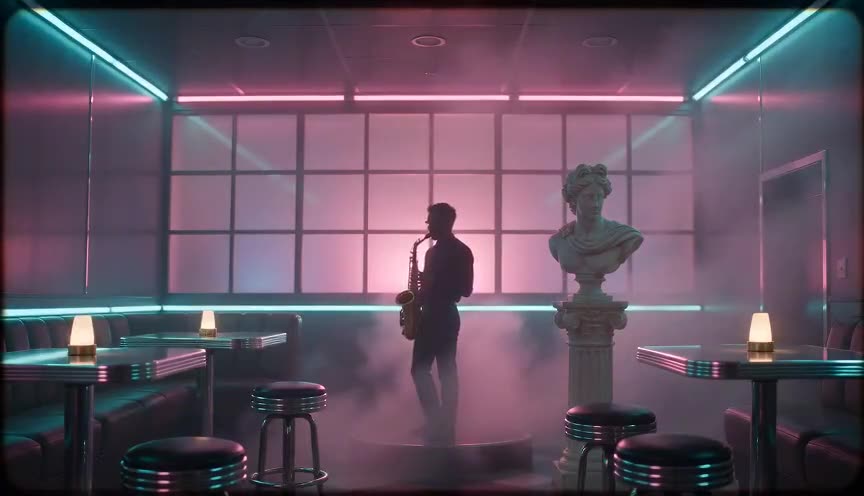
Vaporwave uses similar pink and cyan palettes but leans nostalgic, pastel and surreal, evoking dead retail and 1980s retro-futurism rather than social decay. Cyberpunk keeps the grime, crowding and class conflict that vaporwave smooths away.
In film
Blade Runner (1982)
Defined the genre look with rain-soaked streets, towering advertisement screens and neon reflected off every wet surface.
Blade Runner 2049 (2017)
Expands the palette into hard magenta and orange against cold interiors, pairing scale with near-total urban decay.
Akira (1988)
Applies the aesthetic to animation, with neon-lit Neo-Tokyo streets and biker gangs cutting through smoke and glow.
The prompt
Name the light sources directly: neon signage, holographic panels, wet asphalt reflections, magenta and cyan practicals. Add scale contrast with words like megastructure, cable clutter or crumbling overpass so the tech reads as lived-in, not clean sci-fi. Mention haze or drifting smoke to catch the light in the air. Avoid asking for readable signage text or brand logos, and avoid generic future words alone (futuristic, sci-fi) since they produce sterile results without the decay that makes cyberpunk read.
The exact prompt that rendered the video on this page. Keep the description of the move, change the subject and the setting.
Cyberpunk atmosphere on a desert highway at dusk: a lone rider on a matte-black electric motorcycle speeds along a cracked two-lane road as towering roadside billboards flicker with pink and cyan holographic glow, reflecting off the bike's chrome fairing and the storm-wet asphalt. The camera holds a low, wide tracking shot from a chase vehicle, moving parallel to the rider at a steady pace, framing a dull orange sun behind distant transmission towers strung with tangled cable. Thin haze drifts across the road, catching shafts of magenta light against the darkening sky. No text.
Common mistakes
Color without decay
Adding magenta and cyan lighting to a clean, modern set produces a neon filter, not cyberpunk. The look needs grime, patched wiring and clutter underneath the glow.
No scale contrast
Cyberpunk depends on tiny human figures dwarfed by megastructures and screens. Skip the wide, low angles and the world just looks like a colorful street at night.
Unmotivated light
Cyan and magenta glow should visibly come from signage, screens or holograms in frame. Light that has no visible source reads as an arbitrary color grade instead of a built world.
Frequently asked questions
What is the cyberpunk aesthetic in film?
It is a genre look that pairs advanced technology with urban decay, using neon signage, rain-wet streets and towering advertisement screens set against poverty and grime to suggest a corporate-run near future.
What colors define cyberpunk?
Magenta and cyan dominate, usually mixed with warm amber practicals and cool blue ambient light. The contrast between hot and cold light sources is what gives the look its glow and its unease.
How is cyberpunk different from tech noir?
Cyberpunk is the world: its architecture, signage and social decay. Tech noir applies noir plotting and shadow, usually a detective or hunted protagonist, on top of that same technological, dystopian setting.
Can AI video tools generate a convincing cyberpunk shot?
Yes. Naming the practical light sources (neon, holograms, wet reflections), the lens angle and the scale contrast gets reliable results in tools like Imaginode using models such as Seedance, Kling or Veo.