Neon lighting
Also calledNeon glow, Neon wash, Colored tube lighting
Neon lighting is the use of colored gas-discharge tubes or LED tube fixtures, typically pink, cyan, magenta or green, as the dominant or sole light source in a scene. It bathes faces and surfaces in saturated color and hard-edged shadow, giving the image a synthetic, urban, often melancholic or seductive mood.
What it tells
Directors reach for neon when they want a scene to feel wired into the city itself, a place where the light comes from signs and storefronts rather than the sun. The color does emotional work that dialogue cannot: cool cyan can feel isolating, hot pink can feel dangerous or erotic, and mixed casts on the same face suggest a character caught between two worlds. It signals night, transience and artificiality without a single line of exposition.
How it is shot
On set, gaffers use tube fixtures (real neon, fluorescent tubes with color gel, or RGB LED tubes like tube lights and Astera) placed just out of frame or built into practicals: signs, bar shelves, window glow. Color temperature is abandoned in favor of saturated gels, often 1/2 or full CTB and magenta/cyan combinations, with contrast ratios pushed hard so light falls off fast, leaving deep shadow a few feet from the source. Skin is usually underexposed relative to the neon by half a stop to a full stop so the color reads as light, not as a tint. Smoke or haze in the air catches the beams and makes the color volumetric.
When to use it
- Night exteriors or interiors set in a city, bar, diner, or club after dark
- Scenes needing a synthetic or futuristic mood without literal sci-fi set dressing
- Moments of temptation, danger, or moral ambiguity where color can carry subtext
- Transitions between two emotional states, using two colors meeting on one face
Not to be confused with
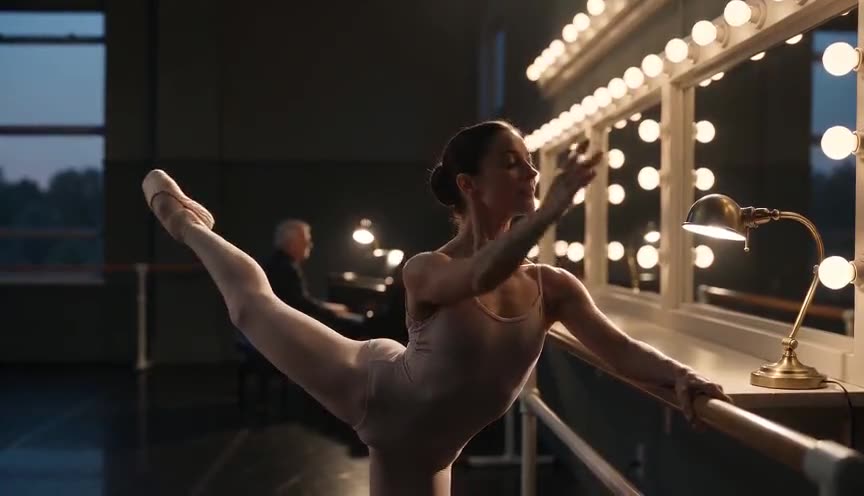
Practical lighting is the broader principle of motivating light from visible sources in frame. Neon lighting is one specific flavor of it, defined by its saturated color and hard urban character rather than realism.
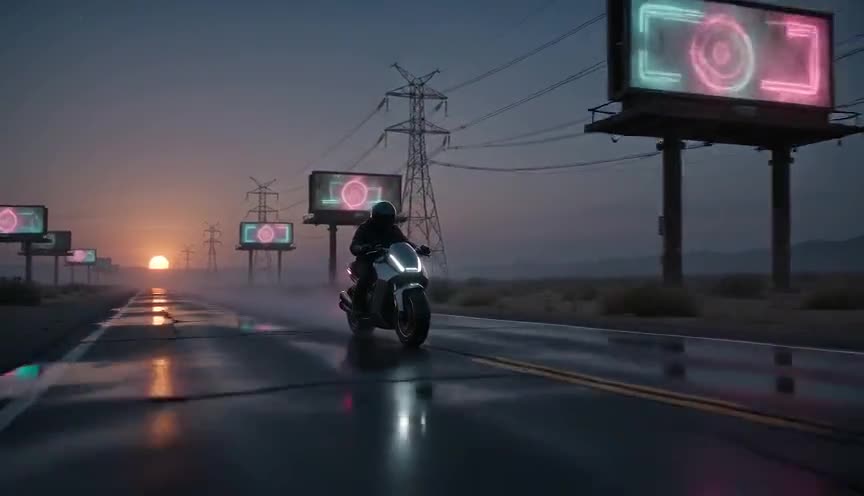
Cyberpunk is a full genre look built from production design, wardrobe, and story as well as light. Neon lighting is the single lighting tool most often borrowed to build that look, but it also works outside the genre.
In film
Blade Runner (1982)
Jordan Cronenweth uses neon signage and rain-slicked streets as the primary light source, defining the look of an entire genre.
Drive (2011)
Newton Thomas Sigel washes Los Angeles nights in pink and blue neon to give a quiet driver an interior, romantic glow.
Enter the Void (2009)
Benoit Debie saturates Tokyo's night scenes in neon color pushed to near-hallucinatory intensity.
The prompt
Name the actual colors (magenta, cyan, hot pink, acid green) instead of just saying 'neon', and specify where the light comes from: a sign, a window, a bar shelf. Mention that faces sit slightly underexposed against the glow, and add haze or steam so the beams become visible in the air. Avoid asking for 'colorful lighting' alone, models default to soft even color without the hard falloff that makes neon read as neon.
The exact prompt that rendered the video on this page. Keep the description of the move, change the subject and the setting.
Neon lighting in a 1970s New York diner at night. A woman in her fifties sits alone at the counter, her face lit from the left in hot pink from a neon sign glowing through the window and from the right in cool cyan from a tube light above the pie case, the two colors meeting in a hard line down her cheek. Steam rises slowly from a coffee cup in front of her, catching both colors. The camera holds static and locked off, no movement, background out of focus with soft pink and cyan bokeh from other signs. No text.
Common mistakes
Even, shadowless color
Flooding the whole frame with the same saturated color removes the contrast that makes neon read as a light source instead of a color filter over the lens.
Overexposing skin
Pushing exposure so faces look clean and bright kills the mood; neon scenes usually sit half a stop under to keep the color dominant over the skin tone.
No haze in the air
Without smoke, steam, or fog, the beams stay invisible and the light looks like a colored wall wash rather than a physical tube glowing in space.
Frequently asked questions
What is neon lighting?
Neon lighting is a lighting style that uses colored tube fixtures, real or simulated, as the main source of illumination in a scene, producing saturated color casts and hard shadow edges rather than natural white light.
Why does neon lighting look so cinematic?
It compresses mood into color: cool and warm hues sitting side by side on one face read instantly as tension, romance, or danger, doing narrative work that would otherwise take dialogue or a longer scene.
Is neon lighting only for cyberpunk or sci-fi films?
No. It appears in noir, crime dramas, romance, and character pieces set at night in cities; the genre look called cyberpunk borrows it, but neon lighting itself is genre-neutral.
How do I get accurate neon lighting from an AI video model?
Name specific colors and their sources (a pink sign, a cyan tube light), mention underexposed skin, and add haze so beams are visible. On Imaginode, models like Kling and Veo respond well to this level of physical detail.