Anamorphic lens
Also calledAnamorphic format, Cinemascope lens, 2.39:1 lens
An anamorphic lens squeezes a wide image horizontally onto standard film or sensor, then a matching desqueeze step stretches it back out, producing the wide 2.39:1 frame, oval bokeh, and horizontal streak flares associated with big-budget cinema. It gives footage a distinct optical signature, elongating out-of-focus highlights and stretching lens flares sideways, so viewers read the image as expansive and cinematic even in a static shot.
What it tells
Directors reach for anamorphic glass when they want a scene to feel larger than life: the wide aspect ratio suits landscapes, crowds, and ensemble blocking, while the oval bokeh and horizontal flares add a dreamlike glow that softens the hard edges of reality. The format carries decades of association with epic storytelling, from war films to musicals, so audiences unconsciously read it as prestige and scale. In quieter scenes, the same soft compression and horizontal streaks lend intimacy a theatrical, slightly heightened quality.
How it is shot
An anamorphic lens uses cylindrical elements, usually with a 2x or 1.3x squeeze factor, to compress the image horizontally during capture; a matching desqueeze in projection or post production stretches it back to a 2.39:1 or 2.66:1 frame. The cylindrical glass also distorts out-of-focus highlights into ovals rather than circles and stretches lens flares into horizontal blue or gold streaks. Classic anamorphic primes run from 25mm to 100mm, focus more slowly than spherical lenses, and often show soft corners and mild barrel distortion at the frame's edges, especially wide open around f/2.8.
When to use it
- Shooting a wide ensemble scene where you want scale and horizontal flares to read as cinematic.
- Filming a musical performance or crowded set piece that benefits from theatrical, elongated bokeh.
- Building a period or prestige drama that leans on classic widescreen visual language.
- Capturing night exteriors with practical lights you want to stretch into horizontal streaks.
Not to be confused with
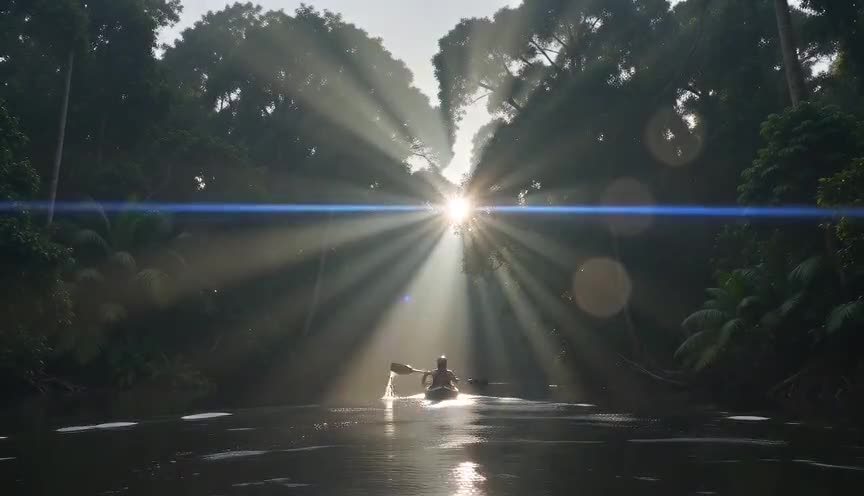
Anamorphic flare describes only the horizontal streak that stretched highlights create; the anamorphic lens is the entire optical system behind it, including the squeeze factor, the wide aspect ratio, and the oval bokeh, not just the flare.
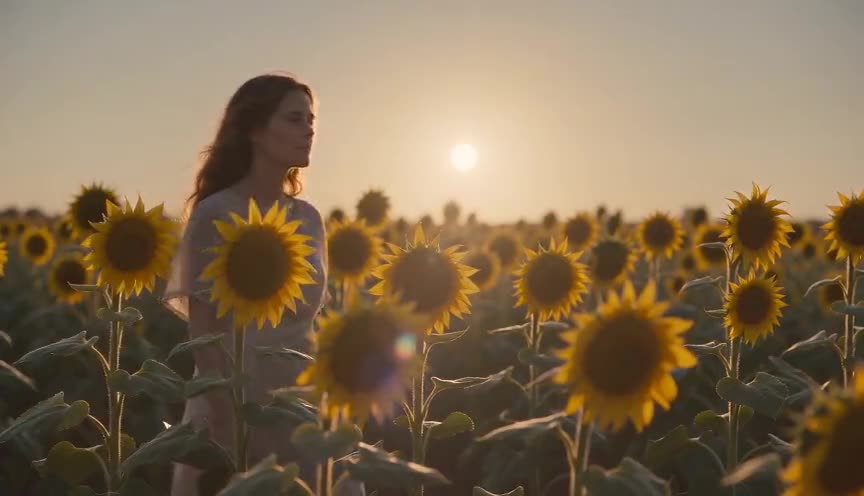
A vintage cine lens adds softness, uneven contrast, and color shifts from aged spherical glass, while an anamorphic lens changes the geometry itself: it squeezes the image, ovals the bokeh, and stretches flares, regardless of the glass's age.
In film
The Hateful Eight (2015)
Shot in Ultra Panavision 70 anamorphic to capture the wide interiors of Minnie's Haberdashery and ensemble blocking.
Drive (2011)
Anamorphic glass stretches neon and headlight flares into horizontal streaks that define the film's nocturnal look.
The prompt
Name the lens explicitly: say 'anamorphic lens' or 'shot on anamorphic glass' and add the widescreen ratio, 2.39:1, so the model favors a horizontal frame. Ask for oval bokeh and horizontal lens flares on any bright point, since those two traits sell the look fastest. Mention a squeeze value like 2x for flavor, but do not overload the prompt with jargon, one or two cues are enough. Avoid asking for extreme distortion or fisheye bending, that reads as a different lens entirely.
The exact prompt that rendered the video on this page. Keep the description of the move, change the subject and the setting.
Anamorphic lens shot, wide 2.39:1 cinemascope frame. At night on a rain-wet city street, a man in a grey wool coat walks slowly toward the camera. Behind him, out-of-focus car headlights and shop signs render as tall vertical oval bokeh, and a passing headlight draws a long thin horizontal blue lens flare streak across the whole frame. Slight curvature at the edges of the frame, shallow depth of field, slow push in. No text.
Common mistakes
Treating it like a filter
Anamorphic character comes from real cylindrical optics or a proper digital emulation, not just adding black bars to fake a widescreen crop.
Forgetting the desqueeze
If you shoot squeezed footage and skip stretching it back out in post, faces and props look unnaturally tall and thin.
Overdoing the flare
Asking for flare on every light source turns a subtle signature look into a distracting gimmick that fights the story.
Frequently asked questions
What is an anamorphic lens?
It is a lens with cylindrical elements that squeezes a wide image horizontally during capture, then a desqueeze step stretches it back out, giving footage a wide frame, oval bokeh, and horizontal streak flares.
Why does anamorphic footage have oval bokeh?
The cylindrical glass compresses light unevenly along the horizontal axis, so out-of-focus points of light that would be round in a spherical lens get stretched into ovals or slightly egg-shaped highlights.
What aspect ratio does anamorphic film use?
Most commonly 2.39:1, sometimes called Cinemascope, though some formats like Ultra Panavision 70 push it as wide as 2.76:1 depending on the squeeze factor of the lens.
Can AI video models fake an anamorphic look?
Yes, tools like Imaginode can approximate it convincingly if you name the lens and describe oval bokeh and horizontal flares explicitly, since the model has no real optics to squeeze and stretch on its own.