Bokeh
Also calledBackground blur, Out-of-focus blur, Bokeh balls
Bokeh is the aesthetic quality of the blur a lens produces in the parts of an image that fall outside the plane of focus, especially the shape and softness of out-of-focus points of light. It pulls the eye toward the sharp subject and turns everything else into soft fields of color and glowing round shapes instead of distracting detail.
What it tells
Bokeh lets a director isolate a person or object from a world that is too busy, too crowded, or too plain to look at directly. The blur reads as intimacy: the audience is close enough to see only what the camera has chosen for them. It also carries mood, since points of light melting into soft circles behind a face can feel romantic, lonely, or dreamlike depending on their color and density, without a single line of dialogue.
How it is shot
Bokeh comes from a wide aperture (f/1.2 to f/2.8), a longer focal length (50mm to 135mm), and distance between subject and background. The wider the aperture and the longer the lens, the shallower the depth of field and the softer the out-of-focus areas. The shape of bokeh highlights depends on the aperture blades: a rounder iris with more blades gives circular blobs, fewer blades give visible polygons, and anamorphic glass stretches them into ovals. Focus is pulled and locked on the subject before the shot, background lights or reflective surfaces are placed a few meters back, and the operator checks on a monitor that the blur stays smooth and free of harsh double edges (nervous bokeh) that some vintage or mirror lenses produce.
When to use it
- Isolating a face or object from a cluttered, busy, or unglamorous location behind it.
- Turning ordinary background lights (candles, city lights, flames) into a soft, decorative glow.
- Building intimacy in a close-up dialogue scene without moving the camera.
- Signaling a subjective, dreamlike, or nostalgic state of mind through soft, glowing surroundings.
Not to be confused with

Shallow depth of field is the technical cause (a narrow zone of sharpness); bokeh is the specific visual character of the blur it creates, especially how out-of-focus lights render as shapes.
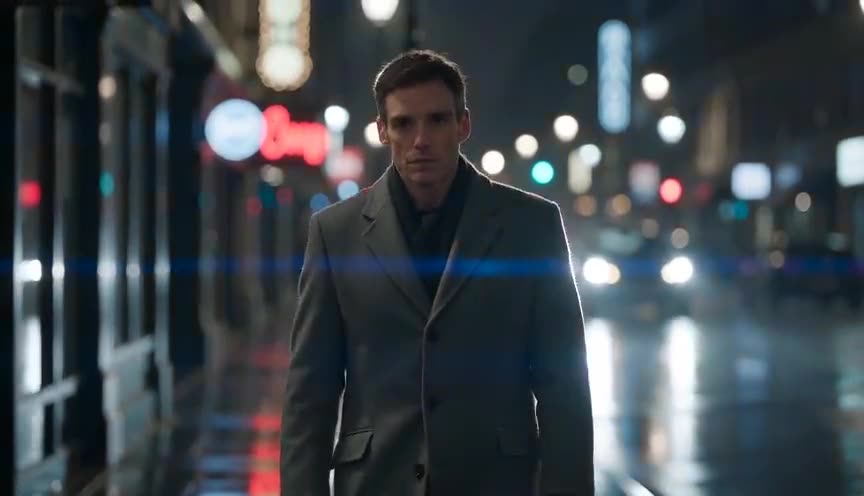
Anamorphic glass changes the shape of bokeh into ovals and adds streaking flares, giving background blur a distinct cinematic signature that spherical lenses do not produce on their own.
In film
Drive (2011)
Uses shallow-focus night driving shots where Los Angeles streetlights dissolve into warm, glowing bokeh behind the driver's silhouette.
Blade Runner 2049 (2017)
Neon signage and rain-soaked surfaces repeatedly melt into large, colored bokeh shapes around characters in foreground focus.
In the Mood for Love (2000)
Wong Kar-wai often softens background lamps and hallway lights into hazy bokeh to isolate the two leads in tight corridors.
The prompt
Name the aperture and lens explicitly (f/1.4, 85mm) rather than just saying 'bokeh', since models respond better to physical camera terms. Describe what stays sharp (the subject) and what turns into soft round or glowing shapes (specific background elements like lights, flames, or reflections). Avoid vague words like 'blurry' alone, which can produce a foggy or out-of-focus subject instead of a clean subject with a blurred background.
The exact prompt that rendered the video on this page. Keep the description of the move, change the subject and the setting.
Bokeh: a chef's hands folding noodles in sharp focus at the center of the frame, shot on an 85mm lens at f/1.4, while the busy ramen kitchen behind him dissolves into soft round blurs of orange flame, silver pots and hanging lanterns. The camera stays static, the shallow depth of field turns every distant light source into a smooth circular glow, and steam drifting through the frame catches the blur without ever sharpening. No text.
Common mistakes
Confusing bokeh with general blur
Bokeh describes the specific look of out-of-focus highlights, not just softness; a smeared, motion-blurred background is a different effect entirely.
Placing the background too close
If the background sits near the subject's focal plane it stays semi-sharp and busy; bokeh needs real distance between subject and background elements.
Letting bokeh compete with the subject
Overly bright or numerous background lights can pull the eye away from the sharp subject, defeating the isolating purpose of the technique.
Frequently asked questions
What is bokeh?
Bokeh is the quality of the blur a lens creates in the areas of an image that are out of focus, most noticeable in how background points of light render as soft round or oval shapes. It is used to isolate a sharp subject from its surroundings.
What causes good bokeh?
A wide aperture, a longer focal length, and distance between the subject and the background all increase the amount and softness of the blur. Lens design, especially the aperture blade shape, determines whether the highlights look round, polygonal, or oval.
Is bokeh the same as depth of field?
No. Shallow depth of field is the narrow zone of sharpness that makes a background go out of focus; bokeh is the specific visual character (shape, smoothness, color) of that out-of-focus area, especially its lights.
Can AI video tools generate realistic bokeh?
Yes, models like those available on Imaginode render convincing bokeh when the prompt states an explicit aperture and lens plus a clear list of background light sources, since vague requests for 'blur' often produce inconsistent results.