Extreme close-up
Also calledECU, Big close-up, Extreme closeup shot, Choker shot
An extreme close-up frames a single detail, an eye, a mouth, a fingertip, so tightly that it fills the entire screen and cuts off almost all context. It strips away the sense of place and forces total attention onto texture, emotion or a small gesture.
What it tells
Directors reach for the extreme close-up when a story needs to skip the room and go straight into a body or an object. It heightens tension before a decision, exposes a feeling a character is trying to hide, or turns a mundane detail (a wedding ring, a trembling lip) into something the audience cannot look away from. Because the frame excludes everything else, the shot feels subjective and urgent, closer to sensation than to information.
How it is shot
The camera fills the frame with one small element, usually 5 to 15 centimeters of subject, using a long lens (85mm to 200mm) or a macro lens held close, which also compresses background into soft blur. Focus is critical: depth of field can be a few millimeters, so a focus puller or manual pull is often needed if there is any movement. Lighting is simplified to one strong source, often a small key or eye light, because texture and shine (sweat, tears, grain of skin) read instantly at this scale. The shot is usually held static or moves only a few centimeters, since any camera shake is magnified enormously.
When to use it
- A character makes a silent decision and you need the audience to read it in the eyes alone
- A small object (a key, a pill, a ring) is about to change the plot and must register as important
- You want to hide the location or the wider action for a reveal later in the scene
- A tactile detail (dust, water, blood, henna) needs to feel physically present to the viewer
Not to be confused with
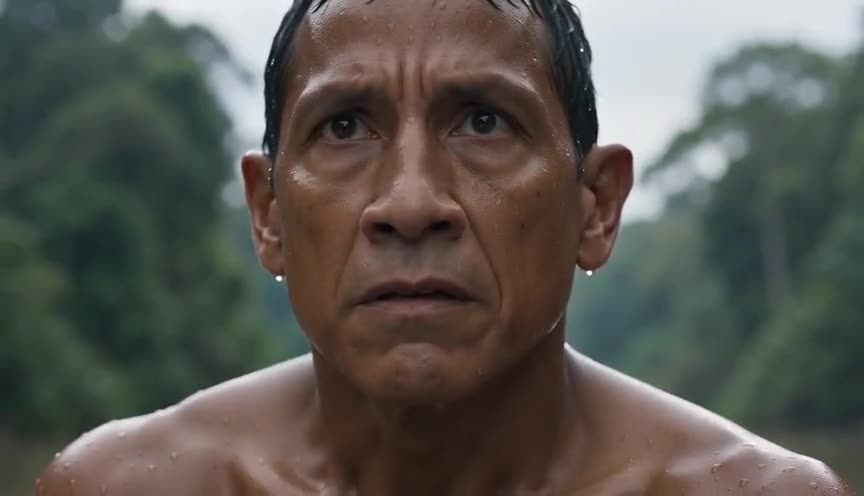
A close-up shows the whole face and reads as a normal conversational size. An extreme close-up goes past the face into a single feature, trading legibility of emotion for raw intensity and abstraction.
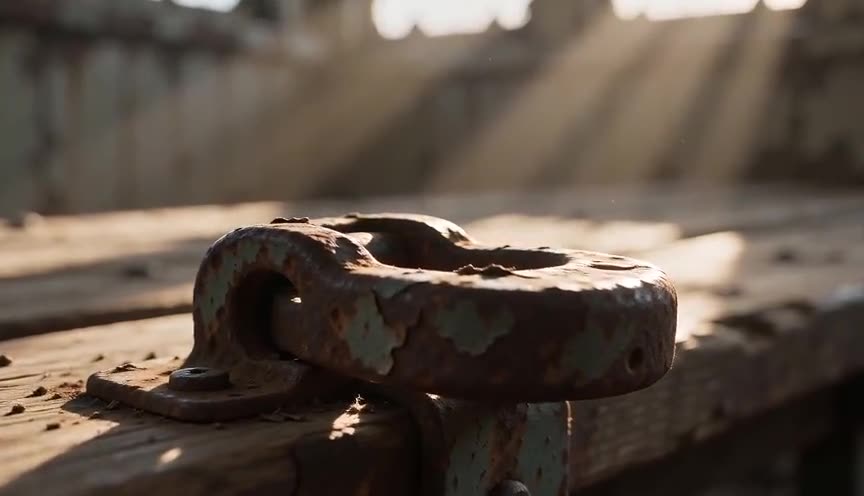
A macro lens is the tool, often used to achieve an extreme close-up of very small subjects like insects or texture. The extreme close-up is the framing choice itself, which can also be reached with a long lens from a distance.
In film
The Good, the Bad and the Ugly (1966)
Sergio Leone cuts to extreme close-ups of eyes during the final standoff to stretch tension before the gunfire.
Persona (1966)
Ingmar Bergman uses extreme close-ups of faces merging in shadow to blur the identities of the two women.
The prompt
Name the exact detail you want filling the frame (an eye, a fingertip, a bead of sweat) and state that it fills the entire screen with no surrounding context. Specify a shallow depth of field and a single light source so the model does not default to a wide, evenly lit shot. Avoid vague words like close, ask for extreme, tight, macro-scale instead, and describe what stays sharp versus what falls into soft blur.
The exact prompt that rendered the video on this page. Keep the description of the move, change the subject and the setting.
Extreme close-up of a woman's henna-painted hand resting on a worn zellige tile in a Moroccan riad courtyard, the frame filled entirely by her fingers and the intricate red-brown pattern on her skin, every crack in the tile and every line of henna in sharp focus while the courtyard fountain and tiled walls dissolve into soft out of focus color behind. Warm afternoon light rakes across the skin from one side, catching fine texture and small droplets of water. The camera stays perfectly still for the full four seconds, no zoom, no pan, only the faint natural tremor of a handheld hold. No text.
Common mistakes
Losing focus entirely
Depth of field is so shallow that any small movement of subject or camera pushes the key detail out of focus, ruining the shot's only reason to exist.
Overlighting the detail
Flat, even lighting removes the texture that justifies going this tight, so the shot ends up looking like a poorly framed close-up instead of something deliberate.
Using it too often
Repeated extreme close-ups in a scene numb the audience and lose the shock value that comes from reserving the technique for one key moment.
Frequently asked questions
What is an extreme close-up?
It is a shot so tight on one detail (an eye, a mouth, an object) that it fills the whole frame and removes almost all surrounding context, forcing the viewer's attention onto that single element.
What lens is best for an extreme close-up?
A telephoto lens between 85mm and 200mm shot from a distance, or a dedicated macro lens held very close, both give the shallow depth of field and magnification the shot needs.
Is extreme close-up the same as a macro shot?
Not exactly. Macro refers to the lens and its ability to focus on tiny subjects, while extreme close-up describes the framing choice, which can also be achieved with a long lens without true macro capability.
Can AI video tools generate a convincing extreme close-up?
Yes, if the prompt names the exact detail filling the frame and describes the shallow focus and single light source explicitly. On Imaginode, being this specific keeps models like Kling or Veo from defaulting to a wider, evenly lit shot.