14mm ultra-wide lens
Also calledUltra-wide lens, Superwide lens, Wide-angle distortion lens
A 14mm ultra-wide lens captures a field of view of roughly 114 degrees on a full-frame sensor, stretching the space in front of the camera so objects close to the lens look larger and the gap to the background feels exaggerated. It puts the viewer physically inside a room or scene, aware of every wall and corner.
What it tells
Directors reach for the ultra-wide when they want the audience to feel the size of a space, not just see it: a character dwarfed by a corridor, a room that seems to close in, an environment that becomes a character itself. The lens removes the polite distance of a normal focal length and replaces it with proximity and distortion, which reads as intimacy, unease, or scale depending on how it is framed and lit.
How it is shot
A 14mm lens on a full-frame body renders an ultra-wide angle of view with heavy barrel distortion at the edges: straight lines near the frame border bow outward, and faces placed close to the lens stretch. Because the focal length is short, hyperfocal distance is also short, so at f/4 or smaller nearly everything from a few feet to infinity stays in focus without racking. Operators keep the camera within a few feet of the subject to avoid empty foreground, watch the frame edges for crew, boom poles and light stands (the lens sees far more than it feels like it should), and often shoot slightly low to add drama to verticals.
When to use it
- Showing the true size of a location, like a warehouse, cathedral, or empty parking structure at night
- Putting the viewer inside a confined space to build claustrophobia or tension
- Following a character in a long take through tight hallways without cutting for coverage
- Distorting a close subject on purpose for comedy, menace, or a subjective point of view
Not to be confused with
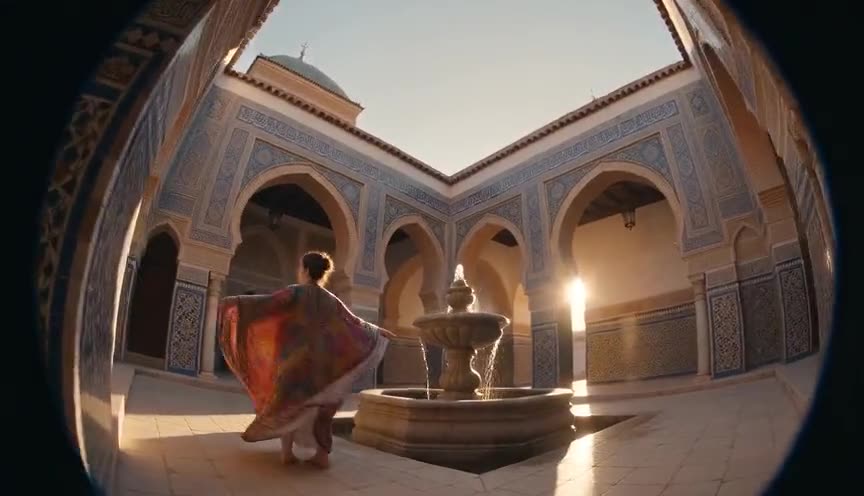
Fisheye pushes distortion further and bends straight lines into visible curves across the whole frame; a 14mm rectilinear lens keeps most lines straight and reserves the stretch for the edges.
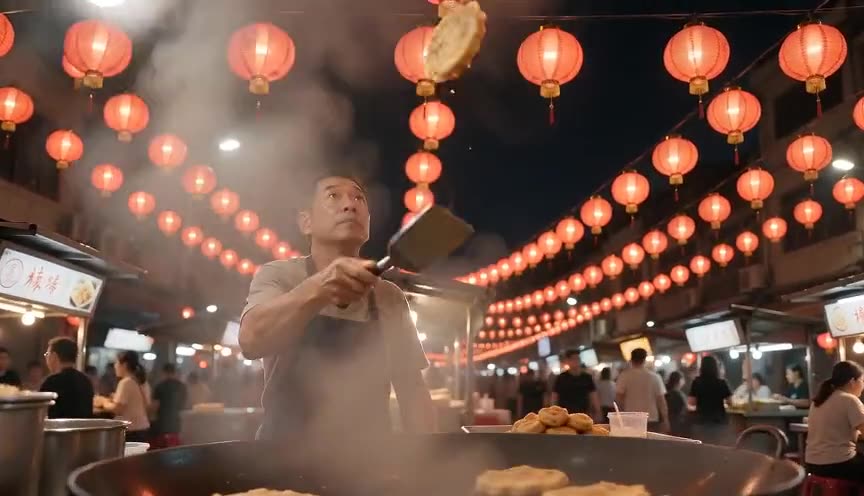
24mm still reads as wide and flattering for interiors, but with far less edge distortion and a gentler sense of depth, better suited to interviews or dialogue than to disorienting scale.
In film
The Revenant (2015)
Emmanuel Lubezki shot much of the film on 12 to 14mm lenses with natural light to make the wilderness feel vast and oppressive around the characters.
Birdman (2014)
Lubezki again used ultra-wide lenses in the theater's tight backstage corridors to keep the long takes immersive and slightly claustrophobic.
The prompt
Name the focal length or say 'ultra-wide angle of view' so the model does not default to a normal lens. Describe a subject close to the camera and a background that recedes far into the frame, since that near-far relationship is what sells the distortion. Mention deep focus if you want everything sharp. Avoid asking for a tight close-up of a face, since ultra-wide close-ups read as extreme caricature rather than a clean portrait.
The exact prompt that rendered the video on this page. Keep the description of the move, change the subject and the setting.
14mm ultra-wide lens shot. The camera is very close to a skateboarder's face and board as he rolls toward the lens in a concrete skate park: his face and hands look big and stretched, the ramps and sky behind him bend and curve at the edges of the frame, and the space looks huge and deep. Handheld following, bright afternoon sun. No text.
Common mistakes
Treating it like a normal lens for faces
Putting a face close to a 14mm lens stretches the nose and jaw in an unflattering way; save the ultra-wide for full bodies, rooms, or environments, not tight portraits.
Forgetting the edges of the frame
A 14mm lens sees far more than expected, so lights, boom mics, and crew members slip into frame if the operator only checks the center of the monitor.
No foreground subject
Without something close to the lens, the wide angle just looks like a normal wide shot from far away; the exaggerated depth only reads when near and far objects share the frame.
Frequently asked questions
What is a 14mm ultra-wide lens?
It is a lens with a very short focal length, around 14mm on a full-frame camera, that captures roughly 114 degrees of view and stretches the space between foreground and background, making close objects loom and distant ones shrink.
Does a 14mm lens distort faces?
Yes, if a face gets close to the lens it will stretch and bulge at the edges, which is why the focal length suits environments and full bodies far better than tight portraits.
What aperture keeps everything in focus with a 14mm lens?
Because the focal length is short, even a moderate aperture like f/4 or f/5.6 gives a hyperfocal distance that keeps nearly everything from a few feet away to infinity sharp, without needing a small aperture.
Can an AI video model render a 14mm lens correctly?
Tools like the ones on Imaginode respond well if you name the focal length and describe a close foreground subject with a receding background, since that near-far relationship is what makes the distortion visible in a short clip.