24mm wide lens
Also called24mm prime, wide-angle lens
A 24mm wide lens is a wide-angle prime lens that captures roughly an 84-degree horizontal field of view on a full-frame sensor, letting more of a scene into frame without moving the camera back. It stretches perspective slightly, pulling the viewer into the space and making foreground objects feel closer and more present than they are.
What it tells
Directors reach for a 24mm when they want the audience to feel physically inside a place rather than watching it from a distance. The wide field of view keeps character and environment in the same breath, so a crowded room, a street, or a cluttered desk becomes part of the performance. It also supports movement: because so much is in frame, a camera moving through space stays coherent, which is why 24mm shows up constantly in walk-and-talks and immersive tracking shots.
How it is shot
On a full-frame camera, a 24mm lens covers about 84 degrees horizontally, versus roughly 40 degrees for a 50mm. To fill the frame with a subject, the camera must sit close, often 3 to 6 feet away, which stretches noses, hands, and anything near the edges of frame. Depth of field is naturally deep even at wide apertures like f/2.8, so backgrounds stay legible. Because the lens exaggerates the distance between near and far objects, foreground props and architecture read as bigger and more dominant. It pairs well with handheld or gimbal support since the wide view forgives small camera wobble that a longer lens would magnify.
When to use it
- Shooting a walk-and-talk through a crowded, detailed location that needs to stay legible
- Establishing a character inside a dense environment like a market, newsroom, or workshop
- Filming interiors where you cannot back the camera up any further
- Building an immersive point-of-view shot that puts the audience physically in the scene
Not to be confused with
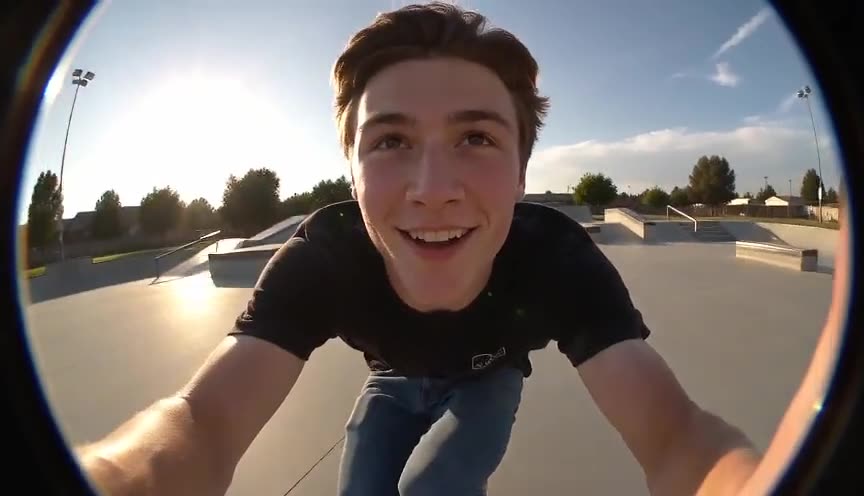
A 14mm ultra-wide lens covers a much larger angle and bends straight lines noticeably at the edges. A 24mm stretches perspective more gently and keeps architecture and faces readable without obvious warping.
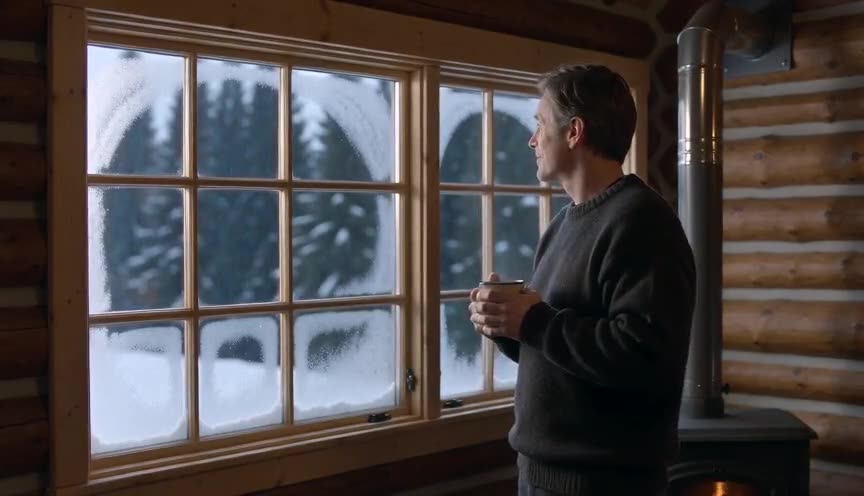
A 35mm lens is closer to natural human vision, with less edge distortion and a tighter field of view. Use 24mm when you need more environment in frame or a stronger sense of immersion.
In film
Goodfellas (1990)
Scorsese favored wide-angle lenses around 24 to 28mm for tracking shots through crowded rooms, keeping characters and setting equally present.
Citizen Kane (1941)
Toland used 24mm wide-angle lenses with small apertures for deep-focus interiors, making foreground figures and distant action sharply visible in the same compositions.
The prompt
Name the lens directly, say '24mm wide lens' or 'wide-angle lens, 24mm equivalent', and specify camera distance close to the subject so the model exaggerates depth correctly. Describe what stays sharp in the foreground and background since deep focus is part of the look. Avoid asking for extreme fisheye bending, that belongs to an ultra-wide or fisheye lens, not a 24mm.
The exact prompt that rendered the video on this page. Keep the description of the move, change the subject and the setting.
24mm wide lens, camera held at chest height about four feet from a food vendor at a night market in Taipei, steam rising from a hot pan in the foreground while strings of red lanterns and a crowd of shoppers stretch deep into the background, all planes staying sharp. The vendor flips food with a metal spatula, the camera drifts slowly forward at a steady pace, edges of the frame showing mild perspective stretch on the nearest stall corners. No text.
Common mistakes
Standing too far back
Backing away to frame a subject defeats the purpose of a 24mm and just produces a normal-looking wide shot with none of its close, immersive stretch.
Expecting fisheye bending
A 24mm distorts gently at the edges, not with the heavy curved lines of an ultra-wide or fisheye. Confusing the two leads to disappointing AI results.
Placing faces too close to frame edges
Perspective stretch is strongest at the borders of the image, so a face near the edge will look unnaturally elongated when the intent was just an immersive wide view.
Frequently asked questions
What is a 24mm wide lens?
It is a wide-angle prime lens covering roughly an 84-degree field of view on a full-frame camera, used to fit more of a scene into frame and to create a sense of the viewer being physically close to the action.
Is 24mm considered wide or ultra-wide?
24mm sits in the wide range, noticeably broader than a 35mm or 50mm but not as extreme as a 14mm or a fisheye. It stretches perspective without the strong curved-line distortion of ultra-wide lenses.
Why do directors like Scorsese use 24mm so often?
It lets the camera move through crowded, detailed spaces while keeping both the actor and the environment sharp and readable, which supports long tracking shots and walk-and-talks.
How do I ask an AI video model for a 24mm look?
State the focal length directly and describe the camera as close to the subject with a deep, sharp background. On a platform like Imaginode you can pair that lens description with a specific setting and camera move for a consistent result.