Establishing shot
Also calledLocation shot, Scene-setting shot, Wide opener
An establishing shot is a wide or extreme wide view, usually at the start of a scene or sequence, that shows the audience where and often when the action takes place. It orients the viewer before the story moves in for closer, more detailed shots.
What it tells
Establishing shots root the audience in space and time before any character speaks or moves into frame. They do the work of exposition without dialogue: this is a coastline, this is dusk, this is a place far from anywhere familiar. Directors use them to slow the pulse after a cut, to signal a change in location or era, and to let the audience breathe before dramatic or intimate scenes begin. The shot carries mood as much as geography, so tone, weather, and scale matter as much as the subject itself.
How it is shot
An establishing shot is usually captured with a wide-angle lens (14mm to 35mm) from a static tripod, a slow crane, or a drone, framing the location large enough to read at a glance: coastline, skyline, building, or landscape. Camera height and angle set scale, a high or aerial angle reads as vastness, a low angle reads as intimacy with the ground. The shot typically runs 3 to 8 seconds, long enough to register but short enough to avoid stalling momentum, and it is placed at the head of a scene or after a cut to a new location. Light and weather (fog, golden hour, overcast skies) do much of the emotional labor, since there is often no character to carry it.
When to use it
- Opening a film or a new sequence to tell the audience where the story is now happening.
- Signaling a jump in location, season, or time of day before cutting to characters.
- Giving the audience a breath between intense scenes with a calm, wide view of the setting.
- Setting scale and mood for an isolated or dramatic location before any dialogue starts.
Not to be confused with
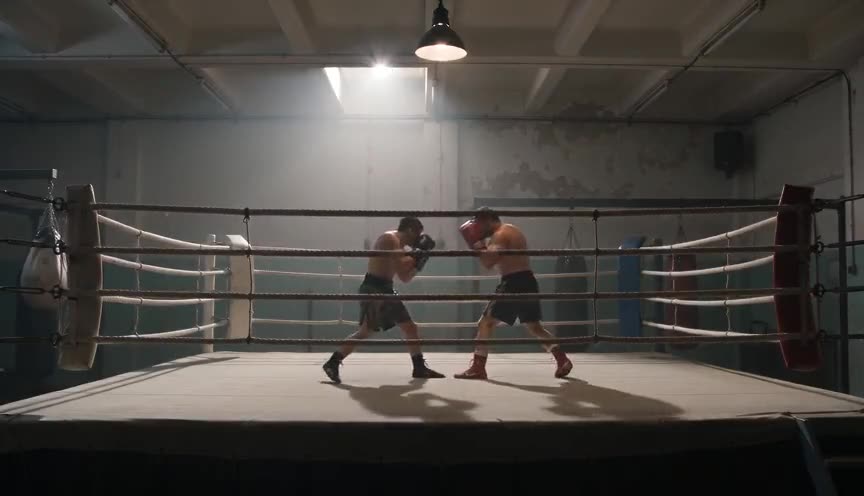
A wide shot frames a subject fully within a location; an establishing shot is a specific use of width, at the head of a scene, whose main subject is the place itself, not a person.
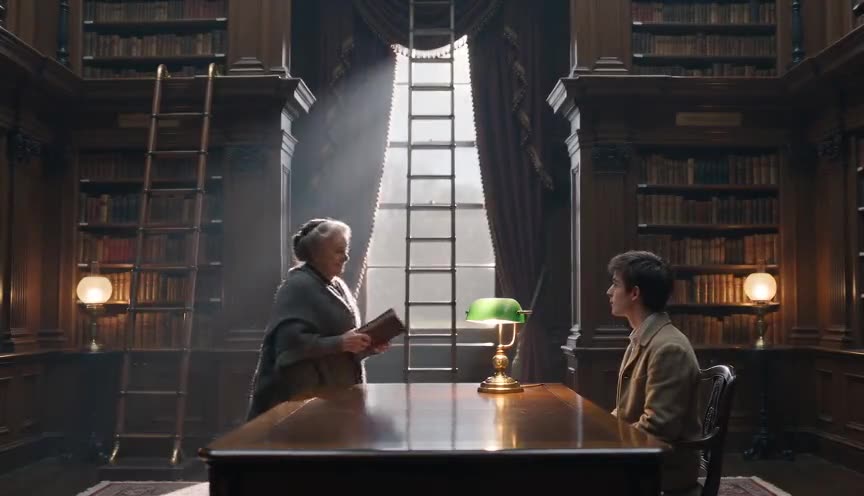
A master shot covers an entire scene's action in one continuous take for editing coverage; an establishing shot only sets the location before that coverage begins and rarely includes the scene's dialogue.
In film
Jaws (1975)
After the underwater prologue, wide shots of a nighttime beach party and shoreline establish the coastal setting before Chrissie's swim and attack.
The Shining (1980)
Aerial establishing shots of the car winding through mountain roads set isolation and scale before the hotel story begins.
The prompt
Name the location plainly and describe scale, light, and weather before mentioning any figure: fog rolling over dunes, low sun on wet sand, a lone gull crossing frame. Keep the camera nearly still or slowly moving (a static wide or a slow drone push) so the model reads it as a setting shot, not an action shot. Avoid crowding the frame with close subjects or dialogue cues, which pull the model toward a medium or close-up instead. Mention lens width (14mm to 35mm) and camera height explicitly.
The exact prompt that rendered the video on this page. Keep the description of the move, change the subject and the setting.
Establishing shot of an Icelandic black sand beach at dawn, captured on a static wide-angle lens from a low tripod near the shoreline. Dark volcanic sand stretches toward distant cliffs wrapped in thin fog, cold gray light spreading from the horizon, and slow ocean waves rolling in and receding across the frame. A single hooded figure walks far in the background, tiny against the scale of the beach. The camera does not move; only the water, mist, and distant walker shift within the fixed frame. No text.
Common mistakes
Cutting in too soon
Cutting away before the audience registers the location undermines the shot's purpose; give it at least 3 to 4 seconds before moving to characters.
Overcrowding the frame
Filling the wide shot with too much detail or action competes with the sense of scale and place that the shot is meant to deliver.
Wrong lens or angle for the mood
A tight or telephoto lens compresses space and kills the feeling of vastness; a wide lens and open framing are what sell the location.
Frequently asked questions
What is an establishing shot?
An establishing shot is a wide view, usually placed at the start of a scene, that shows the audience the location and often the time of day before the story moves closer. It orients the viewer without dialogue.
Where does an establishing shot usually go in a scene?
It almost always comes first, right after a cut to a new location, before any medium or close-up shots of the characters appear. Some scenes repeat it briefly later if the location changes again during the story.
How long should an establishing shot last?
Most run 3 to 8 seconds, long enough for the audience to read the space but short enough to keep the scene moving forward. Longer holds work well when the location itself carries real emotional weight in the story.
Can AI video tools generate a convincing establishing shot?
Yes. Naming the exact location, lens width, camera height, light, and weather clearly, and keeping the camera mostly still or slowly moving, gives models like the ones on Imaginode a strong, wide, scene-setting result in a single shot.