Infrared film look
Also calledAerochrome look, false-color infrared, wood effect, IR photography
The infrared film look is an image made by recording near-infrared light instead of, or alongside, visible light, which makes chlorophyll-rich foliage glow white or pink and skies go dark. It gives the viewer a quietly wrong, dreamlike version of a familiar landscape, as if the world were seen through different eyes.
What it tells
Directors reach for infrared when they want to signal that something is off without a single line of dialogue: a hidden threat, a surveillance point of view, a memory, or a war zone rendered strange enough to force fresh attention. Because the color logic breaks from what the eye expects, infrared reads as uncanny rather than stylized, useful for dream sequences, alien or predator points of view, and documentaries that want distance from familiar war and landscape imagery.
How it is shot
A digital sensor's internal hot mirror (which normally blocks infrared) is removed or a strong IR-pass filter (usually 720nm or higher) is placed over the lens, or the crew loads infrared-sensitive stock like discontinued Kodak Aerochrome. Chlorophyll reflects near-infrared strongly, so leaves and grass turn white or magenta, while clear sky, which scatters little infrared, renders near black. Exposure runs 2 to 4 stops longer than a normal daylight reading because IR-sensitive layers are less responsive. In post, channels are often swapped or remapped (false color) to push the classic red-and-cyan or pink-and-black palette, and skin tones go pale and waxy since blood shows less contrast under IR.
When to use it
- Signaling a predator, alien, or non-human point of view without dialogue or exposition
- Turning a familiar landscape (forest, vineyard, battlefield) into something quietly unfamiliar
- Suggesting surveillance, reconnaissance, or a hidden observer watching from a distance
- Giving a documentary or war sequence emotional distance from conventional color photography
Not to be confused with
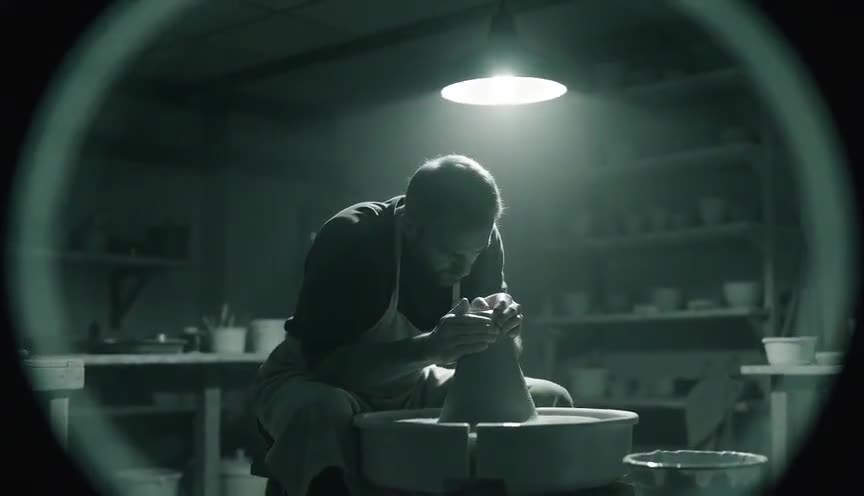
Night vision amplifies existing dim visible light through an image intensifier, producing a green, grainy, low-light picture. Infrared instead records a different wavelength in daylight, producing bright white foliage and dark skies, not a low-light green glow.
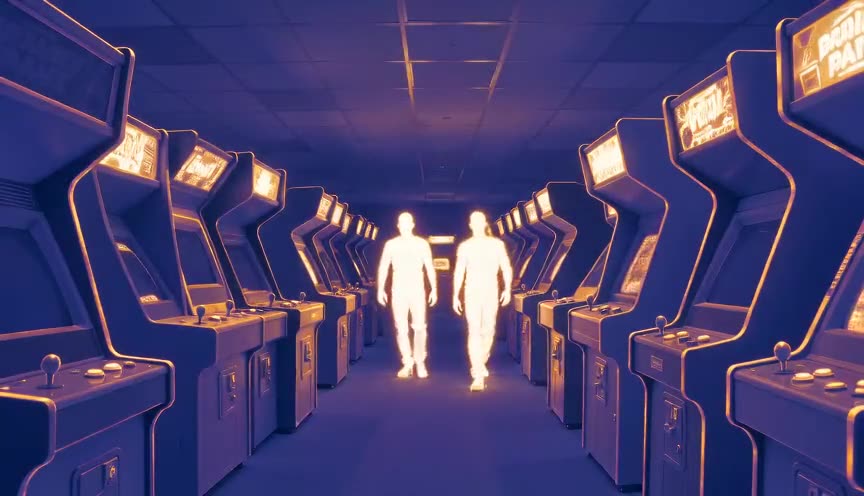
Thermal vision maps heat radiated by objects into a color gradient (often orange to blue), independent of visible light entirely. Infrared film look records reflected near-infrared light in daylight scenes, so it needs light on the subject the way normal photography does.
In film
The Enclave (2013)
Mosse's six channel installation was shot on discontinued Kodak Aerochrome stock, turning Congolese conflict landscapes and vegetation into unsettling pink and magenta terrain.
I Am Cuba (1964)
Sergei Urusevsky used infrared black and white photography for tropical landscapes, making palms and sugarcane glow white against dark, dramatic skies.
The prompt
Name the physical cause, not just a color filter: say the light is near-infrared, foliage reflects it white or pink, skies and water go dark, and skin looks pale. Words like 'Aerochrome,' 'infrared film,' 'false color infrared,' and 'chlorophyll glow' steer models toward the right palette. Avoid 'night vision' or 'heat map' language, which pulls the model toward green image-intensifier or thermal orange-blue looks instead.
The exact prompt that rendered the video on this page. Keep the description of the move, change the subject and the setting.
Infrared film look, static wide shot of a vineyard in autumn at midday, rows of grapevines and a line of trees along the horizon. Near-infrared film stock renders every leaf and blade of grass glowing bright white and pale pink instead of green, while the clear sky above turns near-black with high contrast. A lone worker in a wide-brimmed hat walks slowly between the rows, skin rendered pale and waxy under the infrared exposure. Camera does not move, wind lightly stirs the glowing white foliage. No text.
Common mistakes
Confusing it with night vision
Infrared film look needs daylight or IR illumination and shows a full false-color palette, not the green, grainy, low-light image of an intensifier tube used for night vision.
Forgetting the dark sky
The signature contrast of infrared comes from a near-black sky against glowing white foliage. A generated image that keeps a normal blue sky breaks the effect entirely.
Oversaturating into a generic filter
Pushing pink and magenta everywhere, including skin, sky, and metal, reads as an Instagram filter rather than a physical infrared exposure, which stays selective about what reflects IR strongly.
Frequently asked questions
What is infrared film look?
It is a visual effect made by capturing near-infrared light instead of visible light, which makes leaves and grass glow white or pink and skies render nearly black, giving footage an uncanny, otherworldly quality.
Is infrared film look the same as night vision?
No. Night vision amplifies dim visible light with an image intensifier and looks green and grainy. Infrared works in normal daylight and produces a distinctive false-color palette with glowing foliage and dark skies.
Do I need special camera equipment to shoot infrared for real?
Yes, either a sensor with its hot mirror filter removed, an IR-pass filter over the lens, or discontinued infrared-sensitive film stock like Kodak Aerochrome, plus longer exposure times to compensate for lower sensitivity.
Can AI video models generate an infrared look convincingly?
Yes, if you describe the physical cause (white glowing foliage, dark sky, pale skin) rather than naming a filter, models like those on Imaginode reproduce a convincing false-color infrared palette.