Thermal vision
Also calledheat vision, heat-map view, thermal imaging shot
Thermal vision is an in-camera or digital effect that renders a scene as a false-color heat map, showing temperature differences instead of visible light. It turns living bodies into glowing shapes and strips away texture, detail and identity, which makes the viewer read the scene as surveillance, danger or predatory point of view.
What it tells
Directors reach for thermal vision to put the audience inside a hunter's or a machine's perspective, one where warmth equals prey and everything else dissolves into flat cold. It signals technology, threat or concealment: a soldier scanning a dark building, a creature reading its victims as glowing silhouettes rather than people. The effect also dehumanizes on purpose, since faces lose their features and become blobs of color, which makes the shot feel clinical, alien or predatory instead of intimate.
How it is shot
Real thermal cameras use microbolometer sensors that capture infrared radiation in the 8 to 14 micron range, no visible light required, and map brightness to a palette such as white-hot, black-hot or ironbow. On a shoot, crews either rent a thermal camera rig or simulate the look in post: desaturate the plate, invert or remap luminance through a false-color LUT that sends cold values to blue and purple and hot values to white, yellow and red, then add soft blur, subtle noise, scan lines and a faint bloom around the warmest edges. Camera movement is usually slow or static, matching the low frame rate and soft optics of real thermal sensors.
When to use it
- To show a hunter, machine or soldier tracking a target through walls, smoke or darkness.
- When you need a point-of-view shot that reads as non-human or highly technological.
- To hide a character's identity while still showing their exact location and movement.
- For search-and-rescue, surveillance or night-operation scenes that depend on heat-based visibility.
Not to be confused with
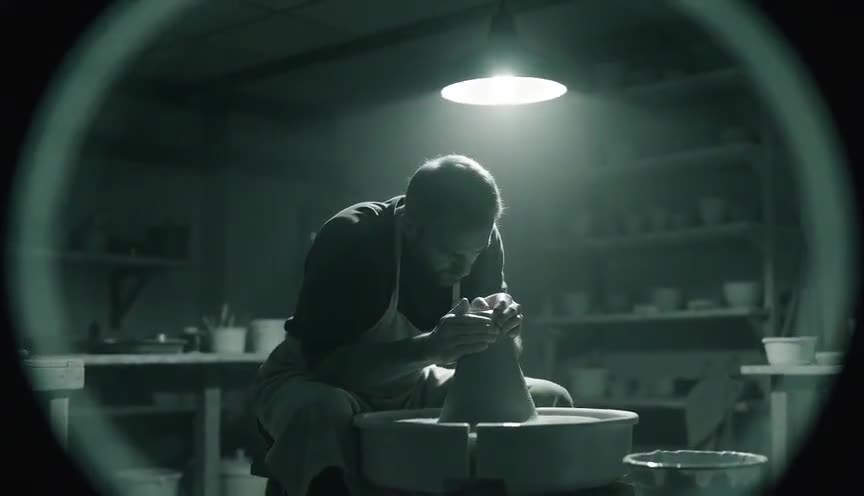
Night vision amplifies existing low light into a green or gray image so viewers see recognizable shapes in the dark. Thermal vision ignores visible light entirely and maps heat instead, turning bodies into colored blobs rather than green-tinted people.
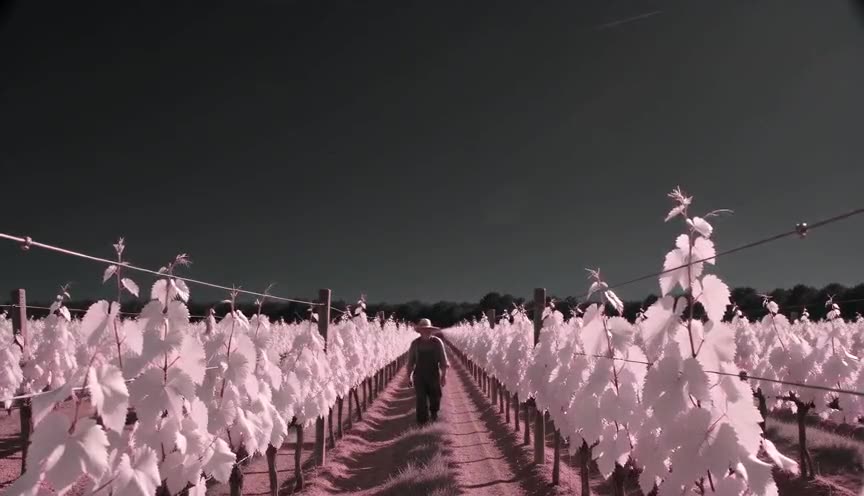
Infrared film look shifts ordinary visible-light photography into a dreamy false-color or black-and-white image, often used for surreal daylight landscapes. Thermal vision maps real temperature data into color, has almost no fine detail, and reads as tactical rather than poetic.
In film
Predator (1987)
The alien's point-of-view shots render the jungle and the soldiers as glowing color blobs, the signature use of thermal vision as monster vision.
The Predator (2018)
Reprises the franchise's heat-vision point-of-view shots, keeping the low-detail false-color palette as a visual shorthand for the creature's perception.
The prompt
Name the palette explicitly (white-hot, black-hot or ironbow) so the model does not default to green night-vision monochrome. Describe warm subjects glowing white, yellow or orange and cold backgrounds sitting in blue or purple, and ask for low detail, soft edges and a faint bloom around the hottest shapes. Avoid asking for readable text, fine texture or sharp faces, since real thermal sensors cannot capture them, and that level of detail breaks the illusion.
The exact prompt that rendered the video on this page. Keep the description of the move, change the subject and the setting.
Thermal vision: a static wide shot of a neon arcade rendered entirely in false-color heat imaging, a cold blue-purple background where the arcade cabinets glow deep violet, while two adult figures walking between the machines glow white-hot and orange along their heads, hands and chests. The image is low-resolution and slightly soft, with a faint scan-line flicker and warm blooming halos around the hottest edges. No fine detail, no visible text, no normal color, just a shifting heat map. No text.
Common mistakes
Green night-vision confusion
Using a green monochrome tint instead of a true heat-map palette makes the shot look like night vision, not thermal, and confuses two different technologies.
Too much detail
Rendering sharp faces, readable text or fine texture defeats the effect, since real thermal sensors cannot capture that level of resolution or clarity.
Inconsistent heat logic
Making backgrounds warm and characters cold, or scattering random colors that do not follow a hot-to-cold gradient, breaks the internal logic viewers expect from a heat map.
Frequently asked questions
What is thermal vision?
Thermal vision is a visual effect that shows a scene as a false-color heat map based on temperature rather than visible light. It renders warm bodies as glowing shapes against a cooler background, which reads as surveillance, danger or non-human perception.
Is thermal vision the same as night vision?
No. Night vision amplifies whatever faint light already exists in a dark scene, producing a recognizable green-tinted image. Thermal vision ignores light entirely and maps heat instead, so it works even in total darkness or thick smoke.
How do filmmakers actually shoot thermal vision shots?
Some productions rent real thermal camera rigs, but most simulate the look in post-production: they desaturate the footage, remap brightness through a false-color LUT and add blur, noise and a soft glow around the warmest areas.
Can AI video models generate a convincing thermal vision look?
Yes. Naming the palette (white-hot or ironbow), describing warm glowing subjects against a cold background, and asking for low detail and soft bloom gets a believable result. On a tool like Imaginode, adding those specific cues works better than the word thermal alone.