Night vision
Also calledNight vision goggles look, NVG effect, Green night vision
Night vision is a camera effect that renders a scene in high-contrast green or grayscale monochrome with heavy grain, imitating the light-amplification tubes used in low-light surveillance and military optics. It tells the viewer they are watching through a device, not with the naked eye, which usually implies secrecy, danger or covert observation.
What it tells
Night vision strips a scene of natural color and detail, replacing it with the cold, granular signature of an optical instrument. Directors reach for it to put the audience inside a watcher's perspective: a soldier on a raid, a predator stalking prey, a voyeur behind a lens. The effect narrows what we can trust about the image, so tension rises the moment something moves at the edge of that green glow.
How it is shot
In camera, this is built by shooting or converting footage to a single-channel green or gray monochrome grade, then layering heavy sensor grain or noise, a soft circular vignette that mimics the tube's optical edge, and bright bloom around any light source, since amplifiers overexpose highlights fast. Contrast is pushed hard so shadows go near-black and any practical light spikes into a halo. Real rigs pair a low-lux sensor with an infrared illuminator, but for a camera look you simply combine color grade, grain, vignette and bloom, usually on handheld or POV footage to sell the idea of a worn device rather than a fixed camera.
When to use it
- A character is watching or moving through darkness using a covert optical device or goggles
- You need a subjective POV that signals surveillance, a raid, or an intrusion
- A scene must feel unlit and dangerous without actually underexposing the whole shot
- You want to break tone briefly, cutting from normal color into a device-mediated view
Not to be confused with
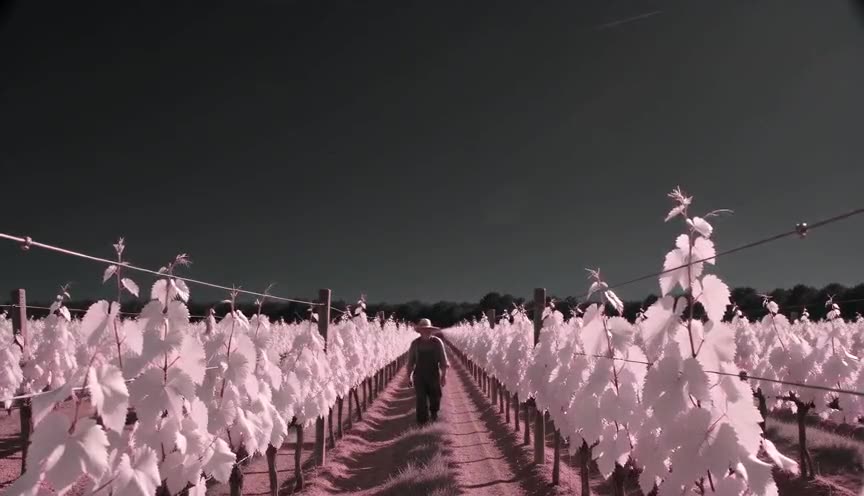
Infrared film look uses false color, often reds and pinks from foliage reflecting IR light, and reads as an artistic or scientific image. Night vision is green-gray and reads as surveillance or military gear, not an art choice.
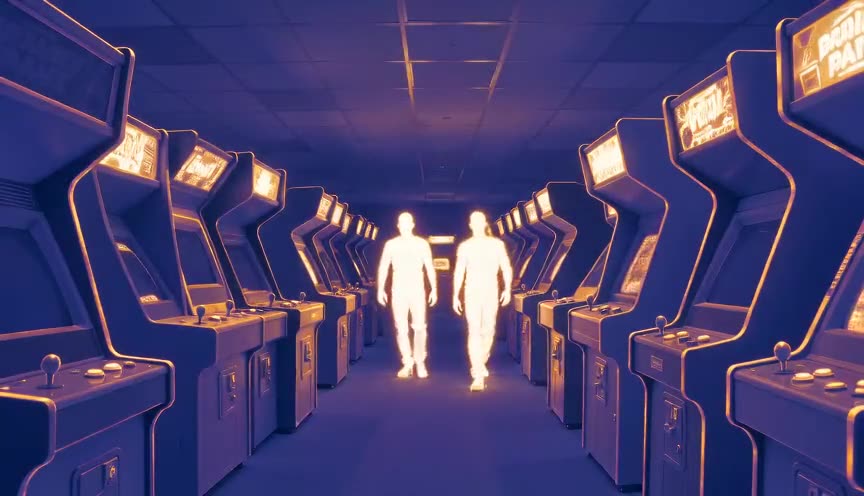
Thermal vision maps heat, not light, so warm bodies glow bright against cool backgrounds regardless of ambient darkness. Night vision amplifies existing dim light, so it still needs some source, however small, to reveal shapes.
In film
The Silence of the Lambs (1991)
In the basement climax, Buffalo Bill stalks Clarice through night vision goggles, turning the green POV into a terrifying asymmetry of sight.
Zero Dark Thirty (2012)
The raid sequence renders much of the operation in green night vision POV shots, grounding the scene in real special-operations procedure.
The prompt
Name the device explicitly, say green monochrome or grayscale, and ask for grain, bloom around light sources and a soft vignette. Push handheld or POV camera language since static, clean shots undercut the surveillance feeling. Avoid asking for on-screen readouts, numbers or HUD text, since models render these as garbled text; let grain and vignette carry the device illusion instead.
The exact prompt that rendered the video on this page. Keep the description of the move, change the subject and the setting.
Night vision footage of a pottery workshop at night, captured through a handheld night vision device: the entire frame is rendered in high-contrast green monochrome with visible grain and a soft circular vignette darkening the edges. An adult potter leans over a spinning wheel, silhouetted against the dim glow of a single bare bulb that blooms into a bright halo. The camera drifts slowly forward and slightly to the right, unsteady and handheld, while the potter's hands and the wet clay remain the only clear points of motion in the frame. No text.
Common mistakes
Keeping full color
Leaving the image in normal color and only darkening exposure does not read as night vision. The monochrome green or gray tint is the single most recognizable trait and cannot be skipped.
Skipping the bloom
Real amplifier tubes overexpose bright points into large halos. Without that bloom around lamps, flames or windows, the effect looks like a simple color filter instead of a device.
Adding fake HUD text
Overlaying readouts, battery icons or coordinates tempts many creators, but AI video models render text as illegible smears. Suggest the device through grain and vignette, not typography.
Frequently asked questions
What is night vision in film?
It is a visual effect that renders a scene in green or gray monochrome with heavy grain and light bloom, simulating the look of light-amplification goggles. Directors use it to place the audience inside a covert or low-light point of view.
Why is night vision footage green?
Early image-intensifier tubes used a phosphor screen that glowed green because the human eye distinguishes more shades of green than any other color, which made faint details easier to read. The color stuck as the genre's visual signature.
Can I get a night vision look from an AI video model?
Yes. Describe the monochrome tint, grain, vignette and light bloom explicitly in the prompt, and specify a handheld or POV camera. On a canvas like Imaginode you can test the same prompt across models such as Kling or Veo to compare how each renders the grain and bloom.
Is night vision the same as thermal vision?
No. Night vision amplifies existing dim light and needs at least a trace of it to work, while thermal vision detects heat and can produce an image in total darkness, showing warm bodies glowing against a cool background.