Boomerang
Also calledPing-pong loop, Forward-reverse loop, Bounce loop
A boomerang is a clip that plays forward and then instantly reverses back to its first frame, so the action repeats in a seamless forward-backward loop. It turns a single continuous motion into an endless back-and-forth rhythm that feels playful, hypnotic, or unsettling depending on the content.
What it tells
The boomerang thrives on repetition without end. By snapping a single gesture back on itself, it turns time into a toy: a wave can crash forever, a smile never fades, a door keeps almost closing. Directors and editors reach for it when they want to isolate a moment outside of consequence, giving the audience a small, contained infinity. It suits comedy, music video punctuation, and social feeds where attention is short, but it can also feel eerie, trapping a subject in a loop that never resolves, which is why horror and surreal work borrow it too.
How it is shot
In practice a boomerang starts as an ordinary clip, usually 1 to 3 seconds, shot at a steady frame rate (24, 30 or 60fps) with a locked-off camera or a very simple, repeatable move. In post, the editor duplicates the clip, reverses the copy, and joins it to the end of the original so the sequence reads forward then backward, then trims both halves so the first and last frames match exactly, avoiding a visible pop at the turnaround. Motion blur and rolling shutter can look odd once reversed, so simple, continuous actions such as a swing, a splash, or a light sweep work best. Frame rate and shutter speed should stay identical across both passes so the bounce feels mechanically clean.
When to use it
- A single gesture, like a wave crash or a door swing, needs to feel endless on a loop.
- Social feeds and ads want a short, attention-grabbing clip that plays cleanly with no visible cut.
- You want to isolate one action outside of time, giving it a playful or unsettling repetition.
- A live-action plate needs to loop seamlessly without shooting extra footage or matching a return path.
Not to be confused with
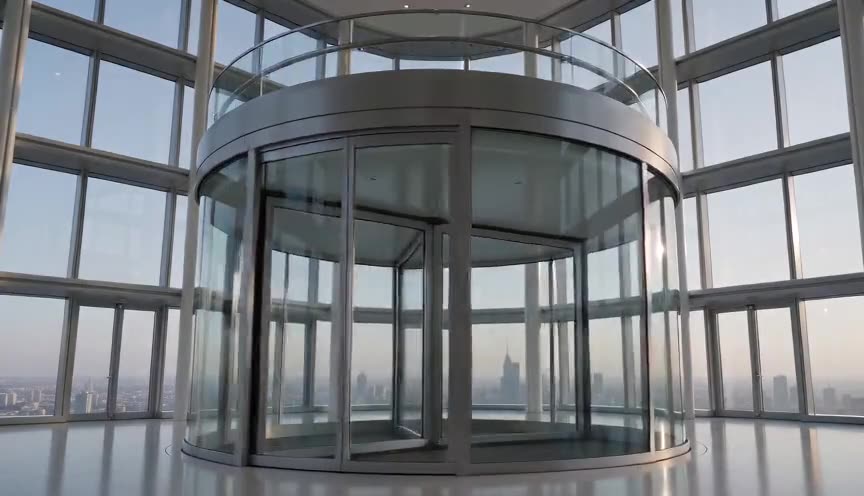
A seamless loop repeats the same forward motion continuously, matching the last frame to the first; a boomerang doubles the footage by playing it backward, so the motion visibly bounces rather than restarting.
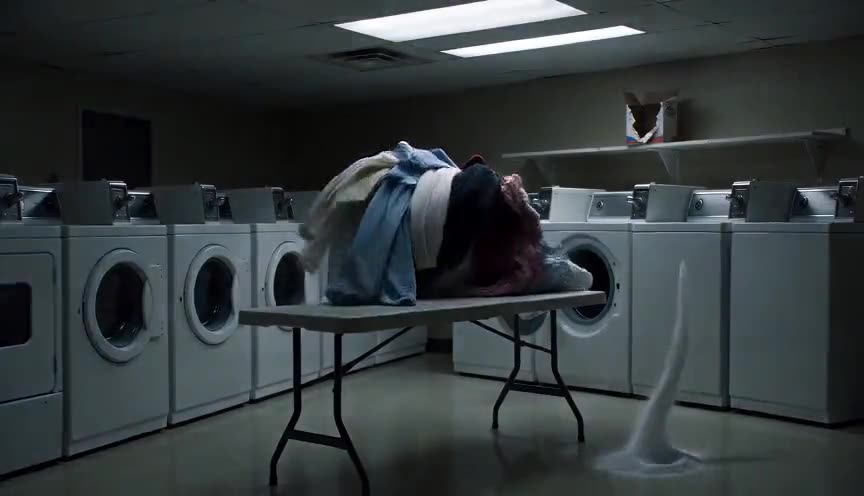
Reverse motion plays an entire shot backward from start to finish and stays there; a boomerang plays the shot forward, then reverses only the second half back to the start, creating a bounce.
In film
Demolition of a Wall (1896)
The wall is first knocked down, then the footage is run backward so the rubble reassembles, a canonical early reverse-motion demonstration.
Pièce touchée (1989)
Arnold optically prints a few seconds from The Human Jungle into relentless forward and reverse loops, turning a simple entrance into convulsive motion.
Passage à l'acte (1993)
Arnold chops the breakfast-table scene from To Kill a Mockingbird into tiny forward and backward loops, making ordinary gestures stutter violently.
The prompt
Describe the action as a short, continuous motion that can reverse cleanly: a wave crashing, a gate swinging, a light beam sweeping. Tell the model the shot plays forward then instantly reverses to frame one, looping smoothly, and specify a locked or very simple camera move so the reverse matches without glitches. Avoid actions with scattering debris, splashes with unpredictable droplets, or people, since these break continuity when reversed, and skip any dialogue or text since it does not read backward convincingly.
The exact prompt that rendered the video on this page. Keep the description of the move, change the subject and the setting.
Boomerang: a locked wide shot of a lighthouse on a rocky, stormy coast at dusk, waves crashing against black rocks in the foreground as the beacon light sweeps once across the frame. The camera stays completely static on a tripod. The wave surges forward, crests, and crashes over the rocks in white spray, then the exact same motion reverses frame by frame, the spray pulling back into the wave, the wave retreating to the sea, looping seamlessly back to the first frame. No text.
Common mistakes
Picking motion that can't reverse convincingly
Splashing water, falling debris, or footsteps in mud look wrong once played backward, because the physics of scattering and settling does not mirror cleanly.
Moving the camera during the shot
A pan, dolly, or handheld drift makes the forward and reverse paths mismatch slightly, breaking the illusion of a single clean loop at the turnaround.
Ignoring the seam at the bounce point
If the last frame of the forward pass does not match the first frame of the reverse pass exactly, the loop flickers or jumps instead of feeling continuous.
Frequently asked questions
What is a boomerang in video?
It is a clip that plays forward and then reverses instantly back to its starting frame, looping the motion back and forth instead of simply repeating forward. The effect was popularized by short social video apps and is now used in music videos, ads, and experimental film.
How is a boomerang different from a seamless loop?
A seamless loop restarts the same forward motion again and again, so the action always moves in one direction. A boomerang plays forward, then plays the same footage backward, so the motion visibly bounces rather than resetting.
Can any clip be turned into a boomerang?
Only clips with simple, continuous motion work well. Actions with splashing water, scattering debris, or people walking tend to look unnatural in reverse, while a swinging gate, a sweeping light, or a rocking object loop cleanly.
Can AI video tools generate a boomerang effect directly?
Some models, including those available on Imaginode, can render a forward-then-reverse motion within a single short clip if you describe the action, the reversal, and the loop point explicitly in the prompt.