Cinemagraph
Also calledLiving photograph, Motion photo, Living still
A cinemagraph is a still photograph in which one small, repeating motion (rippling water, drifting smoke, a flickering flame) loops seamlessly while everything else in the frame stays perfectly frozen. It creates a hypnotic pause between a photo and a video, holding the viewer's eye on the one thing that refuses to stop moving.
What it tells
Directors and image-makers reach for the cinemagraph when they want to isolate a single detail and give it the weight of a held breath: a candle flame in an otherwise frozen room, a curtain that keeps swaying after everyone has left. It works because human eyes detect motion first, so the one moving element becomes the emotional center of the frame by default. It suits moody, contemplative moods, memory sequences and loops built to make a viewer stop scrolling and stare.
How it is shot
A cinemagraph starts as a locked-off shot, usually from a tripod, so the background stays pixel-for-pixel identical from frame to frame. The camera records several seconds to a minute of footage capturing one naturally repeating motion: water lapping, steam rising, hair lifting in a breeze. In post, the editor masks the moving region and freezes every other pixel on a single reference frame, then finds two matching points in the moving footage to build a seamless loop, often blending frames with optical flow to hide the seam. The result is exported as a short looping video, typically 3 to 10 seconds, with no visible cut.
When to use it
- Open a memory or dream sequence where one detail should feel alive while the rest of the world holds still.
- Turn a portrait or product photograph into a social post that stops the scroll with a single moving detail.
- Suggest a frozen moment in time, like a held breath or a pause in an argument, inside an otherwise still frame.
- Build a website hero image or gallery loop that feels alive without the weight of a full video clip.
Not to be confused with
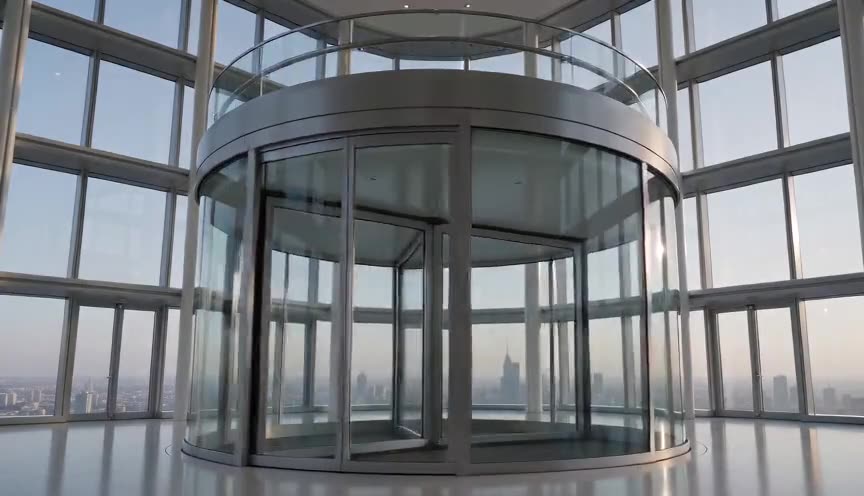
A seamless loop repeats an entire video clip end to end so the whole scene appears to move continuously forever. A cinemagraph freezes everything except one element, so only that detail loops while the rest stays a still photograph.
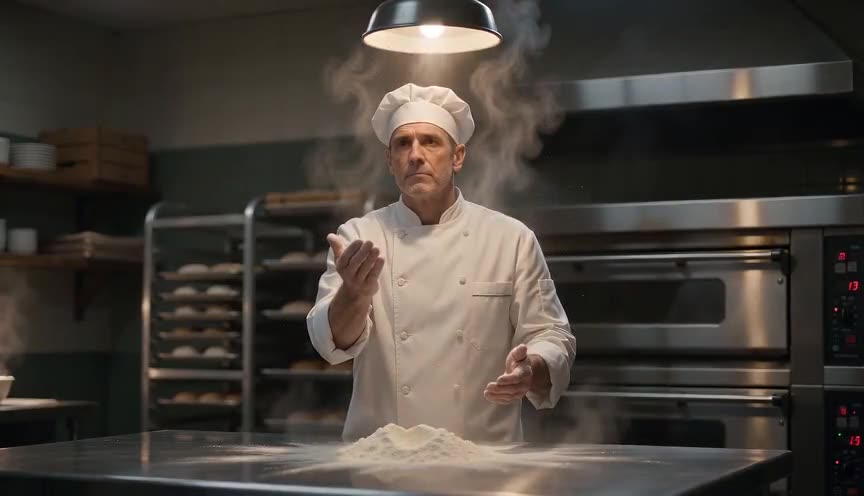
A freeze-frame stops all motion at once, turning a moving shot into a single static image, usually to punctuate an ending. A cinemagraph does the opposite: most of the frame stays still while one element keeps moving forever.
In film
Harry Potter and the Philosopher's Stone (2001)
Moving newspaper photographs and portraits, frozen scenes with one animated detail, are widely cited as a cinematic ancestor of the cinemagraph aesthetic.
La Jetée (1962)
The film is built from still photographs, and the bedroom sequence's sudden eyelid movement is a canonical living-still moment in film studies.
Harry Potter and the Prisoner of Azkaban (2004)
Sirius Black's wanted posters present a still printed notice with a looping magical photograph, one of cinema's most recognizable living-photograph images.
The prompt
Because a cinemagraph must show one moving element sealed inside a frozen frame in just four seconds, describe the camera as fixed and locked off, name the single element that moves (water, smoke, hair, a flag), and state that every other person, surface and structure stays completely still. Ask for the motion to loop rather than develop into a scene, and avoid requesting camera movement, cuts or new action, since those break the illusion. Keep the setting simple so the model can hold the rest of the frame still.
The exact prompt that rendered the video on this page. Keep the description of the move, change the subject and the setting.
Cinemagraph of a quiet Venetian canal at dusk, camera locked off on a tripod with a 35mm lens, framing weathered stone buildings, a moored gondola and a narrow footbridge. Every surface in the frame stays perfectly still: the stonework, the gondola's hull, the shuttered windows, the warm lamplight. Only the canal water moves, its surface rippling gently and reflections shimmering in a continuous, looping pattern, while the rest of the image remains frozen like a photograph. Soft golden-hour light, no camera movement, no cuts. No text.
Common mistakes
Letting the camera move
Any camera drift shifts the frozen elements too, which instantly reveals that the shot is a video and destroys the still-photograph illusion the technique depends on.
Choosing a subject with global motion
If the whole scene sways, like trees in wind or a crowd walking, there is no still region left to anchor the illusion, and the result just reads as slow motion video.
Leaving a visible loop seam
Failing to match the start and end frames of the moving element causes a jump or flicker where the loop restarts, breaking the sense of infinite, uninterrupted time.
Frequently asked questions
What is a cinemagraph?
A cinemagraph is a still image in which one small part of the scene, like rippling water or drifting smoke, loops in continuous motion while everything else stays completely frozen. It sits between a photograph and a video, delivered as a short looping file.
How long should a cinemagraph loop?
Most cinemagraphs run between 3 and 10 seconds and loop indefinitely once published. Longer loops risk showing more variation in the moving element, which makes the seam where the loop restarts harder to hide.
Is a cinemagraph a photo or a video?
Technically it is a video file, since it contains motion over time, but it is designed to be read like a photograph. The frozen majority of the frame is what tricks the eye into seeing a still image at first glance.
Can AI video generators create cinemagraphs?
Yes. AI video tools like Imaginode can generate a cinemagraph directly from a prompt that names the one moving element and states that everything else in the frame must stay locked and still, without shooting, masking or looping footage by hand.