Stutter motion
Also calledStrobing motion, Choppy motion, Staccato motion, Frame skipping
Stutter motion is a time-manipulation technique that plays action back with missing or duplicated frames, so movement reads as jerky and staccato instead of smooth. It jars the viewer's sense of continuous time, making an action feel abrupt, violent, or disorienting.
What it tells
Stutter motion pulls the viewer out of smooth, continuous time and drops them into a broken, fragmented now. Directors reach for it when an action is too fast, too violent, or too overwhelming to process normally: a gunshot, a car crash, a fall. The jerkiness mimics how memory and perception fracture under shock, so the audience feels the disorientation the character feels, rather than just watching it. It also has a rougher, more physical texture than a smooth slow motion shot, closer to newsreel footage than to a polished action sequence.
How it is shot
There are two common paths. On set, the camera runs at a reduced frame rate, often 6 to 12 frames per second instead of 24, with the shutter speed adjusted to match, so each frame captures a slightly larger slice of motion and holds on screen longer when played back at normal speed. In post, an editor achieves the same look digitally by dropping or duplicating frames from a normally shot clip (removing every second or third frame) and disabling frame blending or optical flow interpolation, so the software does not smooth the gaps. Some cinematographers add a mismatched strobe or flicker light on set to reinforce the jaggedness practically, rather than relying only on the edit.
When to use it
- Use it for a sudden violent impact, like a punch or crash, to make the moment feel brutal and abrupt.
- Use it during combat or battle sequences to convey chaos, adrenaline, and the fractured perception of the fighters.
- Use it for a flashback or traumatic memory to signal that the character's recollection is broken and unreliable.
- Use it briefly on a key action beat rather than throughout a scene, so the jolt still reads as a jolt.
Not to be confused with
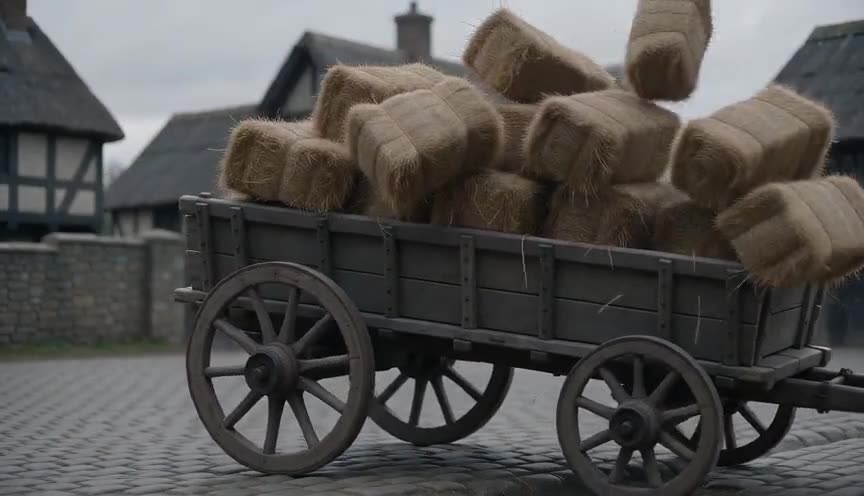
Step printing is the optical or digital process, repeating or dropping frames, used to physically create stutter motion; stutter motion is the visual result you see on screen, often inside a slowed-down shot rather than at normal speed.
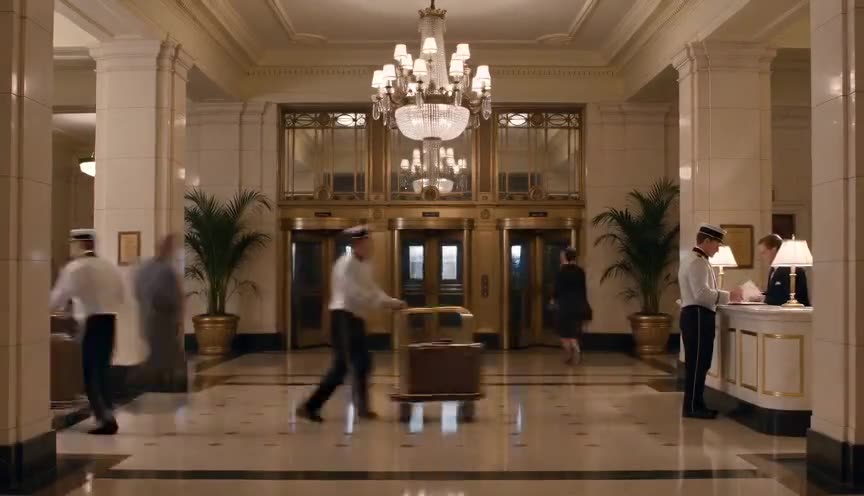
Fast motion speeds real time up smoothly so action reads as sped-up but still fluid, while stutter motion looks jerky and broken regardless of speed, because frames are missing rather than compressed.
In film
Saving Private Ryan (1998)
The Omaha Beach landing uses a narrow shutter angle, creating crisp, strobing motion that makes explosions, impacts, and bodies feel jagged and brutally immediate.
Gladiator (2000)
The opening Germania battle uses altered shutter and frame-rate effects, giving blows, arrows, and charging bodies a harsh, staccato violence.
The prompt
Name the mechanics directly: say 'stutter motion', 'frame-skipping', 'juddering', or 'staccato movement', and describe the subject as jumping between poses rather than gliding. Avoid words like 'smooth', 'fluid', or 'slow motion', which push the model toward continuous motion blur instead. Anchor the effect to one clear moving subject against a mostly static background, since stutter reads best as a contrast between broken motion and a steady frame. Keep the described action simple: one gesture or one vehicle, not a crowd.
The exact prompt that rendered the video on this page. Keep the description of the move, change the subject and the setting.
Stutter motion: a lone motorcyclist speeds along a straight desert highway at dusk, camera locked on a wide static shot from the roadside with warm amber backlight from the setting sun. The rider's body and the motorcycle appear to jump between distinct positions every few frames instead of moving smoothly, as if frames were dropped, while the flat horizon, road markings, and dust cloud behind the wheel stay sharp and continuous. The judder is confined to the rider and bike only, giving a jagged, newsreel-like feel against the still landscape. No text.
Common mistakes
Confusing it with motion blur
Motion blur smooths fast movement into a soft streak; stutter motion does the opposite; it removes frames so movement looks broken and discontinuous, not blurred.
Using it for too long
Stretching stutter motion across an entire scene numbs the viewer and turns a shock cut into a stylistic tic; save it for the specific beat that needs the jolt.
Applying it to slow, calm action
Stutter motion reads as violence or panic; using it on a quiet gesture, like a hand reaching for a cup, feels random rather than meaningful, so match it to genuinely abrupt action.
Frequently asked questions
What is stutter motion?
Stutter motion is a technique where footage is played back with missing or duplicated frames, so movement looks jerky and staccato instead of continuous, often used to make violent or chaotic action feel more visceral.
How do filmmakers achieve stutter motion on set?
They shoot at a reduced frame rate, commonly 6 to 12 frames per second, with the shutter matched, then play the footage back at normal speed so each frame holds slightly longer and the motion reads as broken rather than smooth.
What's the difference between stutter motion and slow motion?
Slow motion is captured at a high frame rate and plays back smoothly at a slower pace; stutter motion drops or duplicates frames so the movement looks jagged, and it can happen at normal speed or inside a slowed shot.
Can an AI video generator produce stutter motion?
Yes; describe the frame-dropping explicitly, for example 'jumps between poses every few frames' or 'juddering, frame-skipped movement', rather than relying on words like 'slow motion'. Imaginode's models respond well to that kind of concrete, physical description.