Underwater
Also calledUnderwater shot, Submerged shot, Underwater cinematography
An underwater shot places the camera below the surface of water, showing the world through refracted light, muted color and slowed, buoyant motion. It immerses the viewer in a physically different medium, creating a sense of weightlessness, danger or dreamlike detachment from the air-breathing world above.
What it tells
Directors go underwater when they want to strip a scene of its normal rules of gravity and speed. Sound disappears, edges soften, and characters move with a delay that reads as either peaceful or threatening depending on the light. It is used for near-death moments, memory and dream sequences, or simply to make an ordinary space feel foreign, since a flooded room or a submerged object forces the audience to re-learn how it behaves.
How it is shot
The camera goes in a waterproof housing, often on a rig or handheld by a diver, shooting at 1/48 or 1/50 shutter to keep motion natural once slowed. Wide to normal lenses (16mm to 35mm equivalent) are common because water magnifies image size by about 25 percent and telephoto lengths lose contrast fast. Practical lights are rigged below the surface or bounced through it, and particulate (fine sand, powdered milk, bubbles) is added to give the beams visible texture. Color shifts toward blue-green within a few meters as red wavelengths are absorbed first, so grading pushes warmth back only on skin if needed. Buoyancy control and weighted rigs keep the frame steady against drift.
When to use it
- A character faces drowning, submersion or a near-death moment that needs disorientation and slowed time.
- A flooded, sunken or submerged space (car, room, wreck) needs to feel foreign and physically altered.
- A dream, memory or hallucination sequence calls for muffled sound and delayed, weightless movement.
- A product or object needs a surreal, calm presentation that separates it from ordinary gravity.
Not to be confused with

Floating camera implies weightlessness through smooth, unmoored movement in open air, while underwater adds real optical distortion, light refraction and color loss that only water produces.
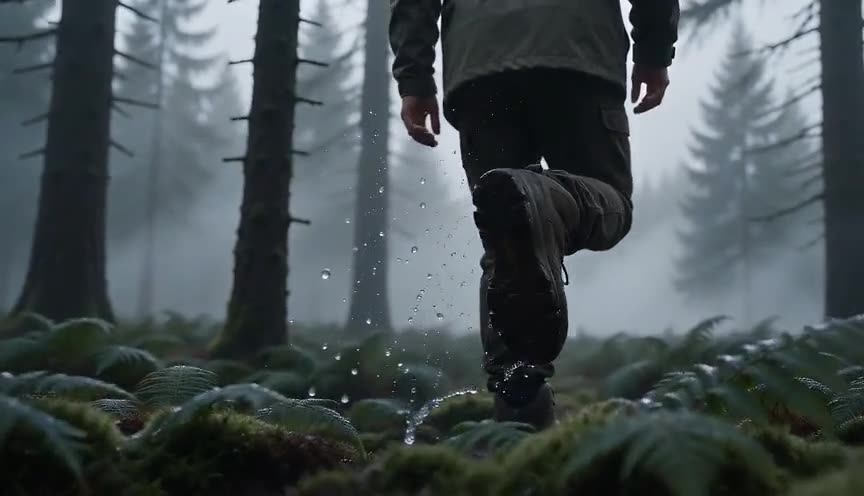
Slow motion is a time manipulation applied to any footage in post or with a high frame rate, while underwater is a physical location that naturally slows and softens motion without needing a frame rate trick.
In film
Life of Pi (2012)
The sinking ship sequence uses submerged wide shots to make the wreck feel vast, slow and disorienting as the boy escapes.
The Shape of Water (2017)
An underwater embrace scene uses soft blue light and buoyant, weightless movement to shift the tone from horror to tenderness.
The prompt
Name the water explicitly (submerged, flooded, underwater) and describe the physical effects: wavering light on surfaces, bubbles trailing from a moving body, muted blue-green color, slowed and buoyant motion. Mention a visible light source (window, work light, sun shafts) so refraction has something to bend. Avoid asking for splashing or surface shots if you want a fully submerged feel, and avoid crisp, sharp detail, since real underwater footage is always slightly soft and hazy.
The exact prompt that rendered the video on this page. Keep the description of the move, change the subject and the setting.
Underwater camera drifts slowly through a flooded car repair garage, submerged fluorescent lights flickering above rippling water, sending wavering light patterns across a sunken sedan and rows of tools floating past. A mechanic in a wetsuit glides weightlessly between hoists, bubbles trailing from his regulator, movement slowed and buoyant, color muted to blue-green, edges softened by refraction. The camera pans gently, tracking his slow kick as murky particles drift through the beam of a work light. No text.
Common mistakes
Water too clear
Perfectly transparent water looks artificial. Real underwater footage always carries some haze, particulate or backscatter that gives the light beams shape.
Sharp, fast motion
Bodies and objects moving at normal air speed break the illusion instantly. Underwater motion should read as delayed, buoyant and slightly resisted by drag.
No color shift
Skipping the blue-green color loss makes the shot look like a dry set with a filter. Depth should visibly eat warm tones the deeper the frame goes.
Frequently asked questions
What is an underwater shot in film?
It is a shot filmed with the camera below the water's surface, showing action through refracted light, muted color and slowed, buoyant motion, used to create disorientation, danger or dreamlike calm.
Do underwater scenes need a real dive tank?
Traditionally yes, either a swimming pool, dive tank or ocean location with a waterproof housing, though modern productions also composite dry-for-wet elements with CGI water and lighting.
Why does underwater footage look blue-green?
Water absorbs red and orange wavelengths first, so anything beyond a few meters of depth naturally shifts toward blue and green, which colorists often preserve or exaggerate for mood.
Can AI video tools generate underwater shots?
Yes, models like those on Imaginode can render underwater looks convincingly if the prompt names the water, the light behavior and the slowed motion explicitly rather than just saying 'underwater' alone.