Floating camera
Also calledWeightless camera, Ghost camera, Drifting camera, Levitating camera move
A floating camera is a camera movement that drifts through space with no visible support, no footsteps, and no fixed anchor to gravity or a character's point of view. It creates a dreamlike, disembodied sense of observation, as if an invisible presence is gliding through the scene.
What it tells
Directors reach for the floating camera when they want the audience to feel like a spirit moving through the world rather than a person walking through it. Because the motion has no footsteps, no sway, and no obvious operator, it reads as omniscient or otherworldly, useful for dream sequences, memory, grief, or a god's-eye narrator. The smoothness itself becomes the emotion: calm, detached, sometimes eerie. It separates the audience from the physical logic of the space, letting the story drift past bodies and furniture the way a thought drifts past details.
How it is shot
The rig is usually a stabilized gimbal, wire-suspended dolly, or cable cam mounted on a slider, jib, or drone, moving at a constant slow speed, often 0.3 to 1 meter per second, with no acceleration spikes. Height typically sits between chest and eye level, sometimes rising or sinking a few inches mid-shot to suggest weightlessness. A wide to normal lens, 24mm to 35mm, keeps parallax visible without distortion. Focus stays locked or racks very slowly; there is no handheld micro-shake, no bounce. On set this needs a Steadicam, motorized gimbal, or cable cam, plus an operator or remote technician who rehearses the path in advance so the move never hesitates or corrects itself in view.
When to use it
- Opening a dream, memory, or hallucination sequence where normal physical rules should feel suspended.
- Suggesting an unseen presence, ghost, or omniscient narrator observing characters without being noticed.
- Moving through a crowded or cluttered space smoothly when a handheld or dolly move would feel too grounded.
- Building unease in a horror or thriller scene by removing the comfort of a visible, human operator.
Not to be confused with
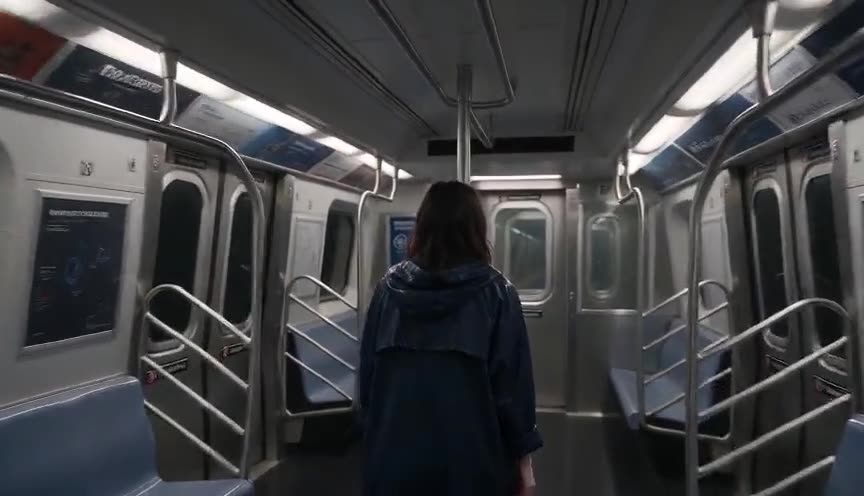
A steadicam is operator-worn and follows human movement, so it still carries a faint organic sway tied to footsteps. A floating camera removes even that trace of a body, drifting with no anchor to walking rhythm at all.
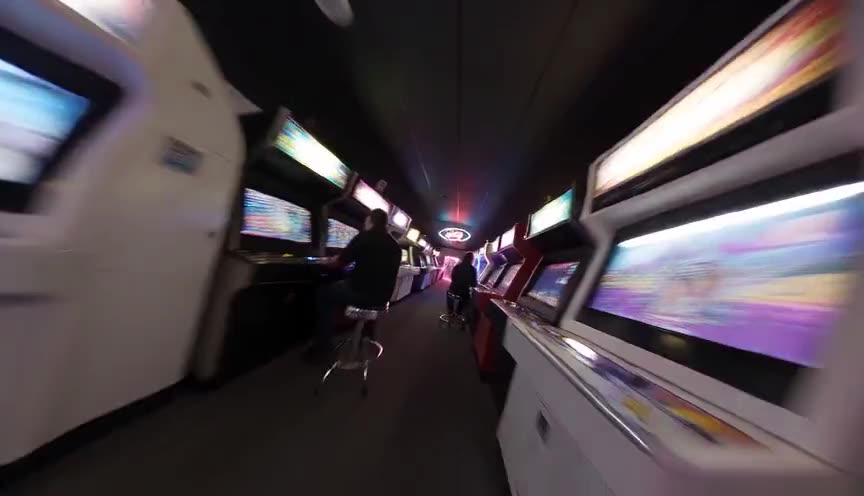
An FPV drone shot is fast, aggressive, and clearly aerial, built for speed and energy. A floating camera stays slow and level, closer to eye height, favoring calm and mystery over velocity and spectacle.
In film
The Shining (1980)
Low Steadicam floats through the Overlook Hotel's corridors and rooms with a smoothness that removes any sense of a walking body.
Enter the Void (2009)
Uses a first-person floating camera that drifts through walls and ceilings like a disembodied spirit observing the story.
The prompt
Name the physics you want removed: say 'no footsteps, no bounce, weightless, gliding' rather than just 'smooth.' Specify a constant slow speed and a height that stays level or drifts a few inches, and mention that the camera passes through or around objects without avoiding them like a person would. Avoid words like 'walking,' 'handheld,' or 'shaky,' which pull the model back toward a human operator. Anchor the mood with words like 'ghostlike,' 'dreamlike,' or 'omniscient' so the model favors an eerie stillness in the motion itself.
The exact prompt that rendered the video on this page. Keep the description of the move, change the subject and the setting.
Floating camera drifting slowly and weightlessly through a 1970s New York diner at eye level, gliding past red vinyl booths, chrome counters, and steam rising from coffee cups, with no visible footsteps, no bounce, and no human sway, as if an invisible presence moves through the room. The camera passes smoothly between a waitress pouring coffee and two men talking quietly at the counter, never speeding up or slowing down, staying perfectly level under warm tungsten light and soft neon glow from the window. The lens stays locked in slow, continuous focus throughout the take. No text.
Common mistakes
Adding handheld shake
Even subtle jitter reintroduces a human body into the shot, killing the weightless, disembodied feeling the move depends on.
Speeding up mid-shot
A floating camera that accelerates or lurches reads as a drone or crane move, not a ghostlike presence gliding through space.
Tying it to a character's eyeline
If the camera pauses on faces the way a person would look, it stops floating and becomes a disguised point-of-view shot instead.
Frequently asked questions
What is a floating camera?
It is a camera movement that drifts smoothly through a scene with no visible support, footsteps, or fixed viewpoint, creating a dreamlike or ghostlike sense that an unseen presence is watching the action unfold.
How is a floating camera shot achieved on set?
Most crews rig a stabilized gimbal, cable cam, or wire dolly and rehearse a slow, constant path in advance, sometimes with an operator on a Steadicam vest, sometimes fully remote controlled, so the motion never hesitates or corrects itself.
What is the difference between a floating camera and a drone shot?
A drone shot is usually aerial, fast, and clearly airborne, while a floating camera stays near human height and moves slowly, favoring an eerie calm over spectacle or altitude.
Can AI video tools generate a floating camera move?
Yes. Tools like the ones on Imaginode can produce this effect from a text prompt if you specify constant slow speed, level height, and the absence of footsteps or bounce, rather than just asking for a smooth shot.