Slow motion
Also calledSlo-mo, Overcranking, High frame rate capture
Slow motion is footage played back slower than the speed it was recorded, most often by overcranking the camera to a higher frame rate than the projection rate. It stretches an instant into several seconds, letting the viewer see gesture, impact and expression that normal speed hides.
What it tells
Directors reach for slow motion when a moment carries more weight than its duration suggests: a fall, a glance, a shot landing. Stretching time isolates the instant from the flow of the scene and hands it to the audience for closer study, turning a physical action into an emotional one. It can dignify violence, romanticize a gesture, or simply let the eye catch what the body already felt.
How it is shot
True slow motion is captured, not just retimed: the camera runs at a higher frame rate than playback, commonly 48 or 96 fps for a gentle effect, 120 to 240 fps for pronounced slow motion, and up to 1000 fps or more on high-speed rigs for near-frozen detail like splashing water or shattering glass. Because more frames are exposed per second, less light hits each one, so sets need significantly more illumination or wider apertures to keep exposure correct. Shutter angle is often opened up to preserve natural motion blur per frame; closing it too far produces a stroboscopic, stuttering look. Sound is recorded separately and resynced, since audio cannot simply be slowed with the image.
When to use it
- A physical action needs to read as significant: a punch landing, a jump, a collision.
- You want the audience to study a face or gesture longer than real time allows.
- Water, dust, fabric or hair movement is more expressive stretched out than at normal speed.
- A turning point in the story deserves a beat of suspended, almost dreamlike time.
Not to be confused with
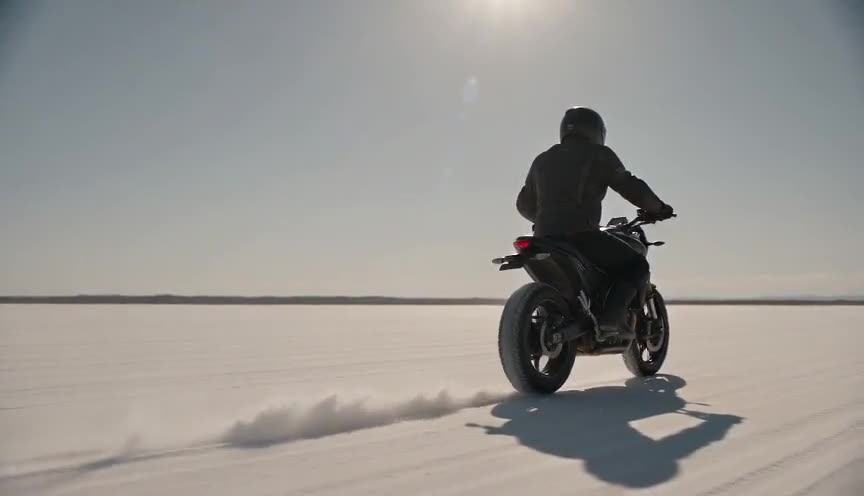
A speed ramp moves between normal and slow speed within one shot, drawing attention to the transition itself. Pure slow motion holds one constant slowed speed throughout, without that shift being part of the effect.
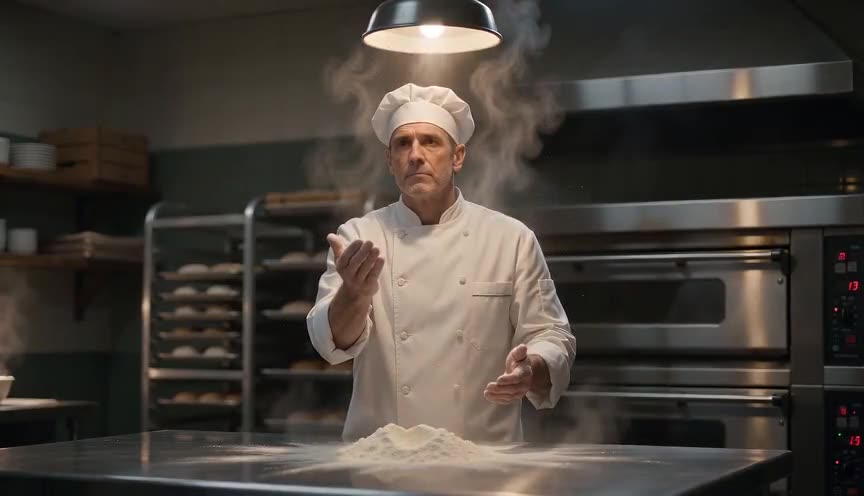
A freeze frame stops motion completely on a single image. Slow motion keeps the action moving, just stretched, so the viewer still sees continuous change rather than a held picture.
In film
Chariots of Fire (1981)
Runners on a beach are shot in slow motion, turning ordinary training into a lyrical, almost mythic image of effort.
300 (2006)
Combat sequences drop into slow motion at the moment of impact, isolating each blow for maximum visual weight.
The prompt
Name the exact speed relationship you want (roughly 10 to 25 percent of real time), and describe what stays airborne or suspended during that window: water droplets, dust, hair, fabric. Mention the light being soft and even, since real overcranked footage needs more exposure. Avoid vague words like cinematic slow-mo alone; anchor the effect in one specific physical detail the model can render moving slowly, and keep the camera behavior simple (static or a slow, steady track) so it does not compete with the time effect.
The exact prompt that rendered the video on this page. Keep the description of the move, change the subject and the setting.
Slow motion: a lone hiker in a weatherproof jacket strides through a misty pine forest, one foot lifting off a bed of wet ferns as a fine spray of water droplets hangs suspended around the ankle. The camera tracks alongside at eye level with a 50mm lens, moving at the same slowed pace as the subject, roughly one-fifth of real time. Mist drifts faintly in the background at normal speed, jacket fabric and loose hair ripple gently, and soft overcast light stays even and diffused throughout the shot. No text.
Common mistakes
Slowing everything, honoring nothing
Overusing slow motion across a whole sequence flattens its power. Reserve it for one or two moments per scene so the shift in time still means something to the viewer.
Underlit high frame rate footage
Shooting at 120 fps or higher without adding light produces dark, noisy footage because each frame gets a shorter exposure window. Compensate with more light or a wider aperture before rolling.
Choppy motion from a low capture rate
Slowing footage shot at normal speed in post, instead of overcranking on set, creates stutter or artificial-looking interpolation. Capture at a genuinely higher frame rate whenever the shot allows it.
Frequently asked questions
What is slow motion?
Slow motion is footage played back slower than the speed it was recorded, usually by overcranking the camera to a higher frame rate than the final playback rate. It stretches an action so the viewer sees more detail and feels more weight in the moment.
What frame rate do you need for slow motion?
48 to 96 fps gives a gentle slowdown, 120 to 240 fps gives clearly slowed action, and specialized high-speed cameras running 1000 fps or more can nearly freeze fast events like a splash or an impact.
Does slow motion need more light on set?
Yes. Higher frame rates expose each frame for less time, so the image gets darker unless you add light or open the aperture. This is one of the most common technical mistakes with overcranked shots.
Can AI video tools generate slow motion?
Yes, models like those used on Imaginode can render convincing slow motion when the prompt names the slowed speed and a specific physical detail such as suspended water or drifting fabric, giving the model something concrete to stretch.