Blue hour
Also calledTwilight light, Civil twilight, L'heure bleue
Blue hour is the short window of twilight, roughly 20 to 40 minutes before sunrise or after sunset, when the sun sits below the horizon and the sky glows a deep, even blue. It gives the frame a cool, melancholic light where artificial sources like windows, streetlamps or beacons read as warm accents against a cold ambient world.
What it tells
Directors reach for blue hour when a scene needs to feel suspended between two states: day and night, safety and danger, before and after. The cool wash flattens harsh shadows and replaces them with a quiet, uniform sadness, so it suits farewells, stakeouts, arrivals in unfamiliar places, or the calm right before something breaks. Because practical lights still glow warm against the blue sky, the image naturally separates human warmth from an indifferent, cooling world.
How it is shot
Crews track civil twilight tables for the exact location and date, since the usable window is short and shifts daily. Cameras are set with a cooler white balance (around 5600 to 8000K) or left on daylight while practicals are gelled warm, so the sky reads blue and windows or lamps read amber by contrast. Exposure is typically wide open, ISO pushed moderately, because ambient light is low but even, without the hard falloff of full night. Crews often schedule two takes, one just after sunset and one deeper into twilight, since the sky's saturation changes fast. Practical lights (lamp posts, neon, headlights) are pre-rigged since there is no time to relight mid-window.
When to use it
- A farewell or a departure that needs to feel suspended rather than final.
- An establishing shot of a city or coastline transitioning from day to night.
- A stakeout, surveillance or waiting scene where tension is quiet and cold.
- Any exterior where you want practical lights to pop warm against a cool sky.
Not to be confused with
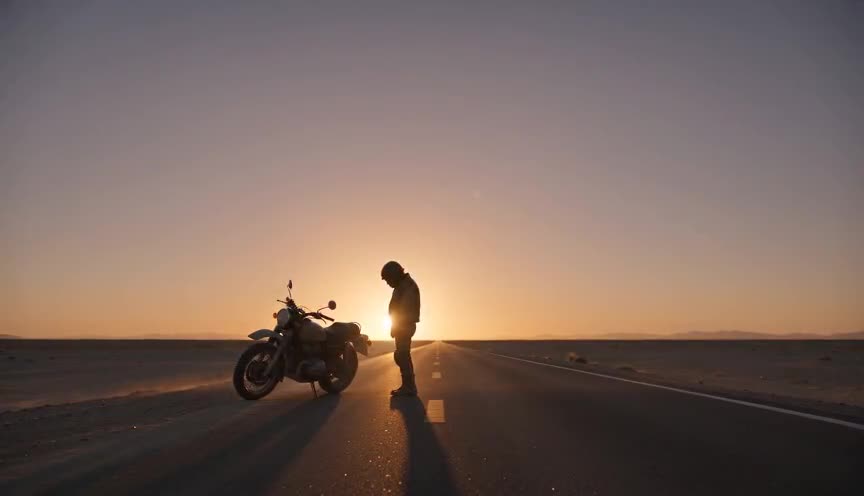
Golden hour happens at the opposite twilight edge and bathes everything in warm, low, directional sunlight. Blue hour has no direct sun at all, so the light is cool, diffuse and shadowless instead of warm and raking.
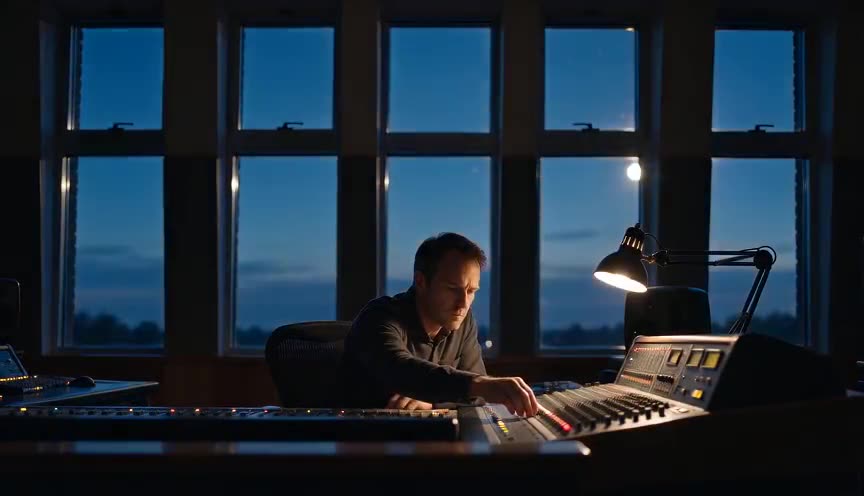
Day for night fakes darkness by underexposing and cooling daylight footage, often with filters, to stand in for a night scene shot without night permits. Blue hour is real twilight, not a simulation, and lasts only a few genuine minutes.
In film
Collateral (2004)
Michael Mann shot portions of Los Angeles at twilight and night with early digital cameras to hold the blue sky and available city light.
La La Land (2016)
The hillside dance number was filmed in a narrow dusk window, balancing a deep blue Los Angeles sky with warm city lights.
Days of Heaven (1978)
Nestor Almendros and Haskell Wexler famously shot many prairie scenes just after sunset, using the brief, cool twilight to create soft blue ambience.
The prompt
Name the exact window (blue hour, dusk, civil twilight) rather than just 'night', since models default to full darkness or generic sunset orange otherwise. Specify that the sky is deep saturated blue and ambient, with no direct sun, and call out any warm practical light source (a window, a beacon, a lamp) by contrast so the model does not wash the whole frame in one color. Avoid vague words like 'moody' alone; give a light source and a color temperature contrast instead.
The exact prompt that rendered the video on this page. Keep the description of the move, change the subject and the setting.
Blue hour lighting on a rocky lighthouse coast, deep saturated twilight blue filling the sky and sea with no direct sun, the horizon still holding a faint fading glow. A wide static shot on a 35mm lens shows the white lighthouse tower against the cool sky, its lamp room glowing warm amber and its rotating beacon sweeping slowly across churning gray-blue waves. Wind pushes spray off the rocks, gulls cut low across the frame, the camera holds perfectly still while only the light, water and birds move. No text.
Common mistakes
Shooting too late
Waiting until the sky is fully black turns blue hour into ordinary night lighting and loses the saturated cool ambient wash that makes the look distinctive.
No warm contrast
Leaving every light source cool makes the frame monochrome and flat. A single warm practical against the blue sky is what sells the twilight feeling.
Ignoring the clock
The genuine window is short and changes daily with the season and latitude, so crews who do not plan shot order around it lose the light mid-scene.
Frequently asked questions
What is blue hour?
Blue hour is the brief twilight period before sunrise or after sunset when the sun is below the horizon but the sky still glows a deep, even blue, giving scenes a cool, melancholic ambient light.
How long does blue hour actually last?
Usually 20 to 40 minutes, depending on latitude and season. Locations closer to the equator get a shorter, steeper twilight, while high-latitude locations can stretch it much longer.
Is blue hour the same as magic hour?
No. Magic hour usually refers to golden hour's warm, low sunlight near sunrise or sunset. Blue hour is the cooler, sunless window that follows or precedes it, with no direct sun in the frame.
Can AI video tools generate a convincing blue hour look?
Yes, tools like the models on Imaginode render it reliably if you name the exact light (blue hour, twilight, civil twilight) and describe a warm practical source in contrast, rather than just asking for 'night' or 'moody lighting'.