Bird's-eye view
Also calledTop shot, Top-down shot, God's eye view, Overhead wide shot
A bird's-eye view is a camera angle placed directly above the subject, looking straight down at 90 degrees, as a bird flying overhead would see it. It flattens people and objects into shapes and patterns and turns the viewer into a detached, all-seeing observer.
What it tells
Directors reach for this angle when they want the audience to feel outside the story rather than inside it. Seen from directly above, characters lose individuality and become pieces on a board, which reads as fate, surveillance, or design at work. It is also the angle that reveals geometry: a hotel lobby's tiled floor, a dance formation, a maze. Because it strips away eye contact and body language, it works best at moments of transition or reflection, not emotional intimacy.
How it is shot
The camera sits on an axis perpendicular to the floor, mounted on an overhead crane arm, a ceiling rig, a drone, or a fixed rope-and-pulley cage above the set. Lens choice matters: a wide lens (16 to 24mm) shows more floor and exaggerates the pattern, a longer lens (35 to 50mm) flattens depth further and keeps lines cleaner. Lighting typically comes from practicals or soft top light already motivated by ceiling fixtures, since a key light from the side would throw long, distracting shadows across the floor. The shot is often locked off or moves on a slow vertical axis (straight up or down), and blocking is choreographed to a mark on the floor so bodies read as shapes from above.
When to use it
- Reveal a floor pattern, maze, or choreography that only makes sense seen from directly overhead.
- Suggest fate, surveillance, or a god's-eye judgment on a character's situation.
- Open or close a sequence by pulling the audience out of the scene into an observer's distance.
- Show scale and formation of a crowd, vehicles, or dancers that a side angle would flatten and confuse.
Not to be confused with
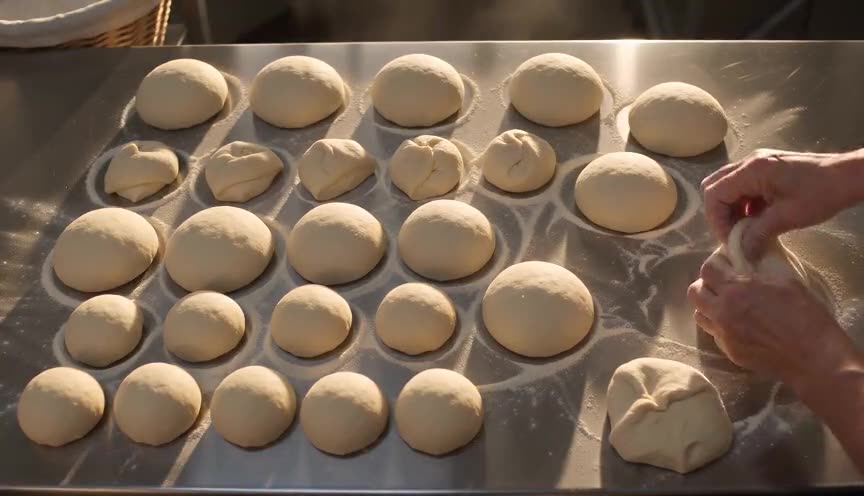
Overhead shot is the same 90-degree top-down angle but usually tighter, framing a table, a bed, or a small group rather than a whole room or location.
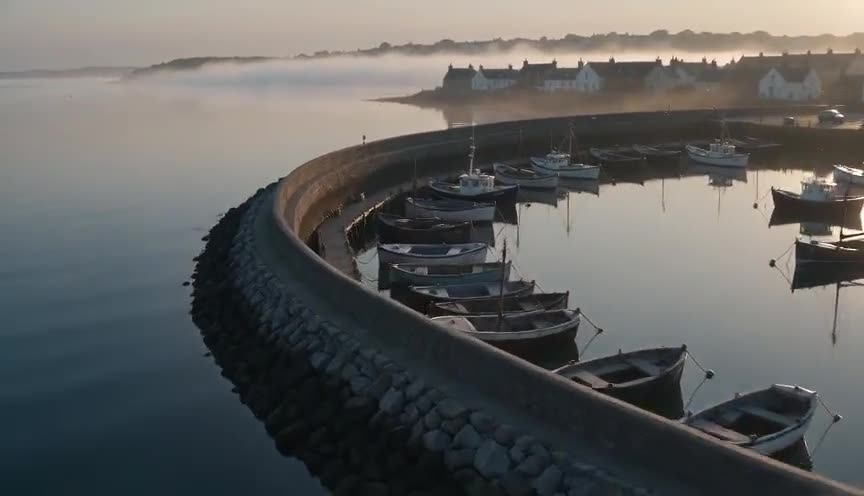
Aerial shot covers any elevated angle from a helicopter or drone, often oblique; bird's-eye view specifically means the camera axis is perfectly vertical, straight down.
In film
42nd Street (1933)
Busby Berkeley's overhead camera turns rows of dancers into shifting kaleidoscopic patterns, a signature of 1930s musical staging.
Psycho (1960)
Hitchcock uses a high overhead view above the staircase landing as Arbogast is attacked, distancing the viewer and concealing the killer's identity.
Taxi Driver (1976)
After the brothel shootout, Scorsese's camera looks straight down and glides over the bloody rooms like a detached, judgmental observer.
The prompt
Say the angle plainly: camera directly overhead, lens pointing straight down, 90 degrees to the floor. Name the pattern you want visible (tiles, formation, furniture layout) since the model needs a reason for the top-down read. Avoid words like 'high angle' or 'aerial' alone, they often produce an oblique tilt instead of a true vertical axis. Keep motion minimal (static or a slow vertical rise or fall) so the geometry stays legible in a short clip.
The exact prompt that rendered the video on this page. Keep the description of the move, change the subject and the setting.
Bird's-eye view: the camera looks straight down from high above a Venetian canal at midday. Gondolas and small boats glide along the green water between terracotta rooftops, tiny people cross a stone bridge, the whole scene laid out like a map. The camera slowly rises higher while staying perfectly vertical. Realistic, sunny, sharp detail. No text.
Common mistakes
Camera not truly vertical
Even a few degrees off perpendicular reads as a high angle, not a bird's-eye view, and breaks the flattened, pattern-based effect.
Too much lateral movement
Panning or tracking sideways from directly overhead confuses depth cues fast; keep motion limited to a straight vertical rise or fall, or hold static.
No visible pattern or scale reference
Without a floor design, grid, or grouped subjects, the shot loses its point; the angle needs something worth seeing from directly above.
Frequently asked questions
What is a bird's-eye view shot?
It is a camera angle positioned directly above the subject, pointing straight down, so people and objects appear as flattened shapes on the ground rather than three-dimensional figures, as a bird flying overhead would see them.
How is bird's-eye view different from a high angle shot?
A high angle looks down at a diagonal, still showing faces and depth. A bird's-eye view is the extreme, perfectly vertical version, 90 degrees down, where faces disappear and only silhouettes and floor patterns remain.
How do filmmakers get a true bird's-eye view on set?
They rig the camera on an overhead crane arm, a ceiling track, a cage suspended above the set, or a drone hovering straight up, then level the camera to a perfect vertical axis before shooting.
Can AI video tools generate a bird's-eye view accurately?
Yes, tools on Imaginode's creation canvas handle it well if you specify the vertical axis explicitly (camera directly overhead, looking straight down) rather than just saying 'aerial' or 'high angle', which often produce an oblique tilt instead.