High angle shot
Also calledhigh shot, downward angle
A high angle shot is a camera position placed above eye level, looking down at the subject at a moderate angle rather than straight overhead. It makes the subject appear smaller, weaker, or more vulnerable, and gives the viewer a sense of oversight or control over the scene.
What it tells
Directors reach for a high angle when they need the audience to feel above a character rather than beside them. The downward view shrinks the subject in the frame, stripping away authority and suggesting fragility, isolation, or defeat. It also works as a narrative overview, letting viewers survey a space, a crowd, or a plan laid out below, before the story returns to eye level. Used sparingly, it marks a shift in power: the character loses ground, the world grows larger, and the audience quietly takes the upper hand.
How it is shot
The camera is raised above the subject, typically 6 to 12 feet, and tilted down anywhere from 15 to 60 degrees; steeper angles read as looking-down-on, shallower ones simply survey a space. Riggers achieve the height with a ladder, a small crane, a jib arm, or a drone hovering close, keeping the lens level enough to avoid a full overhead look. A wider lens, 24mm to 35mm, holds more of the room in frame and exaggerates the sense of scale, while a longer lens flattens it. Light should still model the face: a soft key from above the camera axis keeps eyes from disappearing into shadow, since the downward angle already darkens the brow and cheeks.
When to use it
- Show a character losing power, control, or status in a confrontation or a defeat scene.
- Reveal the layout of a room, a crowd, or a workspace before returning to normal eye level.
- Make a child, an injured person, or a trapped character look smaller and more vulnerable.
- Open a scene from a security camera or surveillance point of view to suggest observation.
Not to be confused with
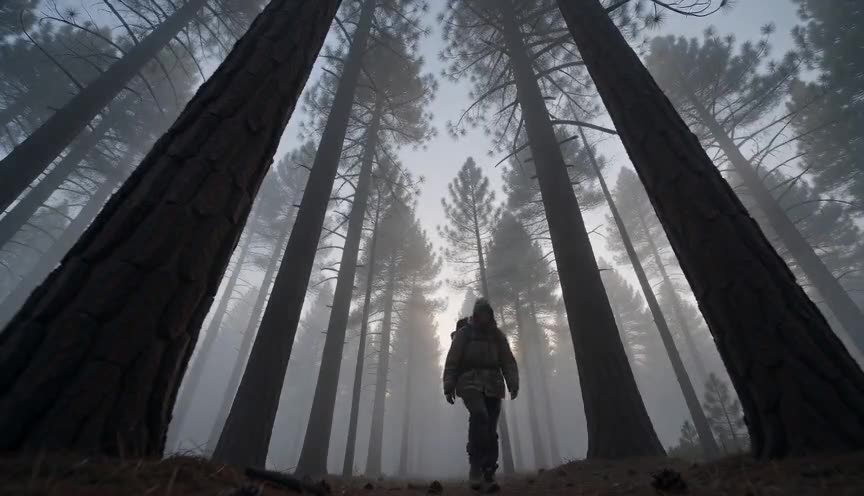
A low angle shot looks up at the subject from below, making them appear powerful or dominant, the visual opposite of the high angle's diminishing effect.
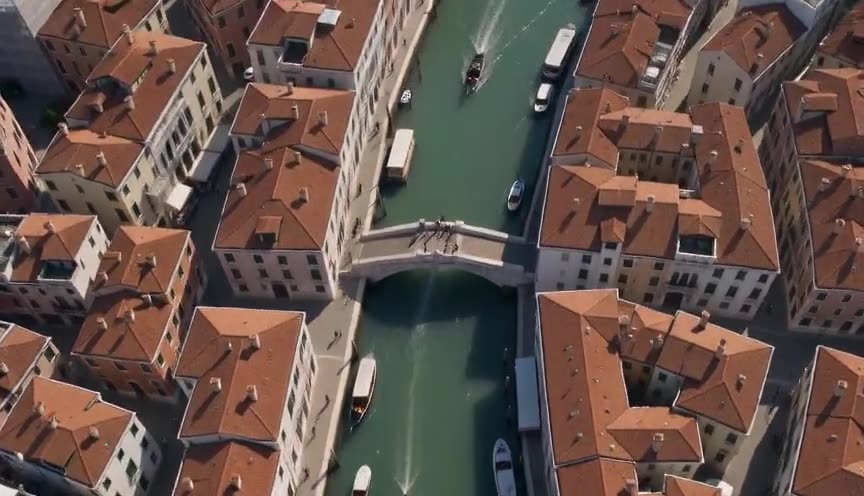
A bird's-eye view looks almost straight down from directly overhead, flattening the subject into a shape or pattern, while a high angle keeps a visible horizon and depth.
In film
Psycho (1960)
A high angle shot down the stairwell during the detective's murder makes him look small and defenseless before the fall.
Vertigo (1958)
Scottie's point of view looks down the bell tower stairwell, turning the depth below into a threatening force that visualizes his acrophobia.
The prompt
Tell the model the camera height and the down-angle explicitly, for example 'camera mounted 10 feet up, tilted down 30 degrees at the subject.' Name the lens (24mm to 35mm) to keep the room readable and mention that faces stay lit from a soft key so eyes are not lost in shadow. Avoid vague words like 'aerial' or 'top view,' which push the model toward a full overhead shot instead of a high angle; keep the horizon or back wall visible in the description to anchor the perspective.
The exact prompt that rendered the video on this page. Keep the description of the move, change the subject and the setting.
High angle shot of a middle-aged mechanic in blue coveralls lying on a rolling creeper beneath a sedan raised on a lift in a car repair garage. The camera is fixed high on a jib arm about ten feet above the concrete floor, tilted down at roughly thirty five degrees, holding steady with no movement. Overhead fluorescent tubes cast flat, even light across the oil-stained floor, tool carts, and hanging hoses, while the mechanic reaches up into the undercarriage with a wrench. The wide view keeps the whole bay, the lift, and the small figure below clearly visible. No text.
Common mistakes
Tilting too far down
Pushing the angle past 70-80 degrees turns a high angle into an overhead shot, losing the horizon and the sense of looking down on someone.
Flat, shadowless faces
Letting the downward angle carve deep shadows under the brow and eyes without adding a soft key light, which makes faces read as dead rather than diminished.
No motivation for the height
Placing the camera high with no visual reason at all, like a balcony, crane, drone, or window nearby, breaks the illusion and reminds the viewer of the rig.
Frequently asked questions
What is a high angle shot?
It's a shot filmed from above eye level looking down at the subject, used to make people, objects, or spaces appear smaller, weaker, or more exposed than they would at eye level.
How high does the camera need to be for a high angle shot?
There's no fixed height; anywhere from a few feet above the subject's head to a full story up works, as long as the camera clearly looks down rather than straight ahead or straight down.
What's the difference between a high angle and a bird's-eye view?
A high angle looks down at an angle and keeps a horizon or background visible, while a bird's-eye view looks straight down from directly overhead, flattening the subject into a pattern.
Can AI video tools generate a convincing high angle shot?
Yes, tools like the models available on Imaginode handle high angle shots well when the prompt states the camera height and the down-tilt angle explicitly, rather than relying on vague words like 'aerial' or 'top view.'