Ground level shot
Also calledFloor-level shot, Ground-level angle, Street-level shot
A ground level shot places the camera at or just above the ground plane, framing the scene from the surface up rather than from human eye height. It exaggerates scale, turns feet, wheels, or grass into the dominant visual element, and gives the viewer the perspective of something small, fallen, or rooted to the earth.
What it tells
Directors reach for ground level when they want the audience to feel the weight of the terrain itself, whether that is dust on a boot, sneakers slapping asphalt, or a body about to fall. The angle strips away faces and puts rhythm, texture, and momentum front and center, building anticipation before a reveal. It can also flatten a character into something small against a vast surface, or make an ordinary action, walking, running, dribbling, feel monumental and ritualistic.
How it is shot
The camera body sits on a low mount plate, a beanbag, or a small ground-level dolly, with the lens height between zero and fifteen centimeters off the surface. A wide to normal lens (18mm to 35mm) is common because it keeps foreground texture sharp while letting the horizon or background stretch upward in the frame. Crews often lay the camera flat and tilt slightly upward to catch legs entering frame, sometimes with a slider for a slow creep alongside the subject. Side or top light raises the texture of the ground (grit, paint lines, grass blades), and focus is usually locked or racked manually as the subject approaches, since autofocus struggles with fast legs crossing a shallow plane.
When to use it
- Introducing a character through their feet, shoes, or gait before showing their face
- Emphasizing the texture and scale of a surface: court paint, sand, cracked pavement
- Building tension before a fall, a collapse, or a low tackle in sports and action scenes
- Suggesting a child's, animal's, or fallen character's literal point of view close to the ground
Not to be confused with
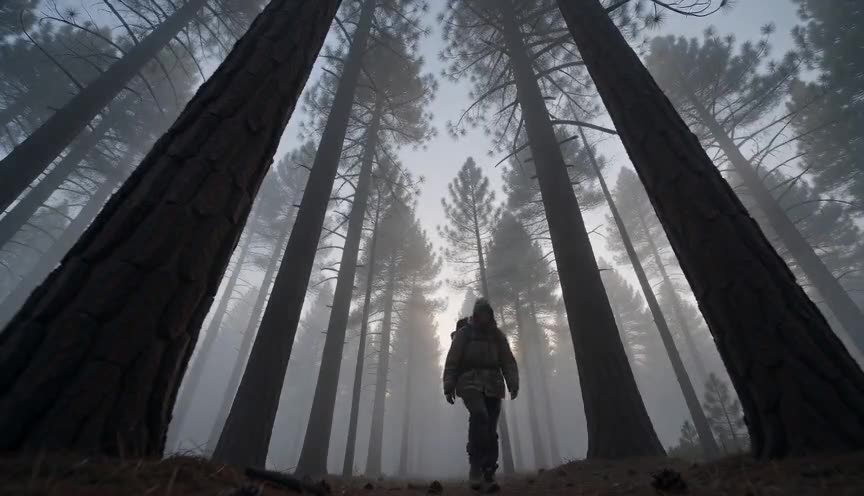
Low angle simply means the camera is below eye level looking up at a subject; it can be waist height or higher. Ground level pins the camera to the floor itself, making the surface and feet part of the composition, not just the upward tilt.
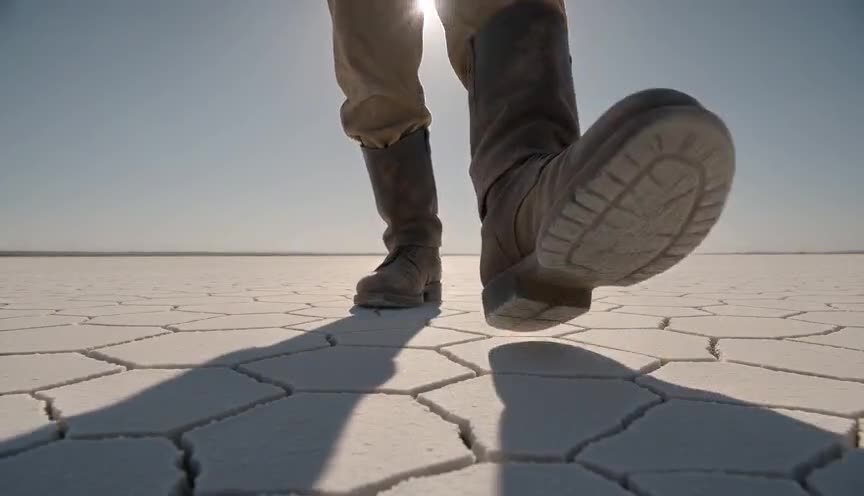
Worm's-eye view pushes the ground level idea to an extreme, aiming nearly straight up for a distorted, disorienting result. Ground level shots are more moderate, often looking along the surface or slightly upward without full vertical exaggeration.
In film
Once Upon a Time in the West (1968)
The opening station sequence lingers on boots, spurs, and dripping water shot from ground level, turning idle waiting into tense ritual.
The Shining (1980)
Steadicam follows Danny's Big Wheel down the Overlook's corridors from near floor height, making wheels, carpet, and thresholds dominate the child's path.
Blue Velvet (1986)
The opening neighborhood sequence descends into the lawn, placing beetles and grass at ground level to expose menace beneath suburban surfaces.
The prompt
Name the camera height explicitly (a few centimeters off the ground), describe what fills the lower frame (shoes, dust, court lines) and what the lens sees rising above it. Specify a wide or normal lens and whether the camera is static or creeping on a slider, since gimbal instructions read as handheld to most models. Avoid vague terms like low angle alone, which models often render as waist height instead of true ground level.
The exact prompt that rendered the video on this page. Keep the description of the move, change the subject and the setting.
Ground level shot on a rooftop basketball court at dusk, camera resting almost flush with the painted concrete, lens pointed slightly upward with a 24mm wide angle. A barefoot young man in athletic shorts steps into frame from the right, his sneakers and calves filling the lower half of the image as city rooftops and a hazy orange sky stretch above him. The camera stays locked in place, only his legs and the basketball bouncing once into frame move, catching dust kicked up off the worn court surface. No text.
Common mistakes
Confusing it with low angle
Placing the camera at waist or chest height and calling it ground level misses the point; the lens needs to nearly touch the surface for the texture and scale effect to register.
Losing the subject in blur
Fast legs crossing a shallow depth of field at close range go soft quickly if focus isn't tracked or pre-set to the exact distance the action will cross.
Ignoring the ground itself
The whole point of the angle is the surface: skipping texture, grit, or reflective light on the ground wastes the shot and leaves it feeling like a generic low angle.
Frequently asked questions
What is a ground level shot?
It is a camera setup where the lens sits at or just above the ground plane, framing action from the surface upward instead of from standing eye height, which emphasizes texture, scale, and the physical weight of the terrain.
How do you physically get the camera that low?
Crews use a ground mount plate, a beanbag, a low-profile dolly, or simply lay the camera on its side rig on the floor, sometimes digging a small trench for wider lenses to clear the foreground.
What lens works best for ground level shots?
Wide to normal lenses (18mm to 35mm) are typical because they keep close foreground texture sharp while still capturing the subject and background rising above it without extreme fisheye distortion.
Can AI video tools generate a convincing ground level shot?
Yes, models like those on Imaginode render it well if you state the exact camera height and what fills the lower frame; on a phone or in the browser you get a usable 4-second test clip in under a minute.