Low angle shot
Also calledlow angle, upshot, hero angle
A low angle shot places the camera below eye level, pointing upward at the subject. It makes the subject look taller, more powerful or more threatening, and it shifts the viewer into a position of looking up rather than meeting the subject face to face.
What it tells
Directors reach for the low angle whenever they need the audience to feel small. A tyrant strides toward camera, a hero stands over a fallen enemy, a building looms against the sky: the angle does the emotional work before a single line is spoken. It borrows the physical experience of childhood, of looking up at adults, and repurposes it to signal authority, danger or awe, letting composition carry a power dynamic that dialogue would have to spell out.
How it is shot
Set the camera below the subject's eye line, often at knee height or lower, and tilt the lens upward. A wide to normal lens (24mm to 50mm) keeps the geometry readable; going wider exaggerates the effect. Keep the horizon low in the frame so verticals converge toward the top, adding height. Light from above or behind reinforces the mood, throwing shadow under the chin or brow. On set this means a low tripod, a doorway dolly, or an operator crouching on the ground; on a gimbal, drop to its lowest height and hold the horizon steady so the shot reads as deliberate, not accidental.
When to use it
- To introduce a villain or authority figure and make them feel physically dominant over the audience.
- When a character needs to look heroic after a victory, standing tall against the sky.
- To make a building, monster or vehicle feel massive and threatening in an establishing moment.
- When you want the viewer to feel small, vulnerable or subordinate inside the frame.
Not to be confused with
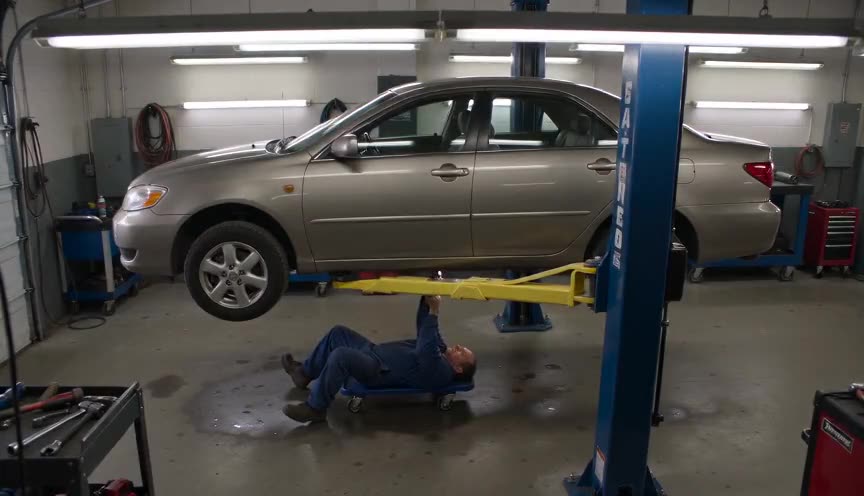
High angle looks down on the subject from above, making them appear smaller or vulnerable, the opposite psychological effect of a low angle looking up.
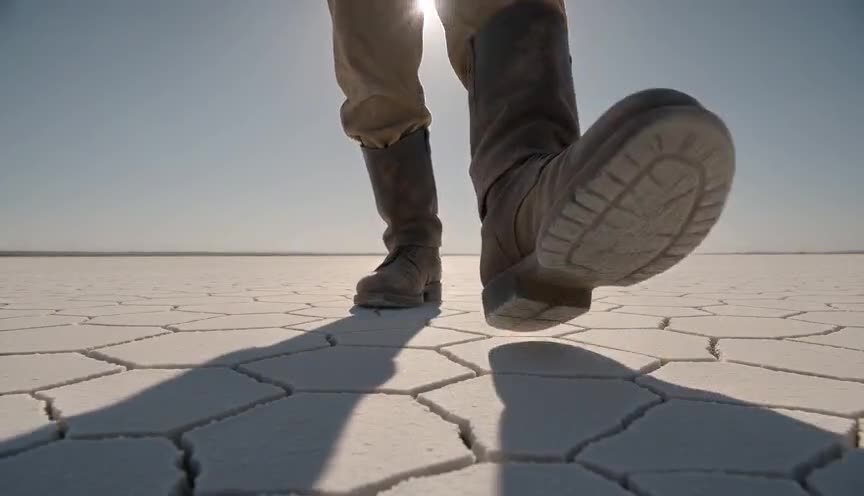
Worm's-eye view pushes the camera almost flat to the ground, an extreme version of the low angle that exaggerates height and scale even further.
In film
Citizen Kane (1941)
Orson Welles shoots Kane from below throughout the film, especially at his political rally, to build the sense of an untouchable, larger than life figure.
Jurassic Park (1993)
Steven Spielberg shoots the Tyrannosaurus rex from low angles to maximize its height and menace as it looms over the characters.
The prompt
Name the camera height explicitly (knee height, ground level) and state that the lens tilts upward, since models default to eye level. Specify a wide or normal lens and mention that verticals converge toward the top of the frame to reinforce the geometry. Avoid vague phrases like 'dramatic angle'; instead describe where the lens points and what looms above the frame line. Keep the horizon low and let the subject fill the upper two thirds for a stronger effect.
The exact prompt that rendered the video on this page. Keep the description of the move, change the subject and the setting.
Low angle shot in a misty pine forest at dawn: the camera sits near the ground, lens tilted sharply upward, as a lone hiker in a weathered jacket walks past camera between towering pine trunks that converge toward a pale grey sky. The horizon stays low in the frame, fog drifts between the trees, and the trunks appear to lean inward and upward as the hiker's boots pass close to the lens. Soft diffused daylight filters down through the canopy. The camera itself does not move; only the hiker and the drifting mist move through the frame. No text.
Common mistakes
Tilting too far
Pushing the tilt to an extreme fisheye-like angle can distort faces into caricature; keep the upward tilt moderate unless distortion is the intended effect.
Ignoring the background
Forgetting what's above the subject wastes the shot; a low angle with a flat ceiling or blank sky loses the sense of scale it's meant to create.
Shaky execution
Handholding a low angle without support introduces unwanted wobble that reads as amateurish rather than deliberate; use a slider, low tripod or braced gimbal.
Frequently asked questions
What is a low angle shot?
It's a shot where the camera is positioned below the subject and points upward, making the subject appear larger, stronger or more dominant to the viewer.
Why do filmmakers use low angle shots for villains?
Looking up at someone mimics the physical sensation of facing a bigger, more powerful figure, so the angle quickly signals threat or authority without any dialogue.
What's the difference between a low angle and a worm's-eye view?
A low angle is any shot below eye level looking up; a worm's-eye view pushes that idea to its extreme, placing the camera nearly flat on the ground.
Can AI video models generate a convincing low angle shot?
Yes, if you state the camera height and upward tilt explicitly rather than just naming the technique. On Imaginode, describing the low camera position and converging verticals gets reliable results.