Object POV shot
Also calledObject's-eye view, Inanimate POV, Thing-cam
An object POV shot places the camera at the exact vantage point and path of an object, so the audience sees the scene as if the object itself were watching. It strips away the human eye and replaces it with an inanimate or non-human perspective, producing disorientation, intimacy, or suspense.
What it tells
Directors reach for this shot when they want to defamiliarize a routine space or hide the source of a threat. Seeing a room from a coin's height, a knife's edge, or an unseen force racing along the floor forces the audience into an unfamiliar, often vulnerable position. It works because it withholds a face: we know something is moving and looking, but not who or what, which builds curiosity in comedy and dread in horror without a single line of dialogue.
How it is shot
The camera is rigged to move exactly as the object would: mounted on a low dolly, skateboard, cable, drone, or handheld pole at the object's height, roughly 10 to 40 centimeters off the ground for small objects. A wide lens, often 18 to 24mm, keeps enough context in frame while exaggerating proximity and speed. The operator studies the object's real physics, its wobble, spin, drop, or slide, and matches the camera's acceleration and shake to that motion rather than to a smooth human walk. The object itself usually stays out of frame, since seeing it would break the illusion, unless it appears briefly in a reflection or at the very end of the shot.
When to use it
- An unseen presence or threat needs to move toward characters without revealing its identity yet
- A small object like a coin, key, letter or blade needs to feel active and central to the plot
- A product or brand film wants to show the world from the product's own vantage point
- A transition needs to travel through a keyhole, drain or gap that a human camera could not physically enter
Not to be confused with
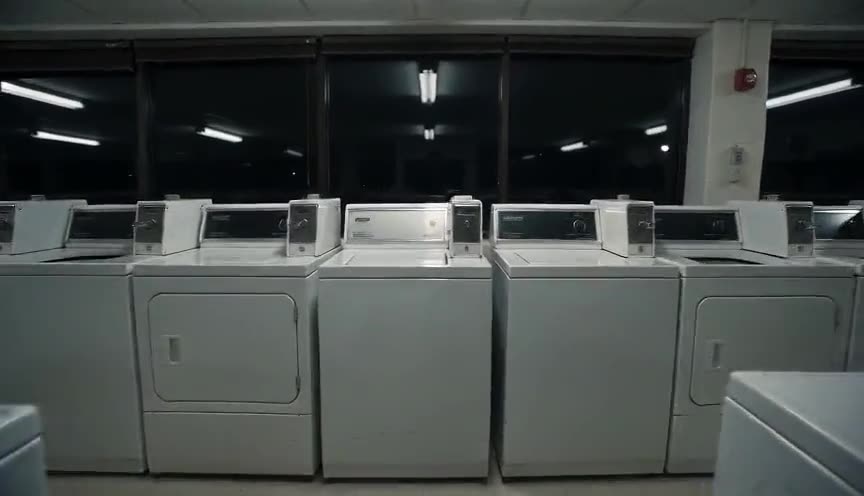
A standard POV shot puts the camera at a character's eyes and usually cuts to that character's face to confirm identity. Object POV commits fully to an inanimate viewpoint and rarely reveals who or what is looking.
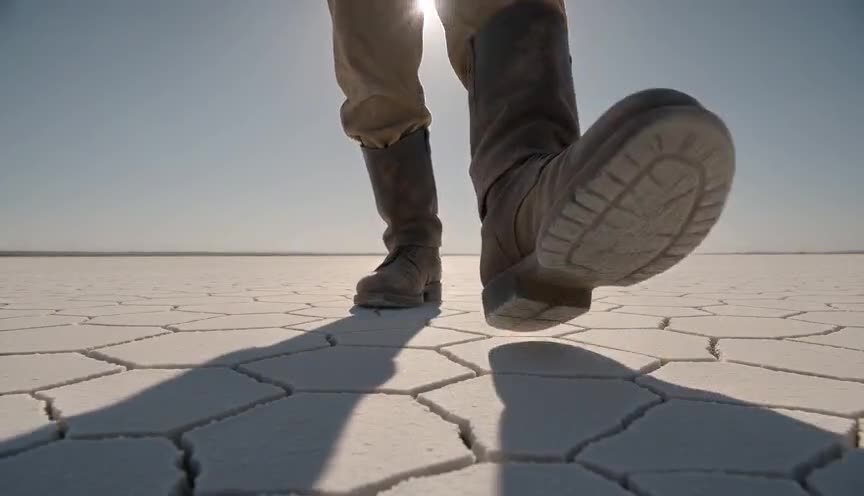
Worm's-eye view is simply a low camera angle looking up at a fixed or moving position. Object POV goes further: the camera must travel the object's exact path, speed and physical motion, not just sit low.
In film
The Evil Dead (1981)
Low, fast tracking shots race through the woods representing an unseen force's viewpoint, a landmark use of non-human camera perspective in horror.
Lord of War (2005)
The opening follows a cartridge from factory assembly through shipment and firing, presenting the global arms trade from the bullet's own moving perspective.
The Big Lebowski (1998)
A dreamlike bowling sequence includes camera views racing down the lane with the ball, making the audience share the object's path toward the pins.
The prompt
Name the object explicitly and describe the camera as if it is that object, not a person watching it. Specify the object's height off the ground, its speed, spin or wobble, and let the described motion match real physics rather than a smooth glide. Mention what brief glimpses of environment the object would catch. Avoid asking the model to show the object itself in frame, since that breaks the illusion, and avoid vague words like exciting or dynamic that give the model nothing physical to render.
The exact prompt that rendered the video on this page. Keep the description of the move, change the subject and the setting.
Object POV shot: the camera becomes the point of view of a small brass tea glass sliding fast across the zellige tile floor of a Moroccan riad courtyard. The lens sits centimeters above the ground, tilted slightly upward, capturing the blur of colorful tiles rushing past, then framing horseshoe arches, a tiled fountain and an orange tree as the glass spins and slows near a low wooden table. Warm midday sunlight flares across the frame. The motion stays continuous, low and unsteady, matching the glass's tumble, with no cuts. No text.
Common mistakes
Showing the object in frame
Letting the object itself appear in its own POV shot breaks the illusion instantly, unless it is a deliberate glimpse in a reflection or the final reveal of the shot.
Too smooth a move
A perfectly steady, human-smooth camera move does not read as an object's physics. Rolling, sliding, dropping and spinning objects need matching wobble, tilt and acceleration.
No narrative reason
Using this shot purely for novelty, without a story reason like suspense, mystery or a small object's importance, makes the audience notice the trick instead of feeling it.
Frequently asked questions
What is an object POV shot?
It is a shot in which the camera occupies the exact viewpoint and path of an object, whether a coin, a weapon or an unseen force, rather than a human character's eyes. The audience experiences the scene from that object's height, speed and motion.
When should I use an object POV shot?
Use it when you want to hide the identity of a threat, make a small prop feel narratively important, or take the audience through a space no human camera could physically travel, like a keyhole or a drainpipe.
How do you film an object POV shot practically?
Rig the camera at the object's height on a low dolly, pole, skateboard or drone, then match its movement to the object's real physics, its wobble, spin or drop, instead of a smooth human walk.
Can AI video tools generate an object POV shot?
Yes. Tools on Imaginode such as Seedance, Kling, Veo, Wan and Grok Imagine can render it if you name the object, describe the camera as its exact viewpoint, and specify its height, speed and physical motion in plain, concrete terms.